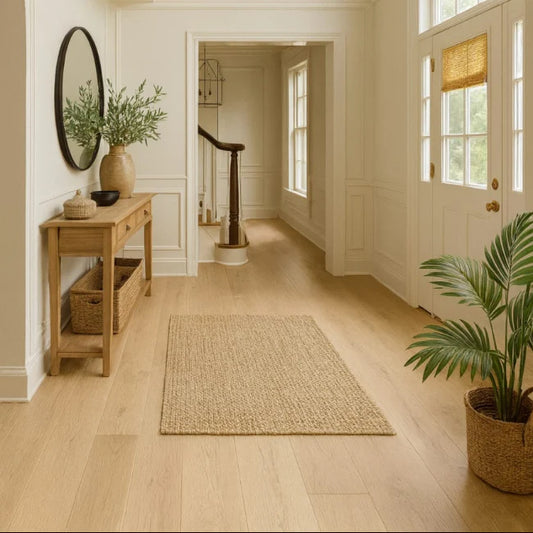
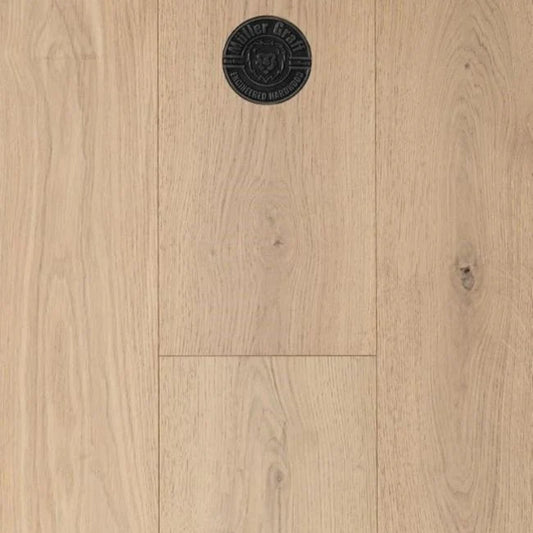
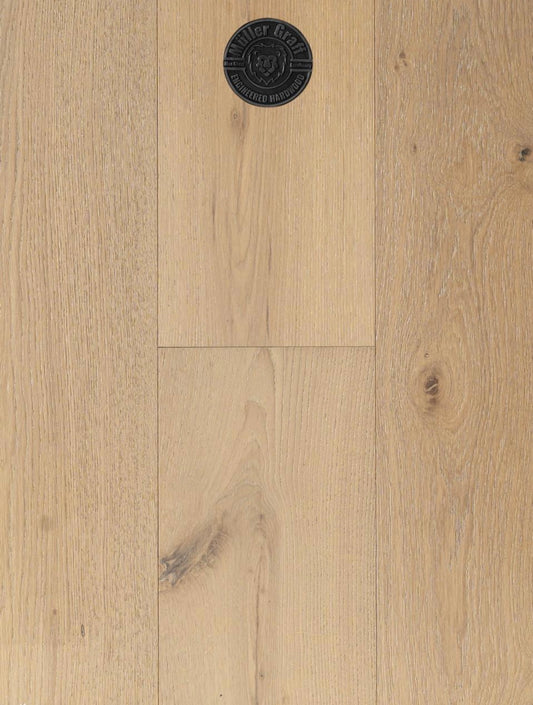
UV Lacquered Engineered Hardwood Flooring
UV lacquered engineered hardwood flooring features a genuine wood surface protected by multiple factory-applied lacquer layers cured using ultraviolet light. The controlled curing process creates a consistent finish before the flooring reaches the installation site.
UV lacquer can be produced in matte, low-luster, satin, or higher-sheen appearances. It sits primarily on the wood surface, helping protect against ordinary stains, traffic, and cleaning while allowing the natural grain to remain visible.
Products should only qualify when the manufacturer explicitly identifies the finish as UV lacquer. General terms such as “UV finish” or “factory finished” may refer to different coating systems and should be verified.
What Is a UV Lacquer Finish?
Lacquer is applied to the genuine hardwood surface during manufacturing. Ultraviolet energy rapidly cures the coating under controlled factory conditions.
A UV lacquer system may provide:
- Consistent factory application
- Controlled curing
- Immediate finished surface
- Protection from ordinary household stains
- Multiple available sheen levels
- Compatibility with wire-brushed textures
- Reduced need for jobsite finishing
- Predictable color and coating
- Straightforward routine care
- Smooth or textured visual options
Exact formulation and performance vary by manufacturer.
UV Lacquer Versus UV Oil
UV lacquer and UV oil protect wood differently. Lacquer forms a surface coating, while oil penetrates and bonds more closely with the wood fibers.
UV lacquer may offer:
- Strong factory-applied surface protection
- Easier routine cleaning
- Less frequent maintenance oiling
- Consistent sheen
- Resistance to ordinary staining
UV oil may offer:
- Natural tactile appearance
- Lower-build finish
- Greater direct contact with wood texture
- Localized maintenance possibilities
- Periodic renewal options
Neither finish is universally superior. Maintenance preferences and desired appearance should guide the decision.
Matte UV Lacquer
Many current engineered-hardwood products use matte or low-luster UV lacquer. The reduced sheen creates a natural appearance and can make minor dust, footprints, and surface marks less visible than a high-gloss finish.
Matte lacquer may complement:
- European oak
- Wire-brushed surfaces
- Wide planks
- Natural beige colors
- Contemporary interiors
- Rustic character grades
- Open-plan rooms
- Modern farmhouse designs
“Matte” is not a standardized gloss measurement, so compare physical samples.
Protection and Realistic Expectations
UV lacquer protects the real-wood surface, but it cannot make hardwood scratch-proof, dent-proof, stain-proof, or waterproof.
Performance depends on:
- Number of finish coats
- Coating formulation
- Wood hardness
- Texture
- Household traffic
- Pet activity
- Furniture protection
- Cleaning products
- Sunlight
- Maintenance
Entry mats and regular grit removal are among the most effective ways to protect the finish.
Cleaning UV Lacquered Hardwood
Routine care should be simple but product specific.
A typical maintenance plan may include:
- Vacuuming with a hardwood-safe attachment
- Using a microfiber dust mop
- Wiping spills immediately
- Applying manufacturer-approved cleaner
- Using minimal liquid
- Cleaning along the grain
- Removing residue
- Protecting entrances
- Avoiding abrasive tools
- Maintaining indoor humidity
Steam mops, wet mopping, oil soap, wax, harsh alkaline cleaners, and solvent products may damage the coating.
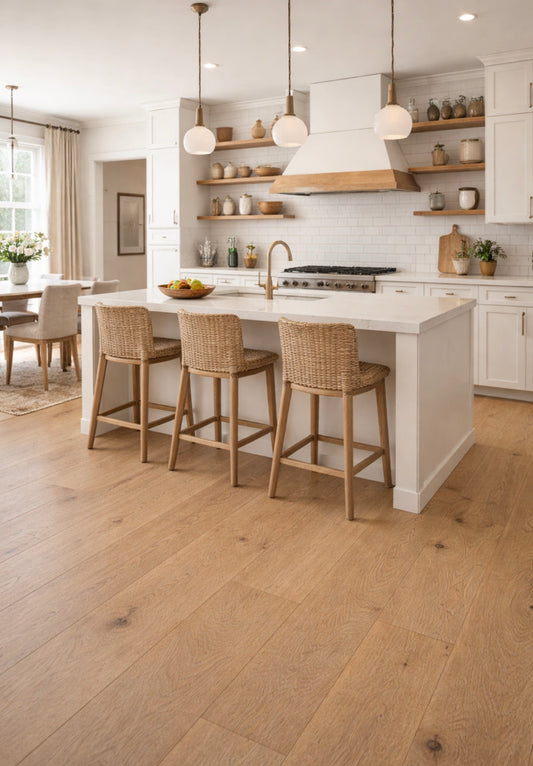
UV Lacquered Hardwood for Kitchens
Selected products may be approved for residential kitchens, where the factory finish can simplify cleaning after ordinary food or drink spills.
Kitchen installations should still consider:
- Sink and dishwasher leaks
- Refrigerator movement
- Cabinet placement
- Appliance clearance
- Direct sunlight
- Expansion requirements
- Cleaning frequency
- Furniture protectors
- Moisture exposure
- Manufacturer room approval
Engineered hardwood remains real wood and should not be treated as waterproof kitchen flooring.
UV Lacquered Flooring for Pets
A quality factory finish may provide useful protection in pet-friendly homes, especially when combined with a wire-brushed texture and medium-tone color.
Pet owners should:
- Keep nails trimmed
- Remove tracked-in grit
- Wipe accidents immediately
- Use compatible bowl mats
- Protect high-traffic entrances
- Avoid dragging crates
- Use furniture protectors
- Follow approved cleaning instructions
Pet-related scratching cannot be eliminated entirely.
Sunlight and Color Change
UV curing describes how the finish is hardened; it does not mean the flooring is immune to sunlight or natural color change. Genuine wood can oxidize, mature, lighten, or darken with exposure.
To encourage more even aging:
- Use window coverings
- Manage strong direct sunlight
- Move rugs periodically
- Rearrange furniture when practical
- Follow manufacturer UV guidance
- Avoid trapping moisture beneath rugs
Color changes are a natural characteristic of real wood.
Recoating and Refinishing
A worn UV lacquer finish may eventually be professionally recoated or refinished, depending on product construction.
Options may include:
- Professional cleaning
- Screen and recoat
- Abrasion and recoating
- Full sanding
- Finish-system replacement
Compatibility must be verified. Applying an unapproved coating over factory lacquer may cause adhesion problems.
Surface Texture
UV lacquer can be applied over:
- Smooth wood
- Wire-brushed grain
- Light distressing
- Hand-scraped effects
- Saw-marked texture
- Natural character features
Texture influences both appearance and cleaning. Deep grain may disguise minor marks but require more detailed vacuuming.
Selecting Sheen and Color
Low-luster floors can create a relaxed natural appearance, while satin finishes reflect more light and emphasize a cleaner formal style.
Consider:
- Room lighting
- Window direction
- Household traffic
- Pet activity
- Cabinet color
- Wall paint
- Furniture
- Desired maintenance appearance
- Texture
- Wood grade
Inspect samples under the room’s daytime and nighttime lighting.
Installation Requirements
UV lacquer protects the top surface but does not change the underlying installation requirements. The substrate must be dry, flat, clean, and structurally sound.
Depending on the product, installation may involve:
- Full-spread glue
- Nail or staple fastening
- Floating assembly
- Approved combination method
- Moisture-control adhesive
- Perimeter expansion
- Acclimation
- Jobsite conditioning
Follow the exact technical documentation.
Frequently Asked Questions
What is UV lacquered engineered hardwood?
It is real engineered hardwood protected by factory-applied lacquer cured using ultraviolet light.
Does UV lacquer mean the floor cannot fade?
No. UV refers to the curing process. Genuine wood may still change color with light and age.
Is UV lacquer waterproof?
No. The finish provides surface protection, but engineered hardwood remains moisture sensitive.
Is UV lacquer easier to maintain than oiled hardwood?
It often requires less periodic renewal oiling, but care instructions vary by product.
Can scratches be repaired?
Minor marks may be addressed with manufacturer-approved methods. Deep damage may require professional repair or plank replacement.
Can UV lacquer be recoated?
Selected finishes can be professionally recoated, but product compatibility must be confirmed.
Is matte UV lacquer good for pets?
A matte, textured finish may disguise minor marks, but it is not scratch-proof.
Can UV lacquered hardwood be installed in kitchens?
Selected products may be used in kitchens when the manufacturer approves the location and spills are cleaned promptly.
Can I use a steam mop?
No, unless the manufacturer expressly permits it. Steam is generally unsuitable for genuine wood flooring.
How should I choose between lacquer and oil?
Choose based on desired appearance, tactile feel, maintenance routine, repair expectations, and manufacturer guidance.