Wire-Brushed Engineered Hardwood Flooring
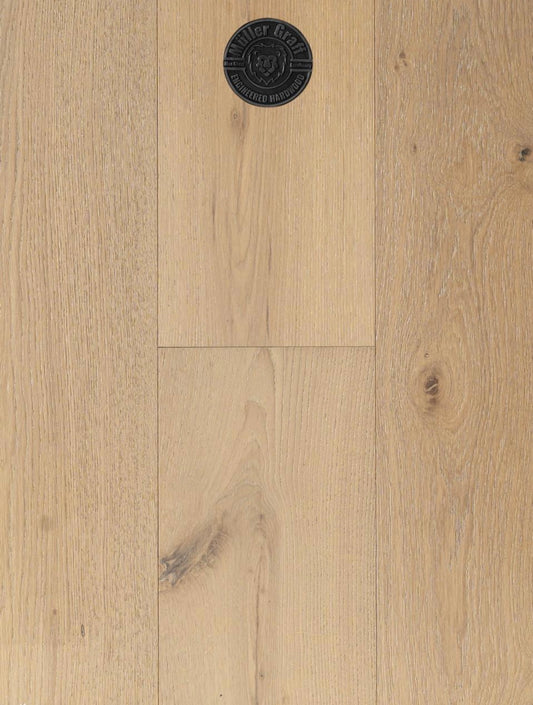
Wire-brushed engineered hardwood flooring features a genuine wood surface textured to emphasize its natural grain. During manufacturing, specialized brushes remove portions of the softer grain while leaving harder grain slightly raised. The result is a tactile, low-luster surface that can create depth and authentic wood character.
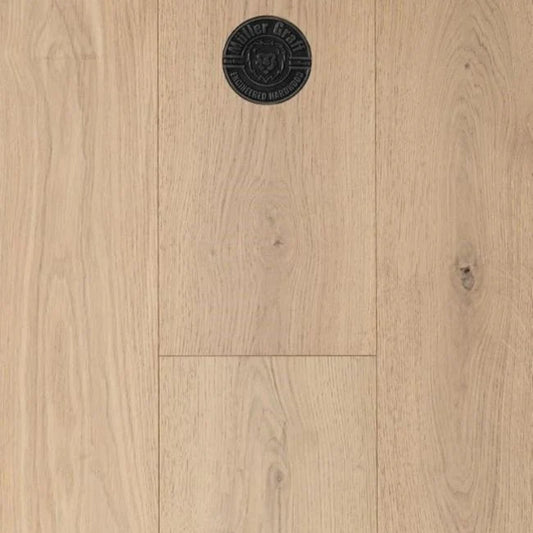
The wire-brushed effect varies significantly. Some floors have subtle grain definition, while others feature pronounced texture, knots, filled splits, and rustic movement. Buyers should examine physical samples because photographs rarely capture the exact surface depth.
Only engineered-hardwood products with a confirmed wire-brushed treatment should qualify for this collection.
How Is Wire-Brushed Hardwood Made?
The manufacturer brushes the unfinished wood surface before applying stain and protective finish. The process follows the natural grain rather than adding a uniform mechanical pattern.
The complete sequence may include:
- Preparing the hardwood wear layer.
- Brushing the softer grain.
- Repairing or filling permitted natural features.
- Applying stain or reactive color.
- Adding protective finish.
- Curing the finish.
- Milling the edges.
- Inspecting the completed plank.
Specific processes differ by manufacturer and product.
Benefits of a Wire-Brushed Surface
Depending on the flooring, wire brushing may provide:
- Greater visible grain depth
- Authentic tactile character
- Matte or low-luster appearance
- Reduced visibility of minor surface marks
- Natural variation
- Strong compatibility with wide planks
- Rustic or transitional styling
- Enhanced stain dimension
- Less reflective surface appearance
- Distinct plank-to-plank character
Wire brushing is a design treatment rather than a guarantee of durability.
Wire-Brushed Flooring for Active Homes
Textured surfaces may disguise some minor scratches, dust, or small indentations more effectively than glossy smooth wood. This can make wire-brushed engineered hardwood appealing for living rooms, dining rooms, hallways, and family areas.
Performance still depends on:
- Wood species
- Finish quality
- Wear-layer thickness
- Household traffic
- Pet nails
- Furniture protection
- Entryway grit
- Cleaning practices
- Indoor humidity
- Installation quality
No real-wood surface is scratch-proof.
Wire-Brushed Hardwood for Pets
Pet owners may appreciate a textured, matte floor because ordinary surface marks can blend into the grain more naturally than they would on a high-gloss finish.
Helpful characteristics may include:
- Durable factory finish
- Medium-tone color
- Moderate shade variation
- Pronounced grain
- Suitable wood hardness
- Substantial wear layer
- Strong core construction
- Appropriate residential warranty
Keep pet nails trimmed, remove grit, wipe accidents promptly, and use compatible mats beneath food and water bowls.
Texture Depth and Cleaning
Deeper texture creates stronger character but may trap fine dust in the low grain. Cleaning methods should follow the manufacturer’s recommendations.
Routine maintenance may include:
- Vacuuming with a hardwood-safe head
- Using a microfiber dust mop
- Removing grit from bevels
- Applying approved cleaner lightly
- Wiping spills promptly
- Cleaning along the grain
- Avoiding steam
- Avoiding excessive water
- Avoiding wax unless approved
A stiff or abrasive brush may damage the finish.
Matte and Low-Luster Appearance
Wire brushing is frequently paired with matte finishes. Lower sheen can soften reflections and allow grain, knots, and variation to remain visually prominent.
Matte surfaces may:
- Reduce visible glare
- Complement natural colors
- Disguise small scuffs
- Create contemporary styling
- Support rustic designs
- Show fewer obvious footprints than high gloss
Sheen level should be confirmed because “matte,” “ultra-matte,” and “low luster” are not standardized universally.
Wire-Brushed Versus Hand-Scraped Hardwood
Wire brushing follows the grain and creates fine linear texture. Hand scraping generally produces broader undulations and tool-mark effects.
Wire-brushed flooring often appears:
- More refined
- Grain focused
- Naturally textured
- Suitable for contemporary rooms
- Compatible with European oak
Hand-scraped flooring often appears:
- More rustic
- Heavily distressed
- Uneven by design
- Traditional or farmhouse inspired
- Character rich
Some products combine multiple treatments.
Wire-Brushed European Oak
European oak is commonly wire brushed because its open grain responds well to texturing. Natural knots and mineral features can create additional character across wide boards.
Popular visual directions include:
- Pale natural oak
- Whitewashed oak
- Honey oak
- Warm beige
- Smoked brown
- Neutral greige
- Weathered tan
- Deep rustic brown
Wood grade strongly influences the final appearance.
Wear-Layer Thickness
Wire-brushed engineered hardwood may use 2mm, 3mm, 4mm, or other real-wood layer thicknesses. Texture depth should be considered when assessing future refinishing.
Aggressive sanding may remove the brushed effect. If refinishing becomes necessary, ask whether the surface can be recoated, lightly abraded, or professionally retextured.
Installation Considerations
Wire-brushed flooring follows the same substrate and moisture requirements as other engineered hardwood. Depending on the product, installation may be:
- Glue down
- Nail down
- Staple down
- Floating
- Manufacturer-approved combination method
The substrate must be flat, dry, clean, stable, and approved. Concrete and wood moisture should be measured before installation.
Choosing a Color and Grade
Texture interacts with stain and grade. Dark stain may settle into grain valleys, while pale finishes may create softer contrast.
Before purchasing:
- Inspect several samples
- Review the grade description
- Examine knot size
- Check filled features
- Evaluate shade variation
- Compare under daytime light
- Compare under evening light
- Coordinate with cabinets
- Review bevel color
- Understand natural aging
One small sample cannot represent every possible plank.
Frequently Asked Questions
What is wire-brushed engineered hardwood?
It is engineered flooring with a genuine wood surface brushed to remove softer grain and emphasize natural texture.
Does wire brushing make hardwood more durable?
It does not change the wood’s fundamental hardness, but its texture may help disguise certain minor marks.
Is wire-brushed flooring difficult to clean?
Lightly textured floors are manageable with regular vacuuming and approved cleaning. Deep textures may require more attention.
Is wire-brushed hardwood good for dogs?
It may visually disguise minor marks, but dogs can still scratch real wood.
Can wire-brushed hardwood be refinished?
Possibly, depending on wear-layer thickness and construction. Sanding may reduce or remove the texture.
Is wire-brushed flooring rough?
Texture ranges from subtle to pronounced. Physical samples provide the best comparison.
Does wire-brushed hardwood collect dust?
Deep grain can hold fine particles, making regular vacuuming important.
Is wire-brushed engineered hardwood waterproof?
No. It contains genuine wood and must be protected from standing water.
What species works well with wire brushing?
European oak and white oak are common because their grain responds well to the process.
Is wire-brushed the same as hand-scraped?
No. Wire brushing follows the grain, while hand scraping creates broader distressed contours.