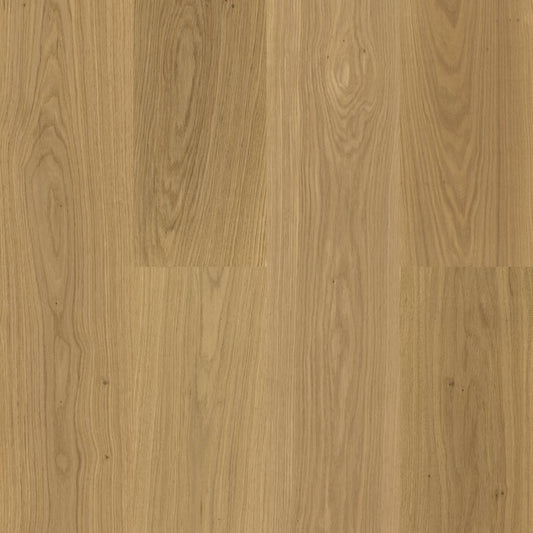
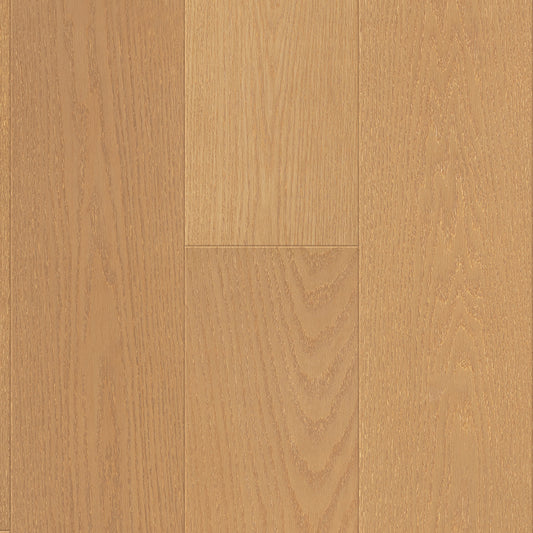
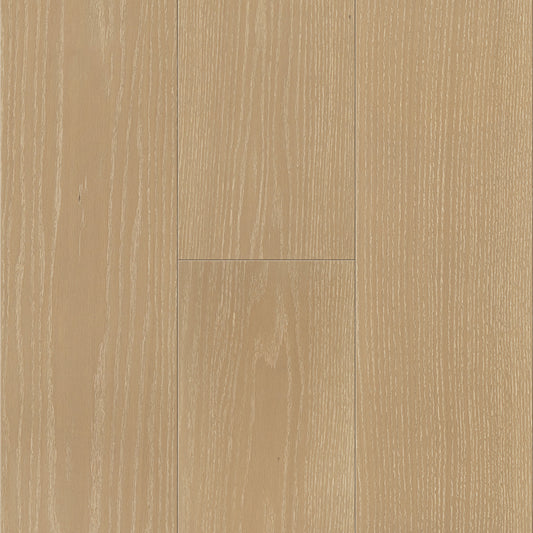
5/8-Inch Engineered Hardwood Flooring
Five-eighths-inch engineered hardwood flooring combines a genuine hardwood surface with a layered supporting core and a verified total plank thickness of approximately 0.625 inches.
The measurement describes the complete plank rather than the hardwood veneer alone. Veneer depth, core construction, finish, dimensions, and installation approval must be evaluated separately.
Only genuine engineered hardwood with a documented 5/8-inch total profile should qualify. Solid hardwood, laminate, bamboo, and wood-look vinyl should remain in separate collections.
Understanding 5/8-Inch Construction
A 5/8-inch engineered hardwood plank may contain:
- Factory-applied protective finish
- Genuine hardwood veneer
- Cross-layered plywood core
- Hardwood-composite core
- Stabilizing backing layer
- Tongue-and-groove edges
- Manufacturer-specific balancing layers
Two floors with the same total thickness can have significantly different veneers, cores, finishes, dimensions, and installation requirements.
Benefits of 5/8-Inch Engineered Hardwood
Depending on the complete product, potential benefits may include:
- Genuine hardwood appearance
- Substantial layered construction
- Wide-plank availability
- Long-plank availability
- Multiple installation methods
- Factory-applied finishes
- Professional refinishing potential
- Compatibility with selected concrete installations
- Compatibility with selected wood subfloors
- Residential and light-commercial options
Thickness alone does not determine quality or suitability.
5/8 Inch Versus 1/2 Inch
A 5/8-inch plank contains approximately 1/8 inch more total material than a 1/2-inch plank.
That additional material may be distributed across:
- Hardwood veneer
- Structural core
- Backing layer
- Edge profile
- Manufacturer-specific components
Compare the actual veneer, number and quality of core layers, plank dimensions, finish, installation method, grade-level approval, and moisture requirements.
A properly specified 1/2-inch product may be more appropriate than an unsuitable 5/8-inch floor.
5/8 Inch Versus 3/4 Inch
Three-quarter-inch flooring is approximately 1/8 inch thicker than 5/8-inch flooring.
The difference may affect:
- Door clearance
- Stair nosing
- Transition profiles
- Adjoining tile
- Existing hardwood
- Appliance clearance
- Fastener selection
- Finished-floor height
- Adhesive requirements
- Underlayment selection
The complete flooring assembly should be measured before ordering.
Veneer Thickness
Selected 5/8-inch products may use veneers such as:
- 2mm
- 3mm
- 4mm
- Manufacturer-specific thicknesses
A thicker veneer may provide additional professional refinishing potential, but sanding is also limited by bevel depth, texture, existing damage, and the amount of wood above the tongue.
Do not estimate veneer thickness from the total plank profile.
Installation Methods
Depending on the manufacturer, approved methods may include:
- Full-spread glue-down
- Nail-down
- Staple-down
- Glue-assisted nail-down
- Floating installation
A substantial profile does not automatically mean every installation method is approved.
Confirm the edge construction, subfloor, grade level, plank width, fastener requirements, adhesive requirements, and expansion instructions.
Concrete Installation
Selected 5/8-inch engineered hardwood can be installed over properly prepared concrete.
The installation may require:
- Concrete moisture testing
- Flatness correction
- Crack evaluation
- Approved adhesive
- Vapor protection
- Surface preparation
- Grade-level approval
- Interior climate control
- Radiant-heat approval where applicable
- Professional installation
Engineered construction does not eliminate slab moisture risk.
Finished-Floor Height
The final assembly may include more than the plank itself. Adhesive, acoustic materials, vapor-control products, and underlayment can add height.
Measure around:
- Doors
- Cabinets
- Appliances
- Stair risers
- Floor vents
- Fireplaces
- Baseboards
- Adjoining floors
- Exterior thresholds
- Transition locations
Transitions should be selected before installation begins.
Frequently Asked Questions
What does 5/8-inch engineered hardwood mean?
It means the entire plank is approximately 0.625 inches thick.
Is the hardwood veneer 5/8 inch thick?
No. The veneer is only one component of the complete plank.
Is 5/8-inch engineered hardwood considered thick?
It is a substantial engineered profile positioned between common 1/2-inch and 3/4-inch products.
Can it be refinished?
Selected products may be professionally refinished, depending primarily on veneer depth and manufacturer guidance.
Can it be installed over concrete?
Selected products may be glued or floated over prepared concrete when expressly approved.
Can it be nailed down?
Some 5/8-inch products can be nailed or stapled over compatible wood subfloors.
Does it require underlayment?
Floating systems may require approved underlayment. Glue-down and nail-down installations have different requirements.
Is it waterproof?
No. Genuine hardwood requires moisture management and prompt spill cleanup.
Is 5/8 inch better than 1/2 inch?
Not automatically. Veneer, core, finish, dimensions, installation suitability, and manufacturing quality also matter.
What should buyers compare?
Compare veneer thickness, core construction, species, plank dimensions, finish, installation method, moisture limits, and grade-level approval.