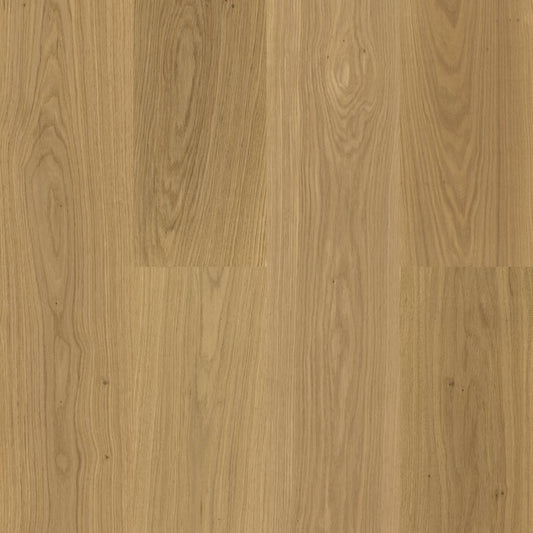
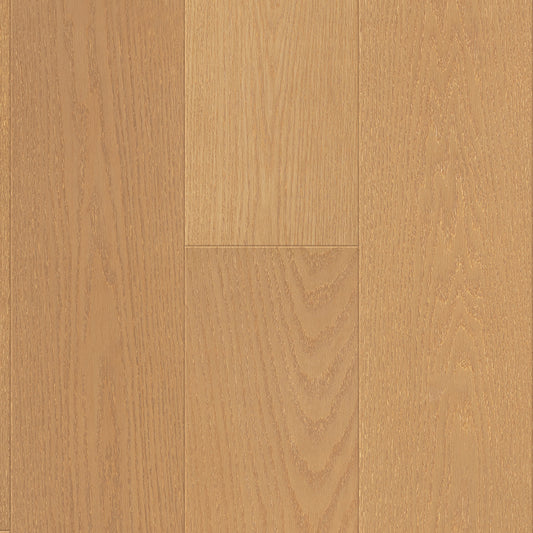
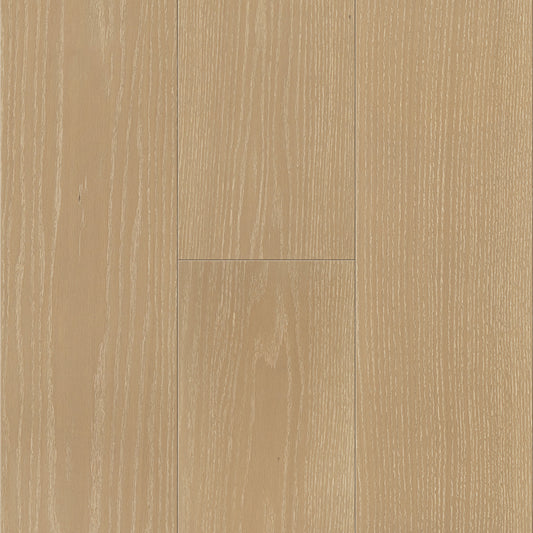
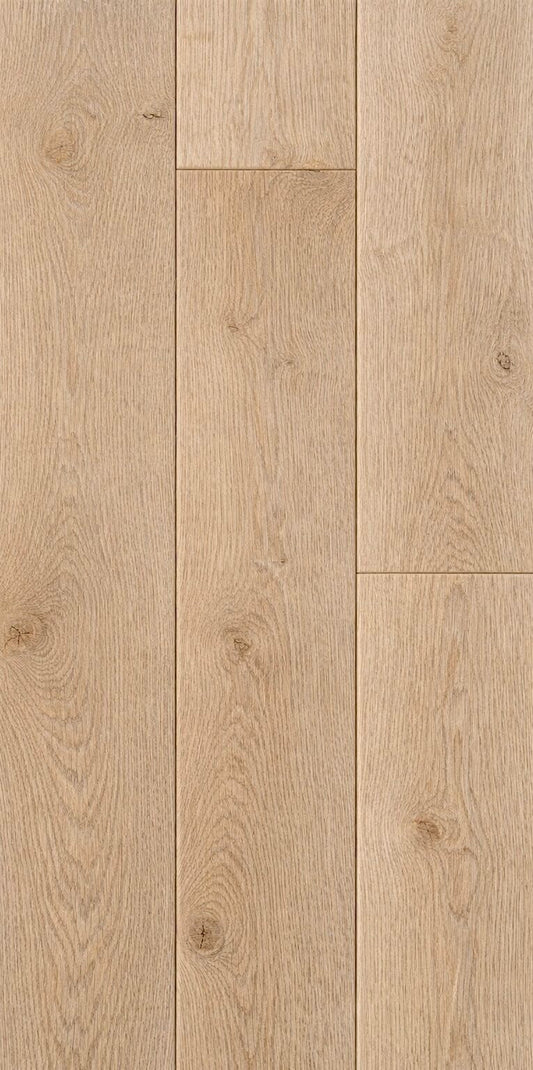
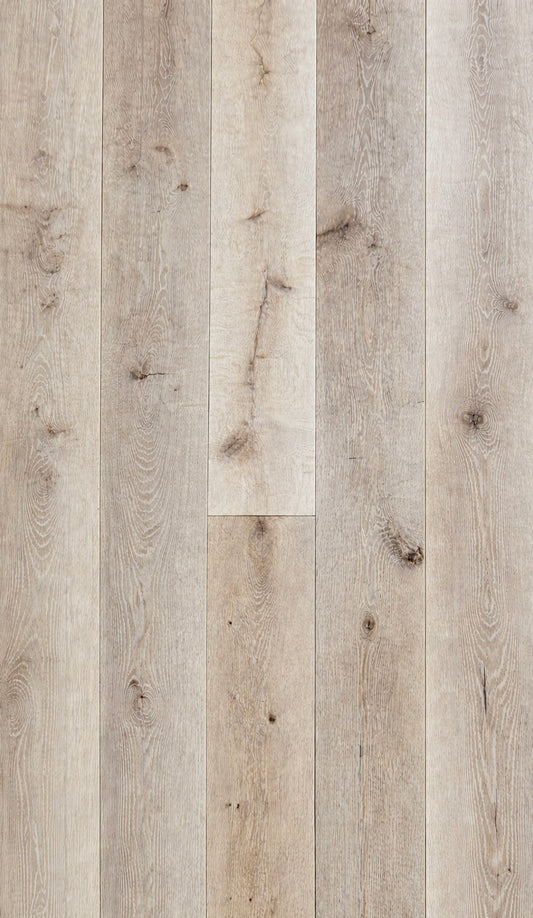
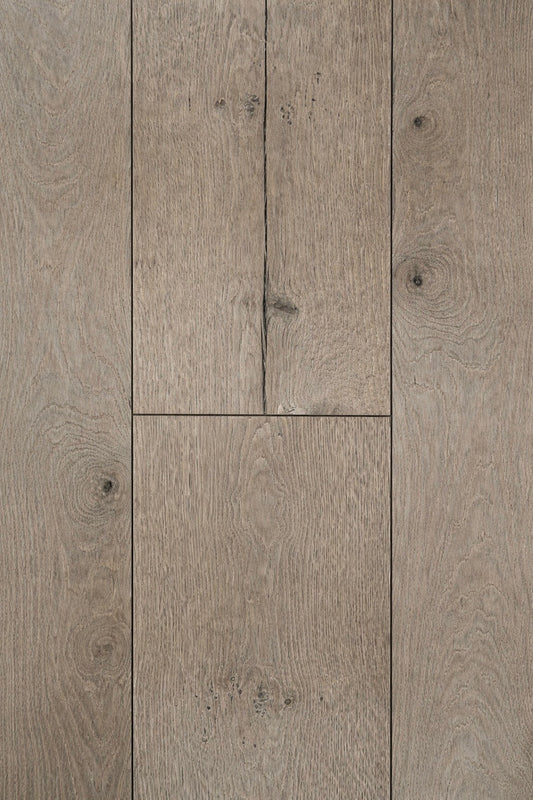
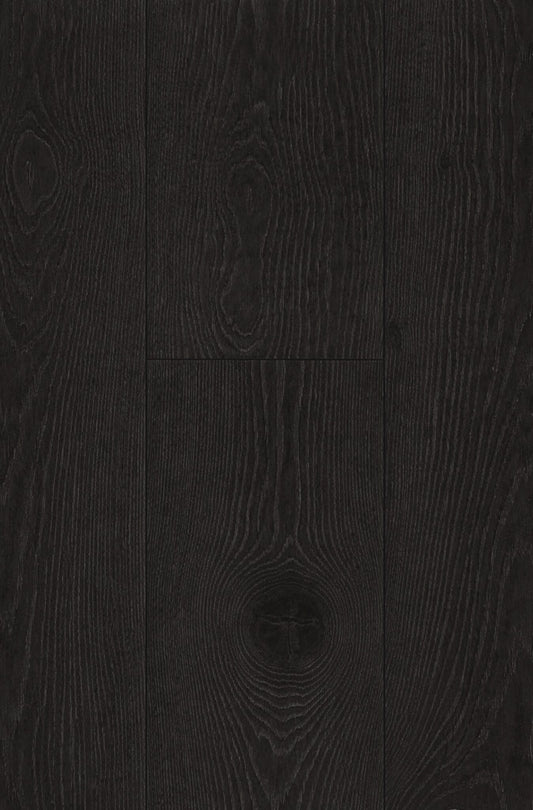
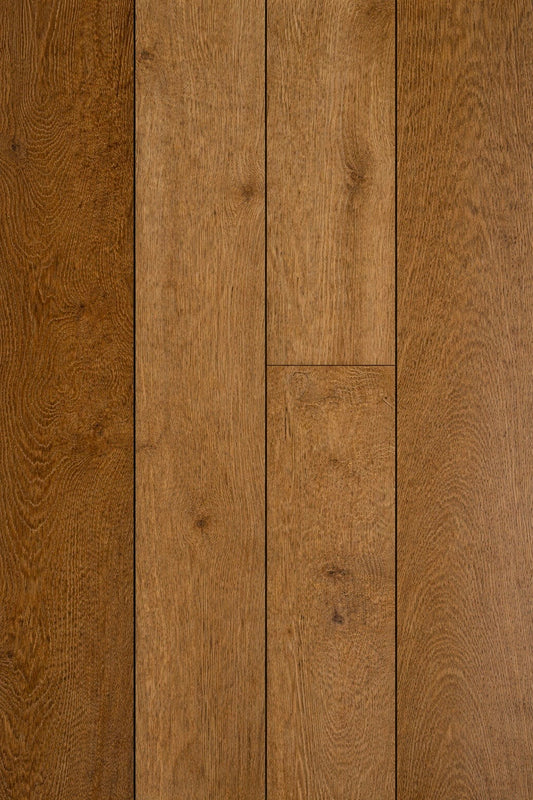
4mm Wear Layer Engineered Hardwood Flooring
Four-millimeter wear layer engineered hardwood flooring combines a substantial real-wood surface with a stable multilayer core. The 4mm measurement refers to the thickness of the genuine hardwood above the core, not the complete flooring plank. This construction appeals to homeowners, builders, and designers seeking authentic hardwood character with greater dimensional stability than many traditional solid-wood installations.
A 4mm wear layer is considered substantial within the engineered-hardwood category. Depending on the product’s construction, finish, installation, and manufacturer guidance, it may provide future refinishing potential that thinner veneers cannot offer. Refinishing should never be guaranteed from wear-layer thickness alone because the usable wood above the tongue-and-groove profile, surface texture, and previous sanding history also matter.
Only products with a manufacturer-confirmed 4mm real-wood surface should be included in this collection.
What Is a 4mm Engineered-Hardwood Wear Layer?
Engineered hardwood consists of a genuine hardwood top layer bonded to a supporting core. The core may use cross-laminated plywood, hardwood layers, or another manufacturer-specified engineered structure.
A qualifying plank may include:
- Factory-applied protective finish
- Genuine 4mm hardwood wear layer
- Adhesive bonding system
- Multilayer plywood or engineered core
- Stabilizing bottom layer
- Tongue-and-groove or locking edge profile
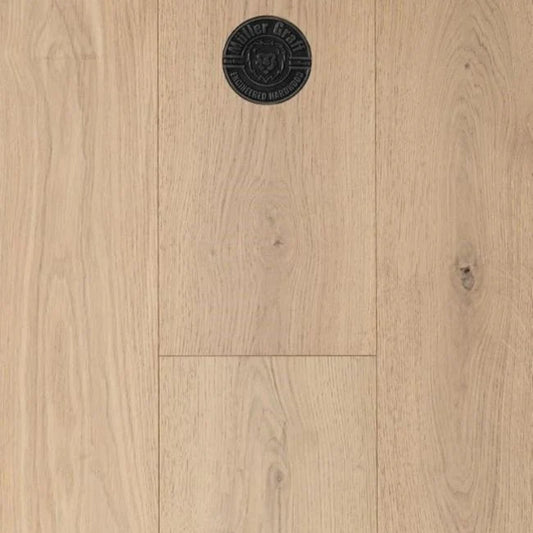
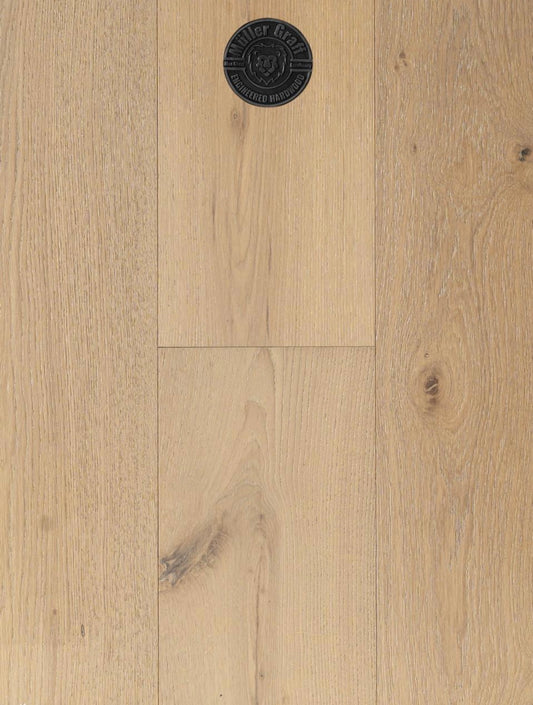
The wear layer supplies the visible grain, color, knots, mineral streaks, and natural variation. Because it is real wood, every plank may differ.
Benefits of a 4mm Wear Layer
Depending on the complete product, a 4mm hardwood surface may offer:
- Authentic real-wood appearance
- Substantial surface construction
- Potential for professional refinishing
- Long-term residential value
- Natural variation between boards
- Wire-brushed or smooth texture options
- Wide and extra-long plank formats
- Greater stability than many solid floors
- Glue-down, nail-down, staple-down, or floating options where approved
- Premium European oak and domestic species choices
The wear layer should not be evaluated independently from the core, finish, milling, moisture content, and installation system.
Can 4mm Engineered Hardwood Be Refinished?
Selected 4mm engineered-hardwood products may be refinished, but the number of possible refinishing cycles cannot be determined from the 4mm measurement alone.
Factors include:
- Wood remaining above the tongue
- Depth of existing texture
- Factory-finish thickness
- Previous sanding
- Board flatness
- Damage depth
- Species
- Refinishing method
- Installer experience
- Manufacturer restrictions
Traditional drum sanding removes more material than professional screening, recoating, or specialized low-abrasion refinishing. Obtain guidance from the flooring manufacturer and an experienced hardwood refinisher before sanding.
Four-Millimeter Versus Three-Millimeter Wear Layers
Both 3mm and 4mm engineered hardwood can provide genuine wood appearance and long service when properly maintained. A 4mm layer supplies an additional millimeter of real wood, but that difference does not automatically make every 4mm floor better.
Also compare:
- Core quality
- Number and orientation of core layers
- Finish system
- Milling accuracy
- Species
- Surface grade
- Plank dimensions
- Installation method
- Moisture requirements
- Manufacturer reputation
A well-built 3mm floor may outperform a poorly manufactured 4mm product.
Wood Species and Natural Character
Many 4mm products use European oak because its grain, stability, and finishing versatility work well with wide planks. Other species may include white oak, hickory, maple, walnut, or specialty hardwoods.
Species influences:
- Grain pattern
- Natural hardness
- Color range
- Knot frequency
- Stain response
- Texture
- Shade variation
- Overall design character
Natural wood changes color as it ages and reacts to light. Samples represent the general appearance rather than every board in the shipment.
Wide and Long Plank Construction
A substantial wear layer is frequently paired with premium plank dimensions. Wide boards display more grain, while long planks reduce end-joint frequency and create extended sightlines.
Before buying, confirm:
- Exact plank width
- Maximum and average length
- Fixed or random lengths
- Carton composition
- Short-board percentage
- Square feet per carton
- Installation pattern
- Required waste allowance
Descriptions such as “up to 86 inches” do not necessarily mean every board is that length.
Installation Options
Engineered hardwood may support glue-down, nail-down, staple-down, or floating installation, but approval depends on the exact product.
Glue-down installation may suit:
- Prepared concrete
- Certain plywood substrates
- Wide-plank projects
- Height-sensitive transitions
- Professional installations
Nail-down or staple-down installation may suit:
- Approved wood subfloors
- Traditional hardwood projects
- Installations requiring mechanical fastening
Floating installation is only appropriate when the milling and manufacturer instructions permit it.
Subfloor and Moisture Requirements
Engineered construction improves dimensional stability, but it does not make hardwood waterproof. The substrate must be flat, dry, clean, and structurally sound.
Before installation:
- Test concrete moisture
- Test wood-subfloor moisture
- Correct active leaks
- Confirm flatness
- Repair loose panels
- Use approved adhesives
- Follow vapor-control instructions
- Maintain required indoor conditions
- Complete wet construction first
- Follow acclimation guidance
Moisture testing should be documented before the floor is installed.
Factory Finish and Surface Protection
The finish protects the genuine wood surface from ordinary traffic, stains, and cleaning. Common systems include UV lacquer, UV oil, aluminum-oxide-enhanced urethane, and proprietary coatings.
Compare:
- Finish type
- Gloss level
- Surface texture
- Maintenance products
- Recoating guidance
- Commercial approval
- Stain resistance
- Manufacturer care instructions
A 4mm wear layer does not make the surface scratch-proof. Entry mats, furniture protectors, and regular grit removal remain essential.
Frequently Asked Questions
What does a 4mm wear layer mean?
It means the genuine hardwood surface above the engineered core is 4 millimeters thick.
Is a 4mm wear layer good?
Yes. Four millimeters is a substantial real-wood layer when combined with a well-built core, quality finish, and accurate milling.
Can 4mm engineered hardwood be refinished?
Selected products may be refinished, but the manufacturer and a professional refinisher should confirm the appropriate method.
Is 4mm engineered hardwood better than 3mm?
It contains more real wood, but total product quality also depends on the core, finish, milling, species, and installation.
Is the complete plank only 4mm thick?
No. Four millimeters describes the hardwood wear layer. Total plank thickness is considerably greater.
Is 4mm engineered hardwood waterproof?
No. Engineered hardwood is real wood and requires moisture control.
Can it be installed over concrete?
Selected products can be glued over properly prepared and moisture-tested concrete.
Is a 4mm wear layer suitable for pets?
It may be, but finish, wood hardness, texture, nail care, and maintenance affect scratching.
Does a thicker wear layer prevent dents?
Not necessarily. Dent resistance depends on wood species, core support, furniture loads, and impact.
Should the flooring be acclimated?
Follow the exact manufacturer instructions and maintain the required site conditions before, during, and after installation.