Solid Hardwood Flooring
Solid hardwood flooring is manufactured from genuine wood, with each plank typically milled from a single piece of timber. It offers natural grain, authentic character, substantial construction, and the potential to remain part of a home for generations when correctly installed and maintained.
Unlike flooring that reproduces a wood appearance through a printed design, solid hardwood contains natural variation created by the tree itself. Grain patterns, knots, mineral streaks, color movement, and board-to-board differences make every installation unique.
What Is Solid Hardwood Flooring?
Solid hardwood planks are produced from one continuous piece of wood rather than a layered core. Products may be supplied unfinished for site finishing or factory-finished and ready for installation.
Common construction details include:
- Tongue-and-groove edges
- Nail-down or staple-down installation
- Square, beveled, or micro-beveled edges
- Smooth, wire-brushed, scraped, or distressed surfaces
- Fixed or random plank lengths
- Factory-applied protective coatings
- Unfinished surfaces for custom staining
Exact specifications vary by manufacturer and collection.
Solid Hardwood Versus Engineered Hardwood
Both categories use genuine hardwood, but their internal construction differs.
Solid hardwood consists of one piece of wood throughout the plank. Engineered hardwood uses a genuine wood veneer bonded over a layered or composite core.
Solid hardwood may offer:
- Traditional single-species construction
- Greater refinishing potential on qualifying products
- Long service life
- Authentic movement and aging
- Strong appeal in permanent residential installations
Engineered hardwood may offer:
- Greater dimensional stability
- More installation options
- Broader approval over concrete
- Better suitability for some below-grade environments
- Wider plank formats with reduced seasonal movement
Neither construction is universally better. The correct choice depends on the subfloor, location, climate, plank dimensions, installation method, and desired appearance.
Popular Hardwood Species
Solid hardwood is available in domestic and imported wood species with different grain patterns, colors, densities, and natural characteristics.
Common choices include:
- White oak
- Red oak
- Maple
- Hickory
- Walnut
- Cherry
- Birch
- Ash
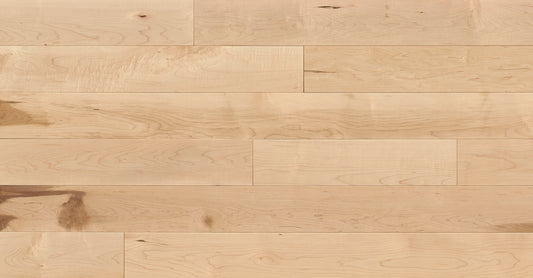
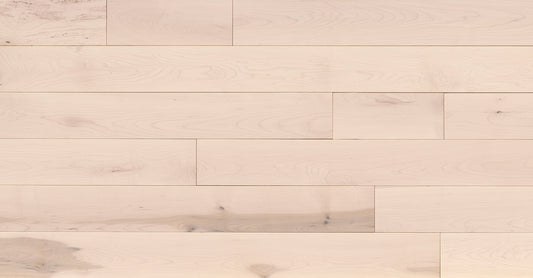
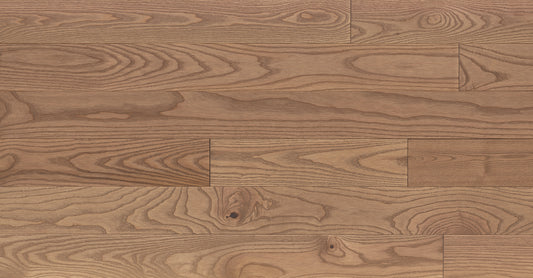
White oak is valued for its balanced grain and versatility. Red oak typically shows warmer undertones and more prominent grain. Maple has a cleaner appearance, while hickory produces stronger color contrast and character. Walnut is generally darker and softer, with a rich luxury appearance.
Wood species should not be selected by appearance alone. Compare hardness, grading, finish, maintenance requirements, and suitability for the intended room.
Hardwood Grades and Natural Character
Wood grades help describe the amount and type of natural variation permitted within a floor. Terminology differs between manufacturers, but products may be described as:
- Select
- Clear
- Natural
- Common
- Character
- Rustic
Select grades generally provide more controlled color and fewer prominent knots. Character and rustic grades may display knots, mineral streaks, filled cracks, sapwood, and greater tonal variation.
These markings are natural features rather than printing defects. Buyers seeking a uniform floor should choose a more controlled grade and inspect several samples or full boards before ordering.
Plank Width and Length
Solid hardwood is available in traditional strip widths and broader plank formats.
Narrower boards may create:
- A classic hardwood appearance
- More seams across the room
- Greater visual rhythm
- Reduced dimensional movement per individual board
Wider boards may provide:
- A more contemporary or historic-plank appearance
- Greater visibility of the natural grain
- Fewer seams
- Stronger board-to-board character
Wide solid hardwood requires careful moisture control and installation. Wider boards experience more noticeable seasonal expansion and contraction than narrower boards of the same species.
Length also affects the completed appearance. Longer average lengths create fewer end joints, while shorter or highly random lengths create a more active layout.
Prefinished Versus Unfinished Hardwood
Prefinished solid hardwood receives its stain and protective coating at the factory.
Potential advantages include:
- No on-site sanding
- Faster room completion
- Consistent factory-applied color
- Controlled curing conditions
- Published finish warranties where offered
Unfinished hardwood is installed, sanded, stained, and sealed on site.
Potential advantages include:
- Custom stain selection
- A smoother site-finished surface
- Greater control over gloss level
- Easier coordination with existing hardwood
- The ability to fill and finish joints during installation
Site finishing requires additional labor, drying time, dust control, and professional skill.
Surface Textures and Finishes
Available surface treatments may include:
- Smooth
- Wire-brushed
- Hand-scraped
- Distressed
- Saw-marked
- Reactive-stained
- Smoked
- Matte
- Satin
- Low-gloss
Smooth hardwood produces a clean, traditional surface. Wire brushing removes softer grain and emphasizes natural texture. Scraped and distressed finishes create a more aged or handcrafted appearance.
Matte and low-gloss coatings can reduce visible glare and may disguise minor dust or everyday surface marks more effectively than high-gloss finishes.
Installation Requirements
Solid hardwood is most commonly nailed or stapled to an approved wood subfloor. Some products may permit alternative methods, but the manufacturer’s instructions must be followed.
Installation planning should address:
- Subfloor type
- Subfloor flatness
- Structural integrity
- Moisture testing
- Wood acclimation
- Indoor temperature
- Relative humidity
- Expansion space
- Fastener type and spacing
- Board layout
- Waste allowance
Solid hardwood should not be installed directly over concrete or below grade unless the specific product and installation system expressly permit it.
Moisture and Seasonal Movement
Wood is hygroscopic, meaning it responds to changes in environmental moisture. It may expand when humidity rises and contract when conditions become drier.
Normal seasonal movement may produce small gaps or changes between boards. Excessive moisture variation can contribute to:
- Cupping
- Crowning
- Gapping
- Checking
- Splitting
- Buckling
- Finish damage
Maintaining stable indoor temperature and relative humidity is essential. Moisture readings should be recorded for both the flooring and subfloor before installation.
Solid Hardwood in Kitchens and Busy Homes
Selected solid hardwood products can be installed in kitchens and other active residential areas, but spills should be cleaned promptly. Wood should not be treated as waterproof.
Protective measures include:
- Using mats near exterior doors
- Placing rugs near sinks where appropriate
- Attaching felt protectors to furniture
- Keeping pet nails maintained
- Removing grit regularly
- Lifting furniture instead of dragging it
- Using manufacturer-approved cleaners
- Avoiding excessive water and steam
Natural wear may become part of the floor’s character, but preventive care helps protect the finish.
Refinishing Solid Hardwood
One of solid hardwood’s most important advantages is its potential to be sanded and refinished. The number of possible refinishing cycles depends on the plank construction, wearable wood above the tongue, installation condition, and depth of previous sanding.
Refinishing may allow a professional to:
- Remove widespread surface wear
- Repair selected stains or scratches
- Change the stain color
- Restore the protective coating
- Extend the floor’s useful life
Not every mark requires full sanding. Screening and recoating may restore some finishes with less material removal.
Frequently Asked Questions
Is solid hardwood made from real wood?
Yes. Each qualifying plank is manufactured from genuine solid wood rather than a printed wood-look surface.
What is the difference between solid and engineered hardwood?
Solid hardwood uses one piece of wood throughout. Engineered hardwood uses a genuine wood surface bonded to a layered core.
Can solid hardwood be refinished?
Many solid hardwood floors can be sanded and refinished multiple times, although the exact potential depends on plank construction and previous sanding.
Can solid hardwood be installed over concrete?
Traditional solid hardwood is generally installed over an approved wood subfloor. Direct installation over concrete should occur only when specifically permitted.
Is solid hardwood waterproof?
No. Genuine wood responds to moisture and should not be marketed as waterproof.
Does solid hardwood scratch?
Yes. Protective finishes improve resistance, but wood can still scratch, dent, or wear. Performance varies by species, coating, household activity, and maintenance.
Does hardwood need to acclimate before installation?
Acclimation requirements vary. Follow the manufacturer’s instructions and confirm that the flooring and building have reached suitable moisture conditions.
Is solid hardwood suitable for pets?
It can be, particularly when an appropriate species and finish are selected. Keeping nails trimmed, removing grit, and cleaning spills promptly will help protect the floor.