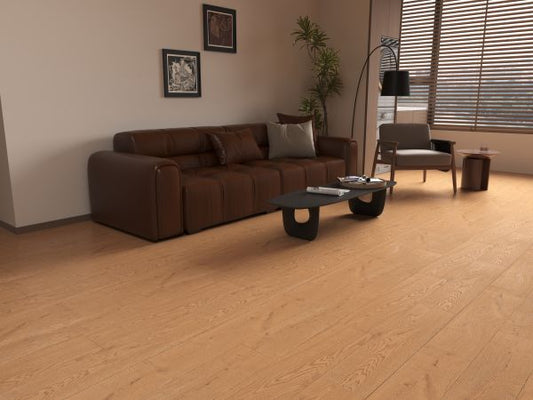
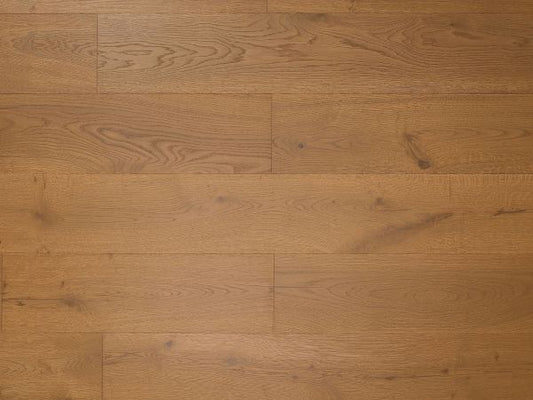
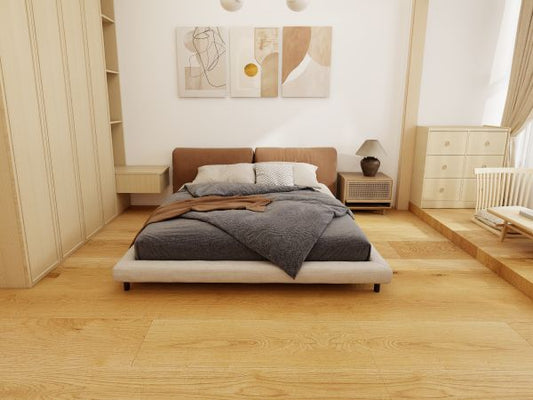
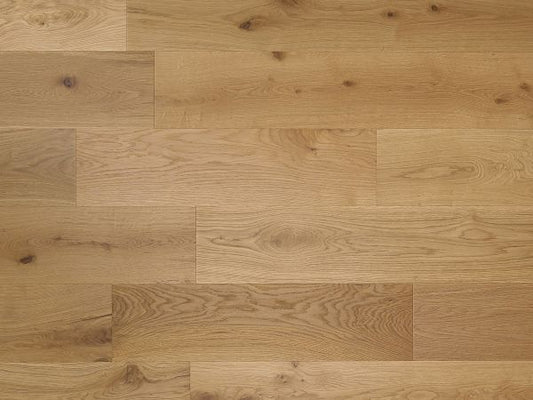
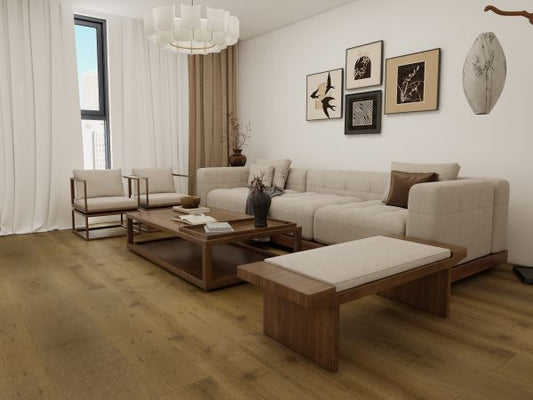
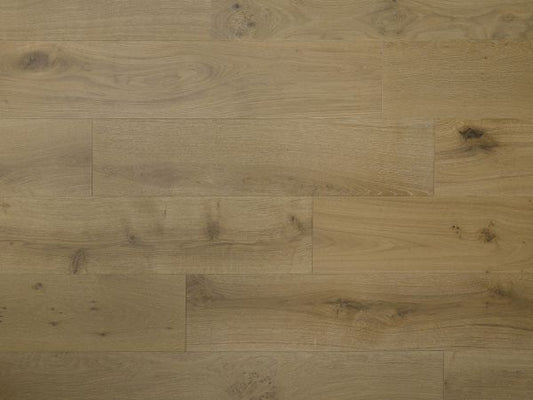
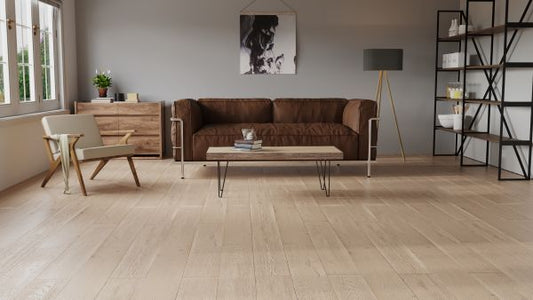
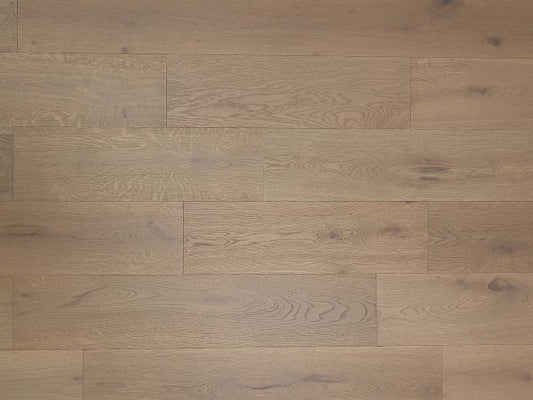
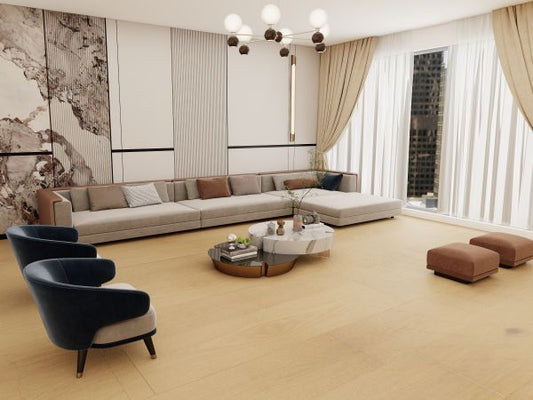
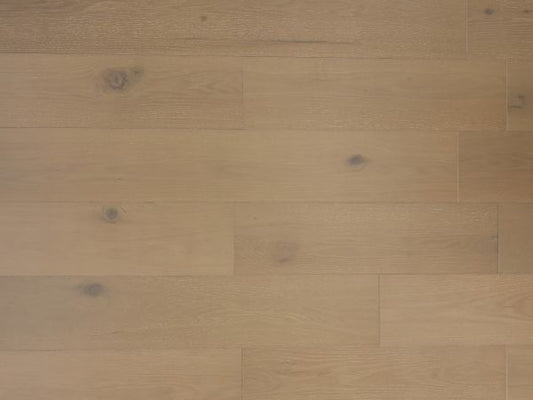
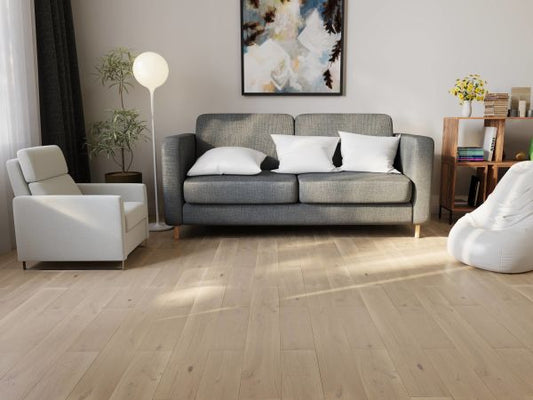
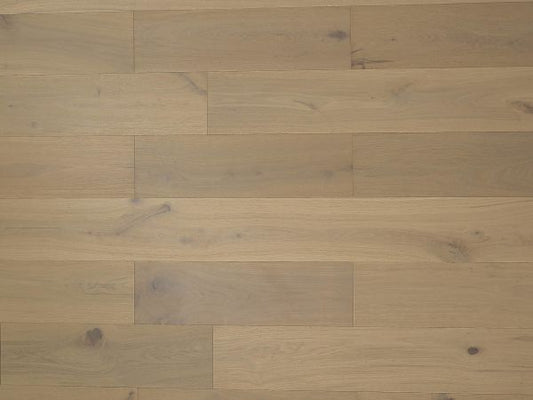
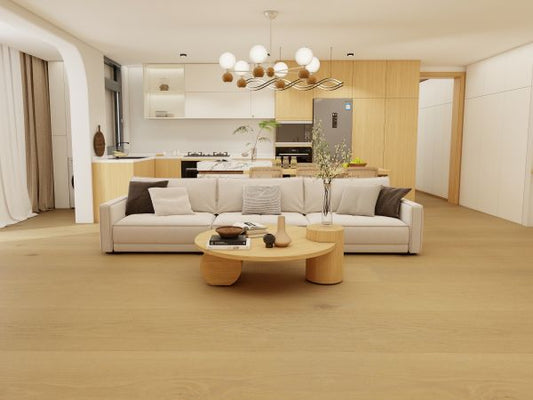
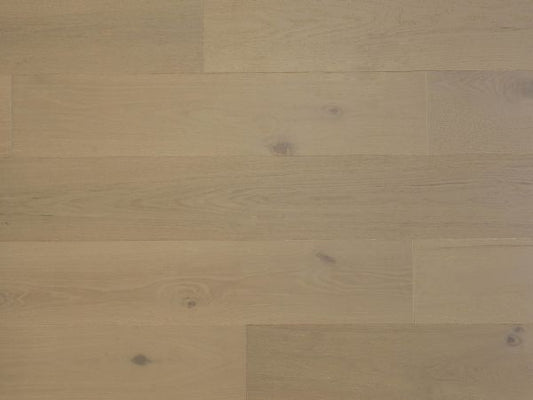
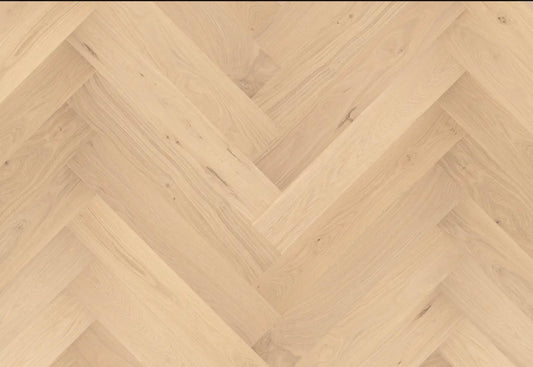
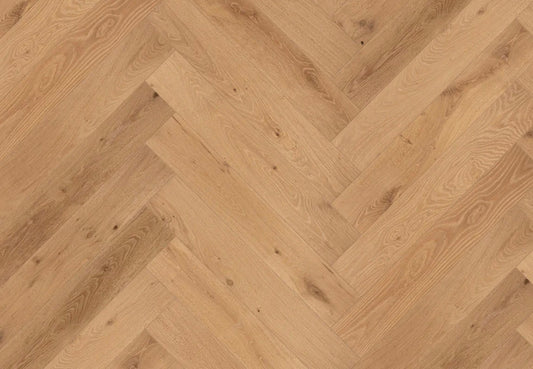
3mm Wear Layer Engineered Hardwood Flooring
Three-millimeter wear layer engineered hardwood flooring uses a genuine wood surface measuring approximately 3mm thick over an engineered supporting structure.
Qualifying products may include:
- European oak
- White oak
- Wide-plank engineered hardwood
- Long-plank engineered hardwood
- Wire-brushed flooring
- Smooth engineered hardwood
- Light and natural colors
- Warm and medium-brown finishes
- Greige and dark flooring
- Residential and commercial options
The 3mm measurement should be confirmed directly through manufacturer specifications.
What Is a 3mm Engineered-Hardwood Wear Layer?
The wear layer, also called the veneer or top layer, is the genuine hardwood surface above the engineered core.
In a product with a 3mm veneer, the visible hardwood portion is approximately three millimeters thick before accounting for any manufacturer-specific construction details.
The veneer provides:
- Genuine wood grain
- Natural color variation
- Surface texture
- Species-specific character
- The visible flooring finish
- Potential restoration options where approved
A 3mm veneer should not be confused with a 3 mil vinyl wear layer. Millimeters and mils are different measurements.
Is a 3mm Wear Layer Good for Engineered Hardwood?
A 3mm veneer can provide a substantial genuine wood surface for residential flooring. However, veneer thickness is only one component of quality.
Buyers should also compare:
- Core construction
- Total thickness
- Finish durability
- Milling precision
- Edge profile
- Plank dimensions
- Installation method
- Warranty coverage
- Manufacturer reputation
- Environmental suitability
A thick veneer cannot compensate for poor manufacturing or improper installation.
Can 3mm Engineered Hardwood Be Refinished?
Some 3mm veneer products may support professional sanding or refinishing, but this should never be guaranteed without product-specific manufacturer guidance.
Refinishing potential depends on:
- Usable wood above the tongue or joint
- Factory-finish thickness
- Surface texture
- Previous sanding
- Bevel depth
- Floor flatness
- Condition of the wood
- Equipment and contractor experience
Less aggressive restoration methods may be available when full sanding is unsuitable.
What Is the Difference Between a Veneer and Wear Layer?
In engineered hardwood, the visible genuine wood surface may be described as the veneer, top layer, lamella, or wear layer.
These terms often refer to the same general component, but manufacturers may measure or describe construction differently.
The product documentation should confirm:
- Nominal veneer thickness
- Wood species
- Finish system
- Total floor thickness
- Core composition
- Refinishing guidance
In vinyl flooring, “wear layer” refers to a transparent protective layer rather than genuine wood.
3mm Versus 2mm Engineered-Hardwood Veneer
A 3mm veneer contains more genuine hardwood thickness than a comparable 2mm veneer. This may provide greater restoration potential, depending on the product’s complete construction.
A 2mm veneer may still offer suitable residential performance when paired with:
- A durable factory finish
- A stable core
- Accurate milling
- Correct installation
- Appropriate care
- Strong warranty coverage
The best value depends on the project rather than veneer thickness alone.
3mm Versus 4mm Engineered-Hardwood Veneer
A 4mm veneer provides additional hardwood thickness, which may appeal to buyers prioritizing potential future refinishing.
However, a thicker veneer may also increase product cost. Buyers should determine whether the additional thickness provides meaningful value for their expected use.
Compare:
- Purchase price
- Finish quality
- Core stability
- Warranty
- Installation cost
- Expected traffic
- Maintenance plans
- Long-term ownership
A 3mm product can still occupy a premium position when the complete construction is strong.
What Species Are Available With a 3mm Veneer?
Three-millimeter engineered-hardwood products may be available with surfaces including:
- European oak
- White oak
- Walnut
- Hickory
- Maple
- Other manufacturer-confirmed hardwood species
Oak is especially common because it supports a broad range of colors, textures, grades, and plank dimensions.
Is 3mm Engineered Hardwood Good for Busy Homes?
It may suit active residential spaces when the surface finish, construction, warranty, and installation support the expected traffic.
Busy households should consider:
- Factory-applied finish
- Matte or low-gloss appearance
- Wire-brushed texture
- Color variation
- Pet activity
- Furniture protection
- Grit control
- Spill management
- Approved cleaning methods
Veneer thickness does not make the floor scratch-proof or waterproof.
Can 3mm Engineered Hardwood Go Over Concrete?
Qualifying products may support glue-down or floating installation over properly prepared concrete.
The manufacturer should confirm:
- Concrete-subfloor approval
- Grade-level approval
- Moisture limits
- Adhesive requirements
- Vapor protection
- Underlayment compatibility
- Acclimation procedure
- Environmental requirements
Subfloor preparation remains essential regardless of veneer thickness.
How Should 3mm Engineered Hardwood Be Maintained?
Routine care may include:
- Removing abrasive grit
- Cleaning spills promptly
- Using approved hardwood cleaner
- Avoiding steam mops
- Avoiding excessive water
- Protecting furniture legs
- Using entrance mats
- Maintaining appropriate humidity
- Following warranty instructions
A professional should evaluate the floor before recoating, screening, or sanding.
Frequently Asked Questions
Is a 3mm wear layer thick for engineered hardwood?
It is a substantial veneer specification, although thicker and thinner engineered-hardwood products are available.
How many times can a 3mm veneer be refinished?
There is no universal number. Refinishing depends on usable wood thickness, construction, surface condition, and manufacturer guidance.
Is 3mm the same as 3 mil?
No. Three millimeters is far thicker than three mils. The term mil is commonly used for vinyl wear layers.
Does a thicker veneer make engineered hardwood more durable?
It may increase restoration potential, but surface durability also depends heavily on the finish and maintenance.
Is 3mm engineered hardwood real wood?
Yes. Qualifying products use a genuine hardwood surface approximately 3mm thick.
Can 3mm engineered hardwood be installed in kitchens?
It may be possible when the manufacturer approves the product for kitchen use. Moisture precautions still apply.
Can 3mm engineered hardwood be floated?
Some products support floating installation, while others are designed for glue-down or fastened methods.
Is 3mm engineered hardwood waterproof?
No waterproof claim should be made unless the manufacturer explicitly confirms it for the selected product.
Should I choose 3mm or 4mm engineered hardwood?
The choice should consider price, finish, core construction, warranty, expected use, and long-term restoration plans.
Browse the products above to compare 3mm wear layer engineered hardwood flooring by species, color, total thickness, plank dimensions, finish, installation method, and warranty.