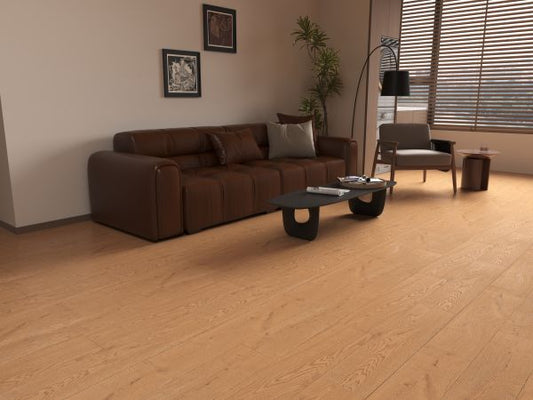
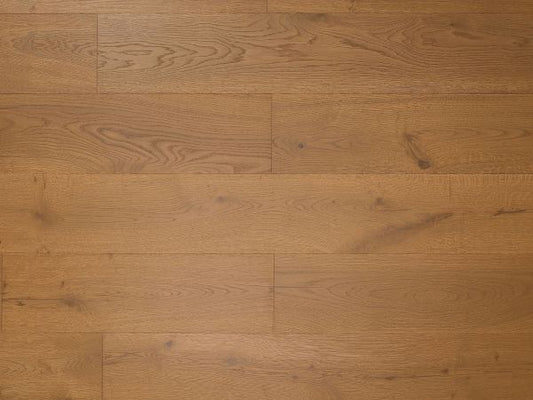
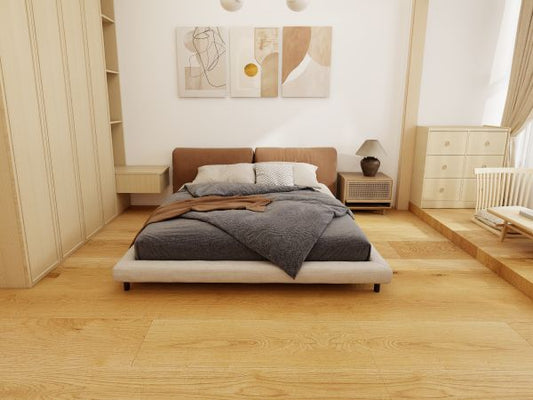
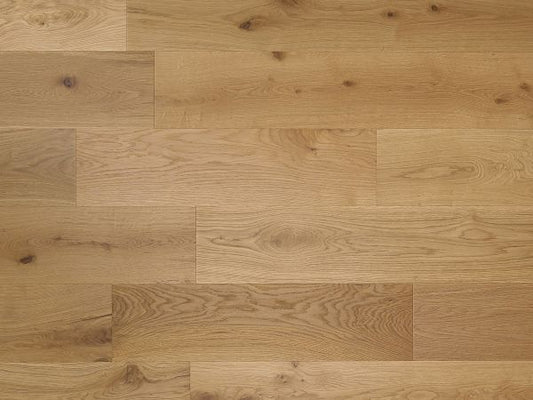
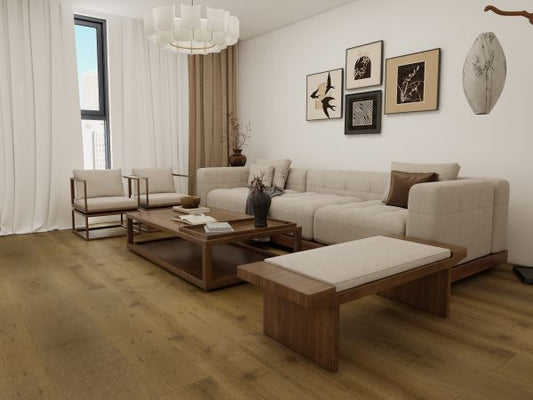
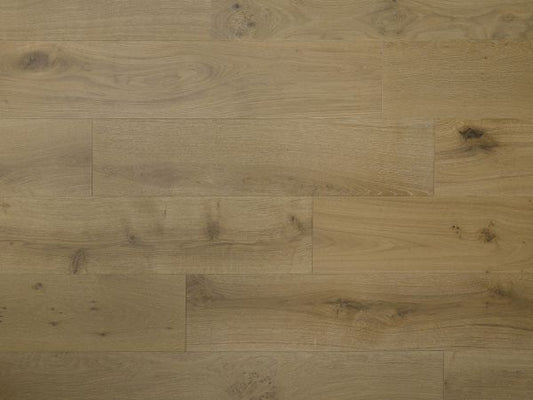
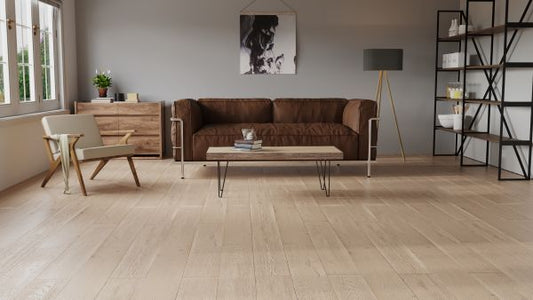
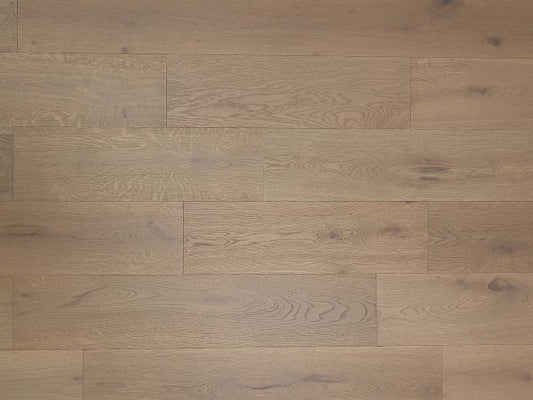
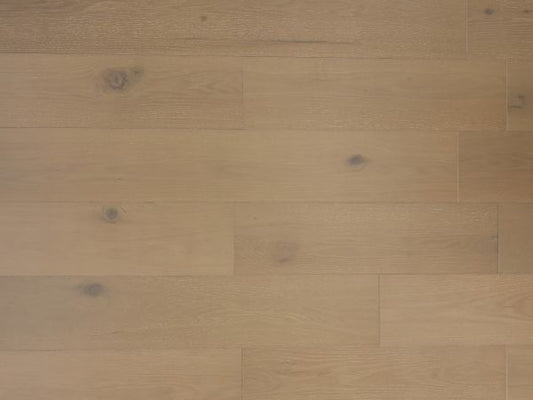
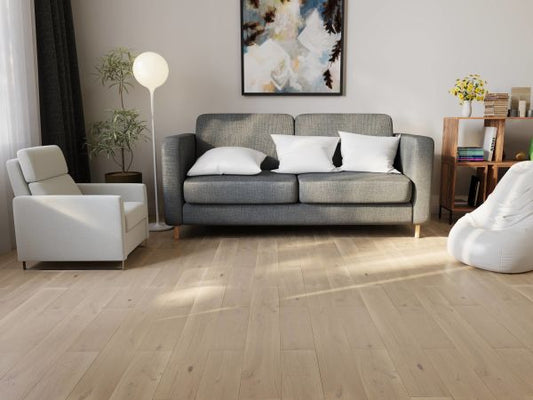
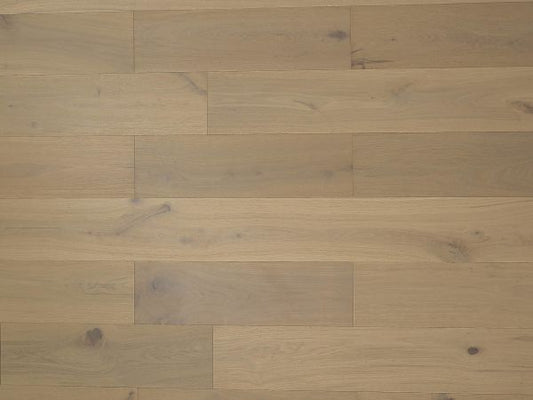
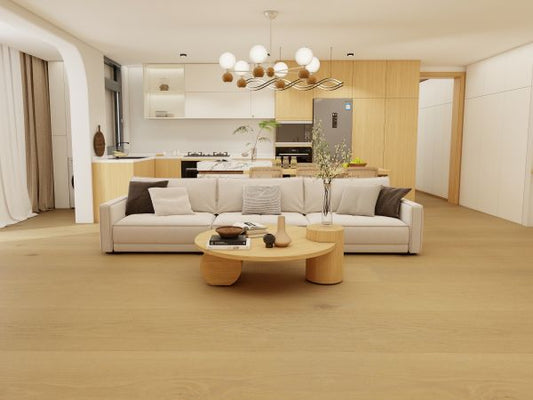
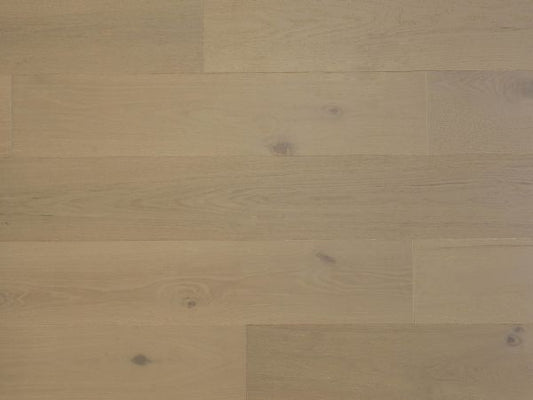
3mm Veneer Engineered Hardwood Flooring
Three-millimeter veneer engineered hardwood flooring combines a genuine wood surface approximately 3mm thick with a stable supporting core.
The 3mm measurement applies only to the real hardwood veneer, not the complete plank. Total thickness may vary considerably between products.
Only flooring with a manufacturer-confirmed 3mm hardwood veneer should qualify. Products described simply as engineered hardwood without a documented veneer measurement should not be assumed to meet this specification.
Why Veneer Thickness Matters
The veneer is the genuine hardwood layer visible after installation. It determines how much real wood exists above the engineered core.
A verified 3mm veneer may provide:
- Genuine hardwood grain
- Natural board variation
- Substantial real-wood construction
- Professional refinishing potential
- Factory-applied finish options
- Wide-plank availability
- Long-plank availability
- Multiple wood species
- Multiple surface textures
- Long-term residential value
Veneer thickness alone does not establish overall flooring quality.
3mm Veneer Versus 2mm Veneer
A 3mm veneer contains approximately 1mm more genuine hardwood than a 2mm veneer. This may provide greater flexibility for professional repair, screening, recoating, or refinishing.
The complete products should still be compared for:
- Core construction
- Total thickness
- Finish durability
- Surface texture
- Bevel depth
- Plank dimensions
- Installation method
- Moisture requirements
- Warranty coverage
- Manufacturing quality
A well-constructed 2mm product may outperform a poorly matched 3mm product in a particular installation.
Can a 3mm Veneer Be Refinished?
Selected 3mm veneer floors may be professionally refinished. However, the number and type of refinishing procedures depend on more than the published veneer measurement.
Important factors include:
- Wood remaining above the tongue
- Existing surface damage
- Texture depth
- Bevel construction
- Finish chemistry
- Installation method
- Sanding equipment
- Installer experience
- Manufacturer restrictions
- Previous refinishing
Do not promise a specific number of sandings without written manufacturer guidance and an onsite professional evaluation.
Veneer Versus Wear Layer
Manufacturers may refer to the genuine wood surface as a veneer, wear layer, lamella, or top layer.
For engineered hardwood, this layer is real wood. It should not be confused with the transparent wear layer measured in mils on vinyl flooring.
A 3mm hardwood veneer is also different from:
- 3mm total plank thickness
- 3 mil vinyl wear layer
- Laminate overlay
- Printed wood-look film
- Wood-plastic composite surface
- Bamboo wear layer
Product construction should be verified before adding it to the collection.
Wood Species
Three-millimeter veneers may be available in:
- White oak
- European oak
- Red oak
- Hickory
- Maple
- Walnut
- Birch
- Acacia
- Manufacturer-specific hardwood species
Species affects grain, color, hardness, natural variation, and response to staining. It does not independently determine the performance of the complete engineered plank.
Surface Treatments
A 3mm veneer may use:
- Smooth finishing
- Wire brushing
- Hand scraping
- Light distressing
- Reactive staining
- Smoking or fuming
- Saw-mark effects
- Matte finishing
- UV-cured urethane
- Oil or hardwax-oil systems
Deep texture may reduce how aggressively the floor can be sanded without changing its original appearance.
Installation Methods
Depending on the product, approved methods may include:
- Glue-down
- Nail-down
- Staple-down
- Glue-assisted nail-down
- Floating installation
The veneer measurement does not determine the installation method. Edge construction, total thickness, core, plank width, subfloor, and manufacturer instructions must guide installation.
Moisture and Environmental Control
A 3mm veneer remains genuine wood and responds to changes in moisture and humidity.
Maintain the manufacturer’s required conditions to reduce the risk of:
- Seasonal gaps
- Cupping
- Crowning
- Surface checking
- Finish stress
- Edge movement
- Delamination
- Permanent damage
The subfloor and flooring should be tested before installation.
Frequently Asked Questions
What is a 3mm veneer on engineered hardwood?
It is a genuine hardwood surface layer approximately 3mm thick, bonded to an engineered supporting core.
Is a 3mm veneer good?
It is a substantial engineered-hardwood veneer, but core quality, finish, construction, installation, and warranty also matter.
Can 3mm veneer engineered hardwood be refinished?
Selected products may be professionally refinished, subject to their construction, condition, texture, and manufacturer guidance.
How many times can a 3mm veneer be sanded?
There is no universal number. A flooring professional must consider usable wood, bevels, texture, damage, and previous sanding.
Is a 3mm veneer waterproof?
No. It is genuine wood and requires moisture management.
Is 3mm veneer the same as a 3mm wear layer on vinyl?
No. Engineered hardwood uses a genuine wood veneer, while vinyl uses a transparent protective wear layer usually measured in mils.
Can it be installed over concrete?
Selected products can be glued or floated over prepared concrete when expressly approved.
Can it be nailed down?
Selected products can be nailed or stapled over approved wood subfloors.
Does a thicker veneer always mean better flooring?
No. The core, finish, manufacturing quality, specifications, and installation suitability must also be considered.
Should veneer thickness be verified before purchase?
Yes. Use the official manufacturer specification rather than estimating it from total plank thickness.