75-Inch Engineered Hardwood Flooring
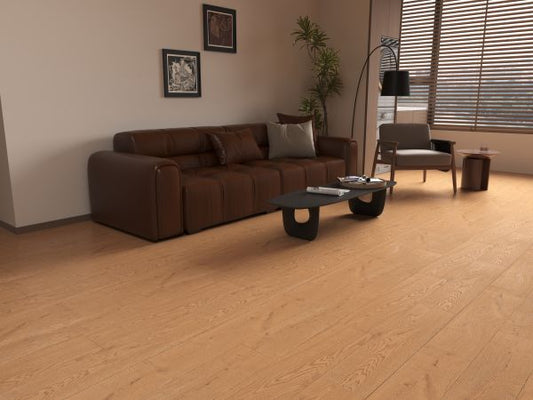
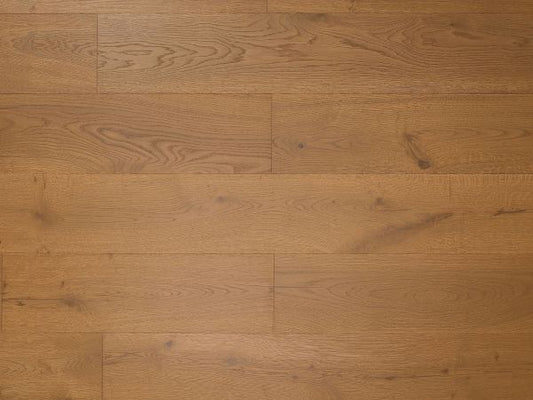
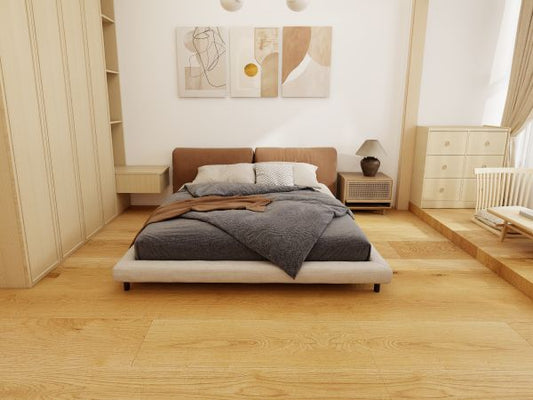
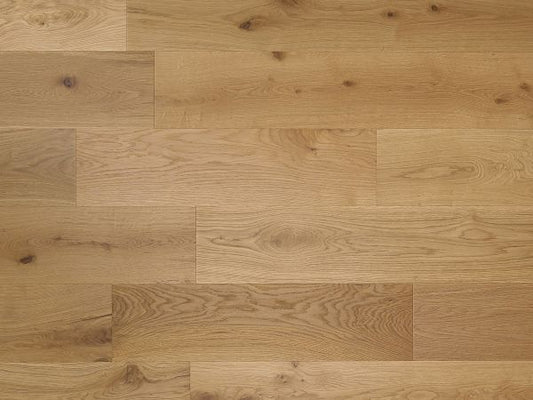
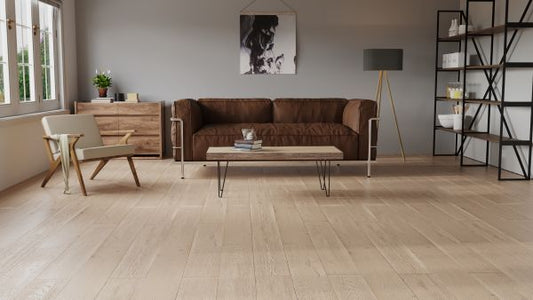
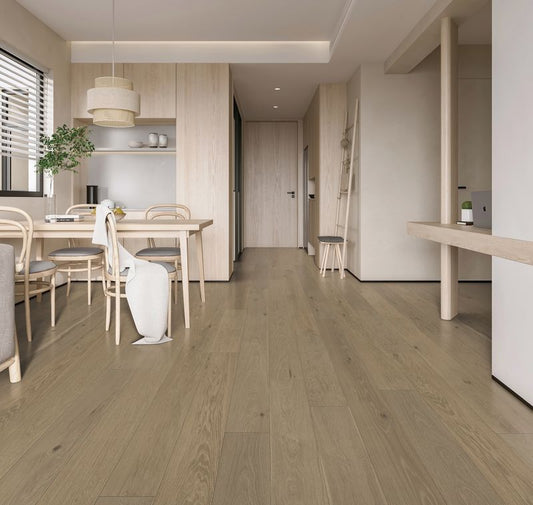
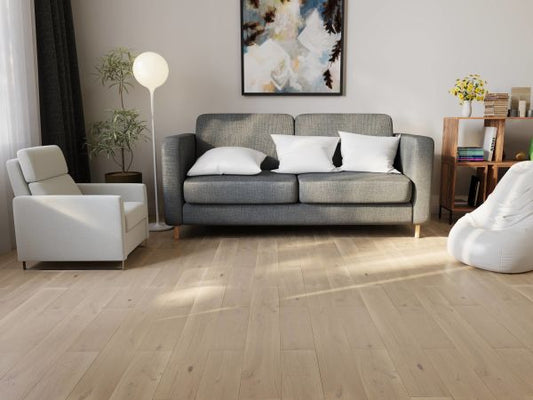
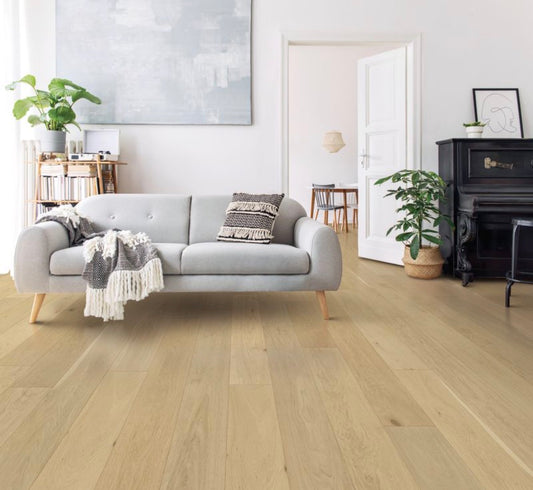
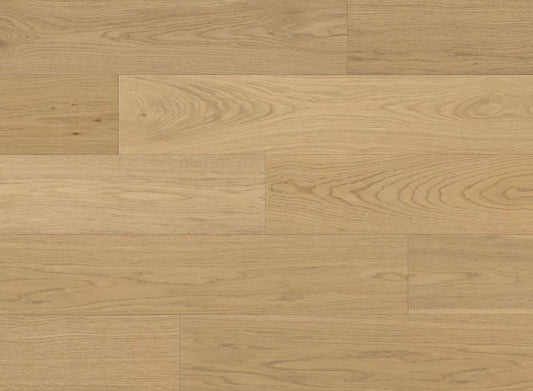
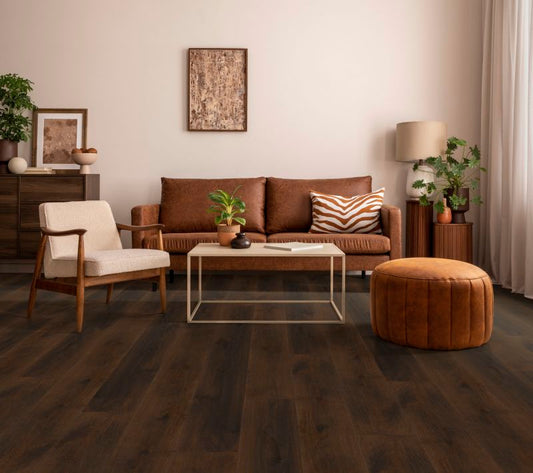
Seventy-five-inch engineered hardwood flooring features long genuine wood planks measuring approximately six feet three inches. This format can create extended sightlines, fewer end joints, and a more continuous hardwood appearance.
Manufacturers may describe a product using its precise length, rounded length, or maximum plank length. A floor marketed as 75 inches long may contain fixed-length boards or a mixture of shorter and full-length pieces. Carton composition should always be confirmed.
Benefits of 75-Inch Hardwood Planks
Long engineered hardwood may provide:
- Extended room sightlines
- Fewer visible end joints
- Premium board proportions
- Strong visual continuity
- Greater display of natural grain
- Wide-and-long plank combinations
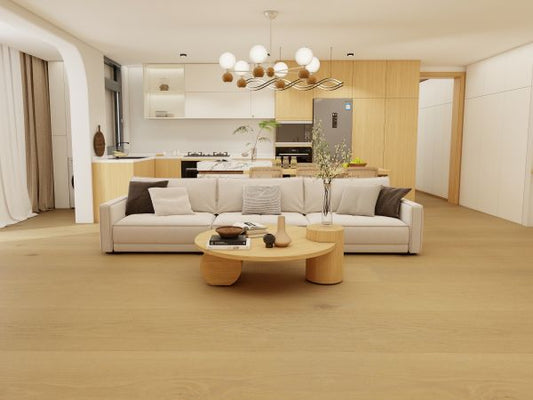
- Expansive open-concept styling
- Reduced visual interruption
- Authentic hardwood variation
- High-end residential character
Length does not independently determine core quality, durability, or refinishing potential.
Fixed Versus Random Lengths
Fixed-length flooring generally contains boards of one stated length, although cartons may include starter pieces. Random-length flooring contains multiple plank lengths.
Before purchasing, verify:
- Maximum plank length
- Minimum plank length
- Average board length
- Percentage of full-length boards
- Number of lengths per carton
- Whether starter boards are included
- Manufacturer layout guidance
- Carton square footage
A product’s maximum advertised length should not be interpreted as the length of every board.
Flooring Direction
Long boards strongly influence visual direction. Common layouts run the planks:
- Along the longest wall
- Toward a focal point
- Parallel with a hallway
- In the direction of natural light
- Along the primary entry sightline
- Consistently through connected spaces
Subfloor structure, room layout, installation requirements, and expansion limits may affect the final decision.
Open-Concept Interiors
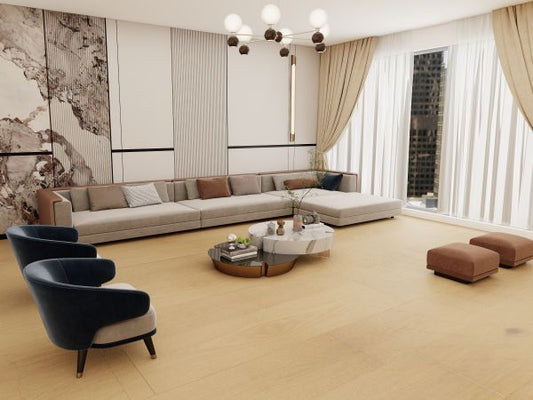
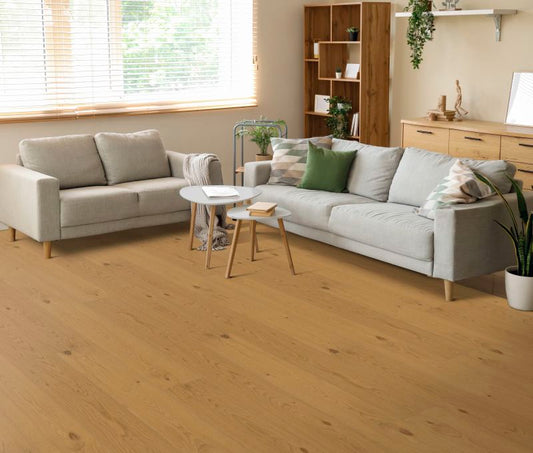
Seventy-five-inch planks can visually connect living rooms, dining rooms, kitchens, and hallways.
Before planning one continuous floor, confirm:
- Maximum installation dimensions
- Transition requirements
- Substrate changes
- Expansion breaks
- Kitchen-island restrictions
- Cabinet installation sequence
- Heating zones
- Direct sunlight
- Exterior-door locations
- Stair transitions
Installation requirements take priority over uninterrupted appearance.
Wide and Long Proportions
Many 75-inch products are also approximately 7.5 inches wide. This combination provides a broad display of genuine wood grain without reaching the scale of some nine-inch or extra-long 86-inch products.
Wide-and-long planks require:
- Flat substrates
- Proper material storage
- Careful board selection
- Stable interior conditions
- Correct expansion space
- Professional adhesive application
- Appropriate fastening where required
- Thoughtful waste planning
Handling and Delivery
Long cartons require more space than standard flooring. Confirm:
- Delivery access
- Liftgate requirements
- Interior doorway dimensions
- Stairway turns
- Elevator length
- Hallway access
- Indoor storage space
- Carton weight
- Two-person handling needs
- Jobsite climate control
Store cartons flat and supported according to manufacturer instructions.
Subfloor Preparation
Long boards span larger areas of the substrate. Uncorrected high or low areas may create unsupported sections or poor adhesive contact.
The substrate should be:
- Flat within published tolerance
- Structurally secure
- Clean
- Dry
- Free from active moisture
- Properly patched
- Correctly fastened
- Compatible with the selected method
Subfloor preparation is essential for both appearance and performance.
Natural Wood Character
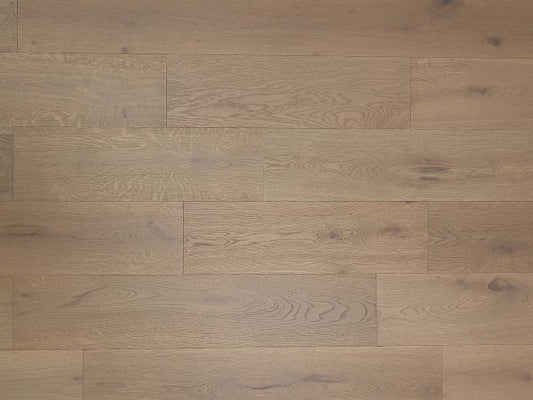
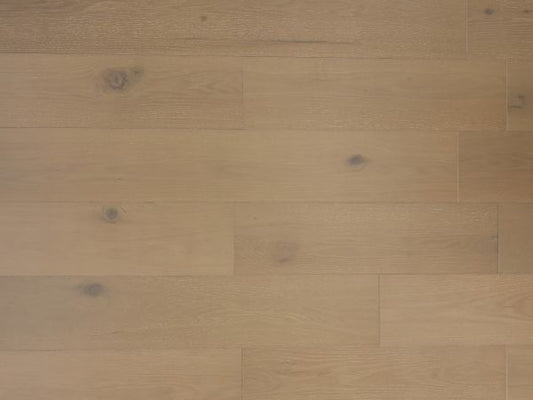
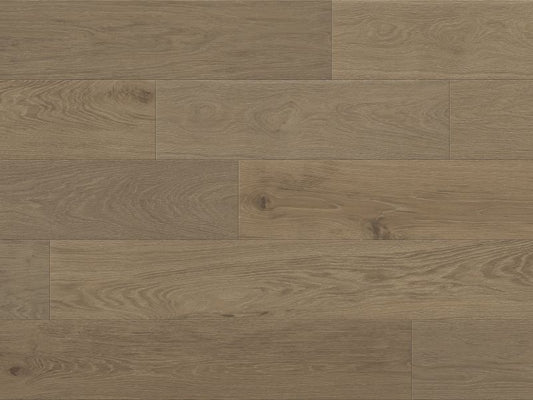
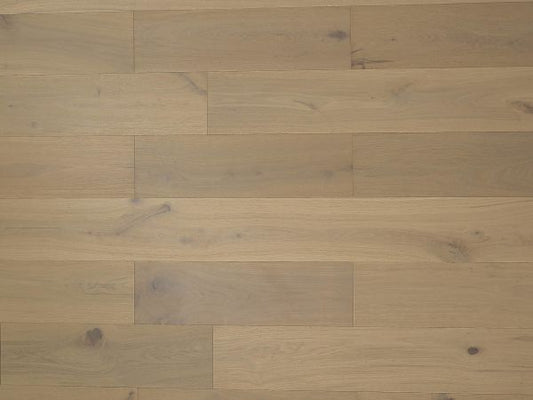
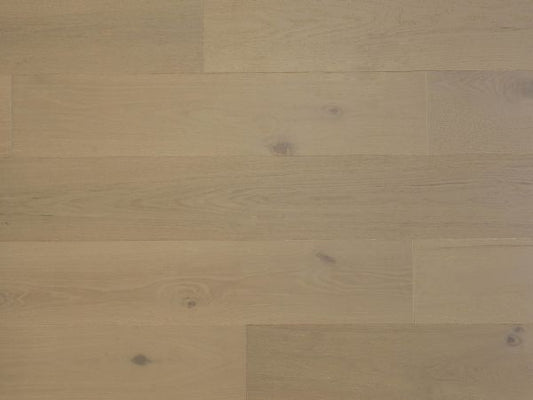
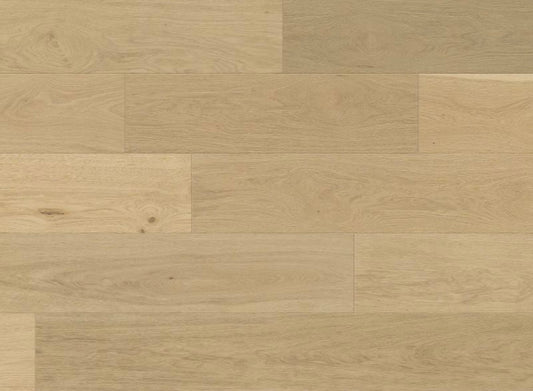
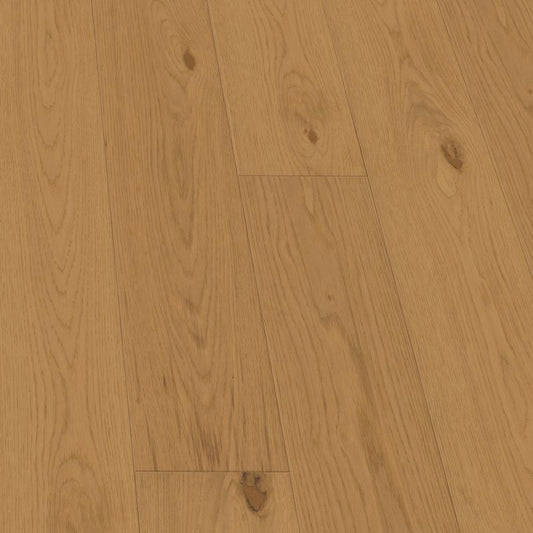
A long genuine wood plank may display substantial variation from one end to the other, including:
- Grain movement
- Knots
- Mineral streaks
- Sapwood
- Filled character
- Tonal transitions
- Surface texture
- Natural color changes
A small sample cannot represent every feature found across a 75-inch board.
Installation Waste
Long flooring can produce different offcut patterns from shorter planks. The required overage depends on:
- Room shape
- Installation direction
- End-joint spacing
- Fixed or random lengths
- Closets
- Hallways
- Angled walls
- Board selection
- Natural grading
- Future repair material
Ask the installer to calculate waste using the actual floor plan.
Frequently Asked Questions
How long is 75-inch engineered hardwood?
It is approximately six feet three inches long.
Is every board exactly 75 inches?
Not necessarily. Some products contain fixed lengths, while others include shorter boards.
Does long-plank flooring make rooms look larger?
It may create extended sightlines and fewer end joints, contributing to a more expansive appearance.
Can 75-inch flooring be installed in small rooms?
Yes, although cuts, waste, board direction, and room proportions require planning.
Is long-plank flooring harder to deliver?
It may require additional consideration for truck access, doorways, stairs, elevators, and indoor storage.
Does length determine durability?
No. Durability depends on finish, veneer, species, core, installation, and maintenance.
Can 75-inch flooring go over concrete?
Selected products may be glued or floated over prepared concrete when approved.
Should cartons be mixed during installation?
Yes. Mixing cartons helps distribute natural grain and color variation.
How much extra flooring should be ordered?
The installer should calculate overage according to the room and board-length distribution.
Is 75-inch engineered hardwood genuine wood?
Yes. Qualifying products have genuine hardwood surfaces over engineered cores.