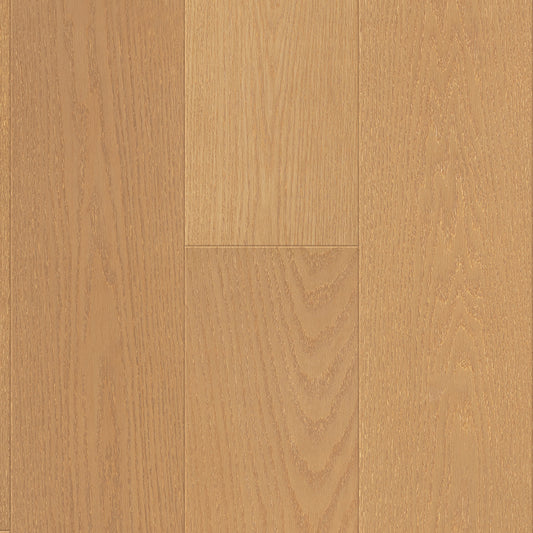
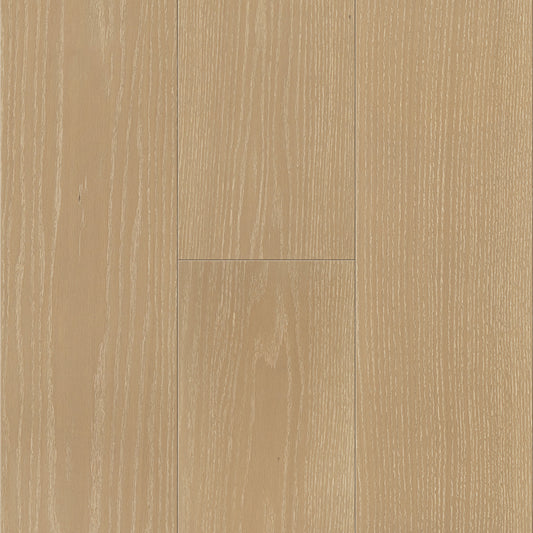
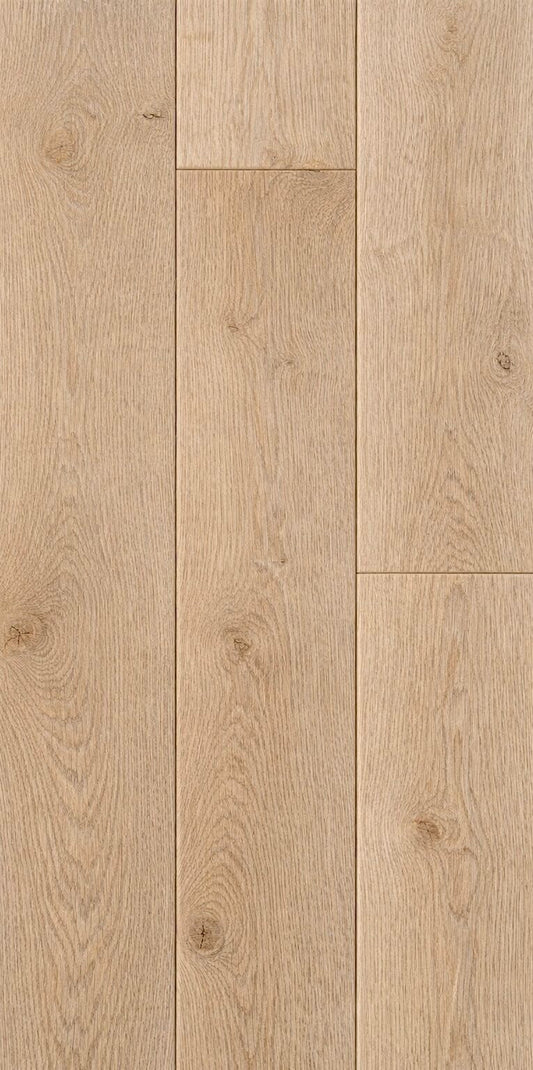
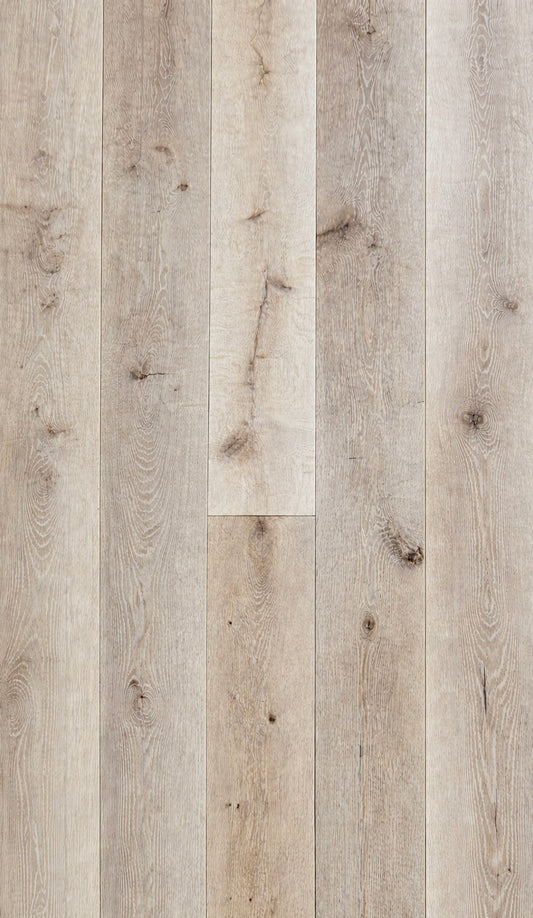
Nail-Down Engineered Hardwood Flooring
Nail-down engineered hardwood flooring uses approved flooring cleats or fasteners to secure genuine engineered wood planks to a compatible wood subfloor.
Mechanical fastening is commonly used for tongue-and-groove engineered hardwood installed over plywood or approved wood panels. However, not every engineered floor is suitable for this method.
Only products with written nail-down or staple-down approval should qualify.
How Nail-Down Installation Works
A professional installation commonly involves:
- Inspecting the wood subfloor.
- Testing moisture conditions.
- Correcting loose, damaged, or uneven areas.
- Planning plank direction and layout.
- Establishing a straight starting line.
- Face-nailing or blind-nailing initial rows as required.
- Fastening through the tongue at the approved spacing.
- Maintaining expansion space.
- Mixing boards from multiple cartons.
- Installing transitions and moldings.
Fastener type and spacing vary by product.
Benefits of Nail-Down Engineered Hardwood
When properly specified, nail-down installation may provide:
- Traditional hardwood installation
- Firm attachment to wood subfloors
- No full-spread adhesive
- Immediate access after installation
- Compatibility with substantial tongue-and-groove planks
- Straightforward board replacement for professionals
- Support for long-plank formats
- Support for selected wide-plank formats
- Genuine hardwood underfoot
- Long-term residential performance
Successful installation depends on the subfloor and fastening system.
Nail-Down Versus Staple-Down
Both methods mechanically attach flooring to a wood substrate.
Cleats are flooring fasteners designed to allow controlled wood movement. Staples use two prongs and may create a different holding pattern.
The manufacturer may specify:
- Cleats only
- Staples only
- Either cleats or staples
- Different fasteners for different subfloors
- Different spacing by plank width
- Pneumatic-tool pressure
- Fastener length
- Required fastener gauge
Use the system listed in the installation instructions.
Nail-Down Versus Glue-Down
Glue-down flooring is bonded directly to wood or concrete using an approved adhesive. Nail-down flooring is mechanically fastened to wood.
Compare:
- Subfloor material
- Grade level
- Flooring thickness
- Plank width
- Finished-floor height
- Sound requirements
- Moisture conditions
- Radiant heating
- Installer experience
- Manufacturer approval
Concrete normally requires an approved glue-down or floating system unless a suitable wood subfloor assembly is constructed above it.
Wood Subfloor Requirements
The subfloor may need to meet requirements for:
- Panel type
- Minimum panel thickness
- Joist spacing
- Structural deflection
- Moisture content
- Flatness
- Fastener holding ability
- Grade level
- Ventilation
- Crawlspace moisture control
Particleboard and some other panel products may not provide suitable fastener holding strength.
Fastener Length and Spacing
Incorrect fasteners may damage the tongue, penetrate utilities, fail to hold the floor securely, or prevent natural movement.
Confirm:
- Fastener type
- Fastener length
- Fastener gauge
- Spacing between fasteners
- Distance from plank ends
- Compressor pressure
- Nailer shoe angle
- Requirements for starter rows
- Requirements for final rows
- Perimeter fastening method
Test the fastening equipment on spare material before beginning the main installation.
Wide-Plank Installation
Wide engineered hardwood may require glue-assisted nail-down installation. This combines mechanical fastening with an approved adhesive system to provide additional support.
The instructions may require:
- Full-spread adhesive
- Adhesive beads in a specified pattern
- Moisture-cure urethane adhesive
- Elastomeric adhesive
- Specific fastener spacing
- Flatness within a tighter tolerance
- Stable interior humidity
- Expansion around fixed objects
- Limits on plank width
- Particular subfloor construction
Do not assume fasteners alone are sufficient for every wide plank.
Moisture Testing
Moisture testing is required for both flooring and subfloor. The permitted difference between their moisture contents may depend on plank width and manufacturer instructions.
Excessive moisture can contribute to:
- Cupping
- Crowning
- Gaps
- Buckling
- Fastener movement
- Finish stress
- Mold within the assembly
- Permanent structural damage
Testing should be documented before installation.
Pipes, Wiring, and Heating Systems
Fasteners penetrate the subfloor. Confirm the position of:
- Plumbing lines
- Electrical wiring
- Radiant-heating components
- HVAC systems
- Low-voltage cables
- Fire-suppression lines
- Structural components
A nail-down installation should not proceed where fasteners could damage concealed building systems.
Frequently Asked Questions
Can engineered hardwood be nailed down?
Selected products can, but written manufacturer approval is required.
Can engineered hardwood be nailed directly to concrete?
No. Mechanical fastening normally requires an approved wood subfloor assembly.
Are cleats or staples better?
The flooring manufacturer’s specified fastener is the correct choice for the product.
Does nail-down flooring need underlayment?
Some installations use approved felt, paper, or membrane, but requirements vary.
Can wide-plank engineered hardwood be nailed down?
Selected products can, although adhesive assistance may also be required.
Can nail-down flooring be installed below grade?
Approval varies. Moisture conditions and the complete subfloor assembly must be evaluated.
Can it be installed over radiant heat?
Only when the flooring, heating system, subfloor, and fastener depth are mutually compatible.
Can nail-down flooring be walked on immediately?
Generally yes, although moldings, repairs, and finish protection may still be required.
Is professional installation recommended?
Yes. Subfloor evaluation, layout, moisture testing, fastening, and equipment setup require experience.
Does nail-down installation prevent seasonal movement?
No. Genuine wood still responds to environmental conditions and requires expansion space and humidity control.