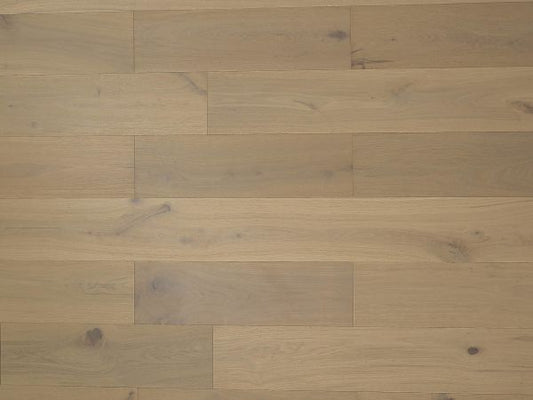
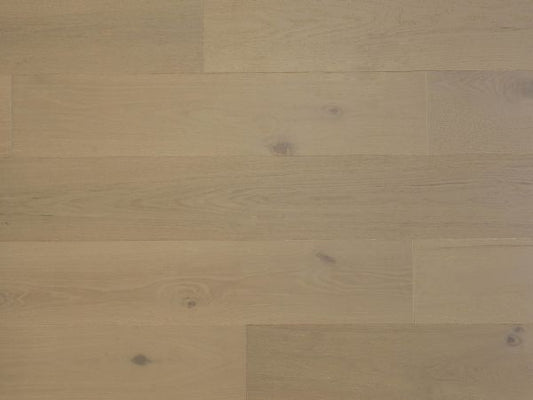
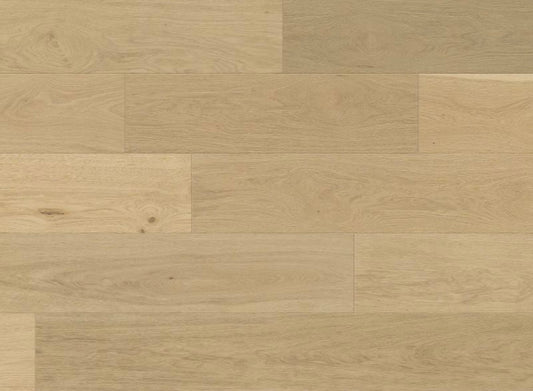
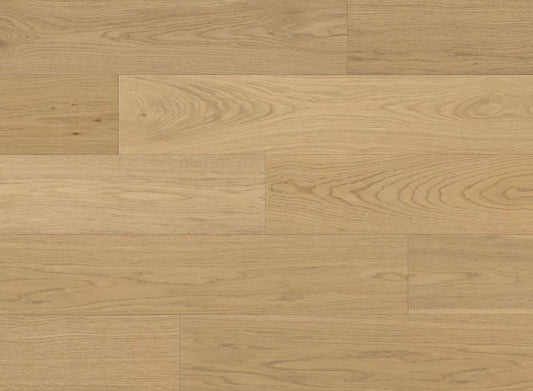
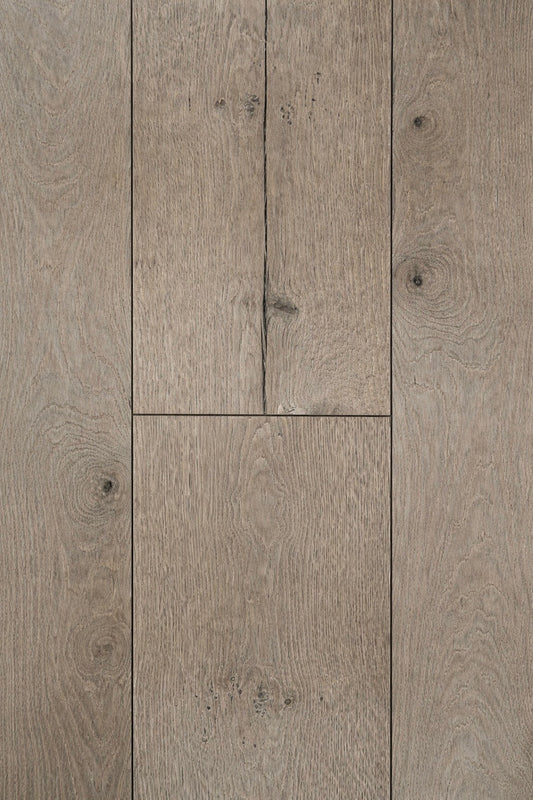
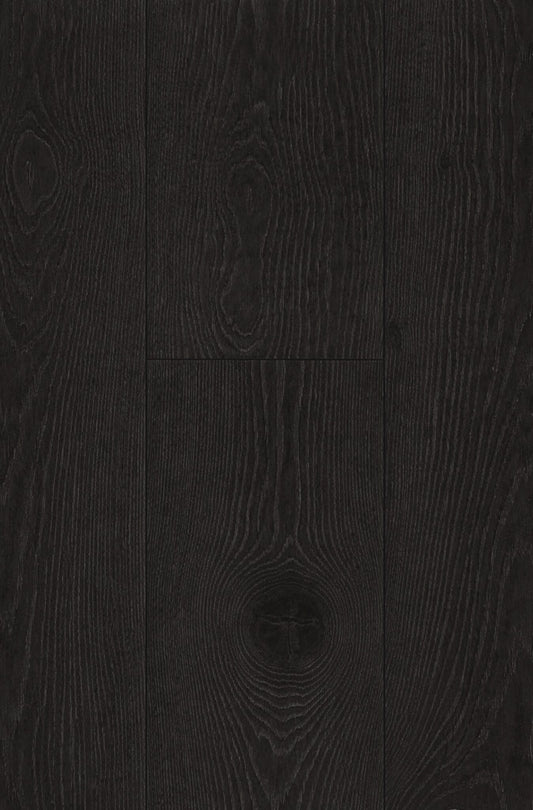
Glue-Down Engineered Hardwood Flooring
Glue-down engineered hardwood flooring uses a manufacturer-approved adhesive to bond genuine engineered wood planks directly to a prepared substrate. The method is frequently selected for concrete slabs, wide-plank flooring, multifamily properties, and projects that prioritize a firm underfoot response.
Only products with written glue-down approval should qualify. Engineered construction alone does not establish that a particular floor can be installed with adhesive.
How Glue-Down Installation Works
Full-spread installation generally involves:
- Inspecting and testing the substrate.
- Correcting flatness and structural defects.
- Selecting an approved adhesive.
- Spreading adhesive with the specified trowel.
- Installing planks within the working time.
- Maintaining correct adhesive transfer.
- Removing adhesive residue as directed.
- Protecting the floor during curing.
Installation instructions vary by product and adhesive.
Benefits of Glue-Down Engineered Hardwood
When properly specified, glue-down installation may provide:
- Firm underfoot response
- Reduced vertical plank movement
- Compatibility with selected concrete slabs
- Controlled sound transmission
- Support for wide or long planks
- Lower assembly height than some floating systems
- Continuous adhesive contact
- Installation above, on, or below grade where approved
- Compatibility with selected radiant systems
- Professional residential appearance
Performance depends on substrate preparation and adhesive application.
Glue-Down Versus Floating Installation
A floating floor connects plank edges without bonding each board directly to the substrate. Glue-down flooring is adhered across the installation area.
Glue-down installation may offer:
- Firmer underfoot feel
- Reduced hollow sound
- No separate conventional underlayment
- Greater support for selected large planks
- Direct compatibility with prepared concrete
Floating installation may offer:
- Faster installation on selected projects
- Easier plank removal
- No full-spread adhesive
- Installation over approved underlayment
- Different acoustic options
The manufacturer’s approved methods should guide the decision.
Glue-Down Versus Nail-Down Installation
Nail-down flooring uses cleats or staples to attach planks to an approved wood subfloor. Glue-down installation may be used over wood or concrete.
Compare:
- Subfloor type
- Plank width
- Flooring thickness
- Grade level
- Moisture conditions
- Finished-floor height
- Sound requirements
- Radiant heating
- Manufacturer instructions
- Installer experience
Wide planks may use a combined glue-assisted nail-down method.
Adhesive Selection
Do not choose adhesive based only on price or general hardwood labeling. Confirm compatibility with:
- Flooring manufacturer
- Wood species
- Plank width
- Substrate type
- Grade level
- Radiant heating
- Moisture conditions
- Required sound control
- Trowel specification
- Warranty terms
Some adhesives combine bonding, moisture control, and acoustic properties, but only their documented ratings should be relied upon.
Concrete Preparation
Concrete should be evaluated for:
- Moisture
- Flatness
- Cracks
- Surface strength
- Curing compounds
- Paint
- Sealers
- Dust
- Oil
- Existing adhesive
- Alkalinity where required
A slab may appear dry while still exceeding the approved moisture limit.
Wood Subfloors
Glue-down installation over wood may be possible when the substrate is approved, stable, dry, flat, and properly fastened.
Review:
- Panel type
- Panel thickness
- Joist spacing
- Moisture content
- Deflection
- Surface contamination
- Existing coatings
- Patch compatibility
- Grade level
- Adhesive approval
Loose or damaged panels should be corrected first.
Adhesive Working Time
Adhesives have published requirements for:
- Open time
- Working time
- Flash time
- Trowel size
- Spread rate
- Temperature
- Humidity
- Cure time
- Cleaning method
- Traffic restrictions
Spreading more adhesive than can be covered within its working time may reduce bond quality.
Removing Adhesive Residue
Adhesive residue should be removed using the manufacturer’s approved cleaner and timing. Dried adhesive can be difficult to remove and may damage the factory finish.
Installers should:
- Keep approved wipes or cleaner available
- Inspect boards continuously
- Avoid unapproved solvents
- Replace contaminated towels
- Follow finish-specific instructions
- Avoid spreading residue across the surface
Frequently Asked Questions
Can engineered hardwood be glued down?
Selected products can, but written manufacturer approval is required.
Can glue-down engineered hardwood be installed on concrete?
Yes, when the flooring, adhesive, slab, moisture conditions, and grade level are mutually compatible.
Does glue-down flooring need underlayment?
Usually not in the conventional floating-floor sense, although approved moisture or acoustic systems may be required.
Does glue-down hardwood sound less hollow?
Direct bonding may produce a firmer and less hollow response than some floating assemblies.
Can wide-plank hardwood be glued down?
Many wide engineered planks support glue-down installation, but the exact method must be verified.
Can glue-down flooring be removed later?
Yes, but removal may be labor-intensive and can require substrate repair.
Can ordinary construction adhesive be used?
No. Use a flooring adhesive specifically approved for the product and substrate.
Is moisture testing still required?
Yes. Adhesive does not eliminate moisture-testing requirements.
Can glue-down hardwood go over radiant heat?
Selected flooring and adhesive systems may be approved for radiant heat.
Who should install glue-down engineered hardwood?
Professional installation is strongly recommended because substrate preparation, moisture testing, troweling, timing, and cleanup are critical.