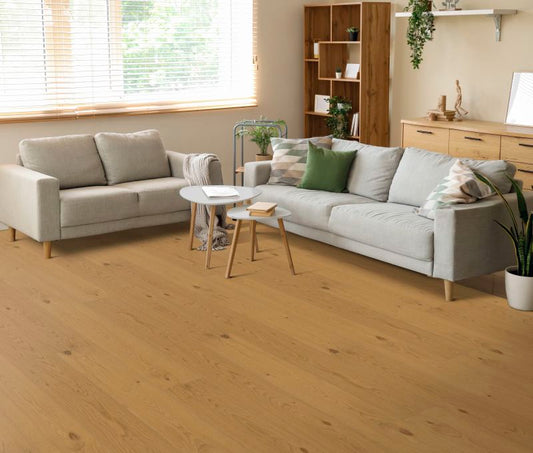
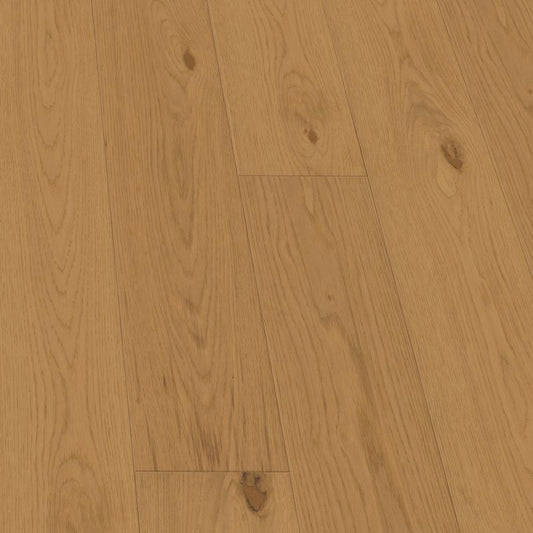
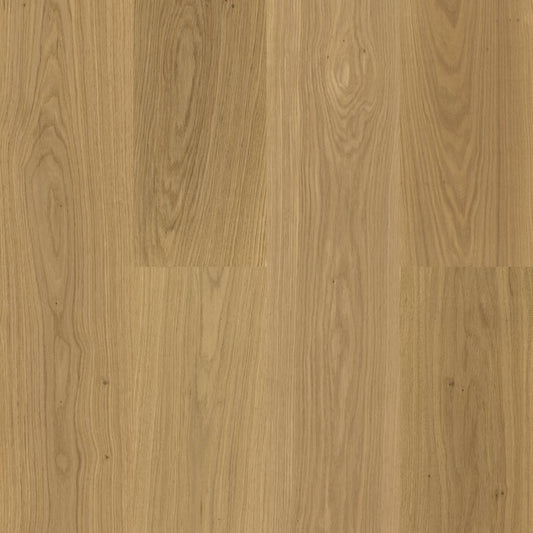
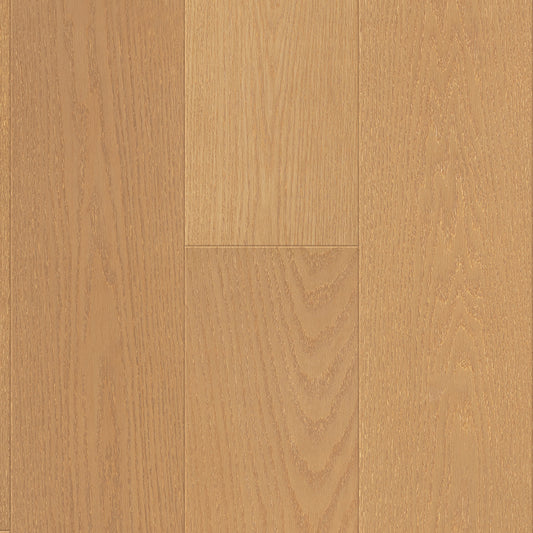
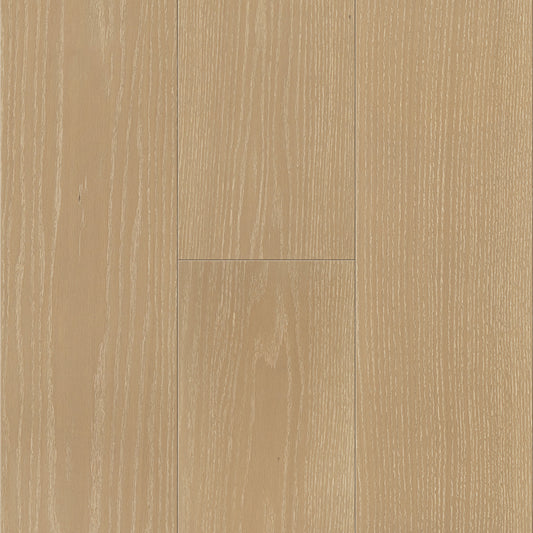
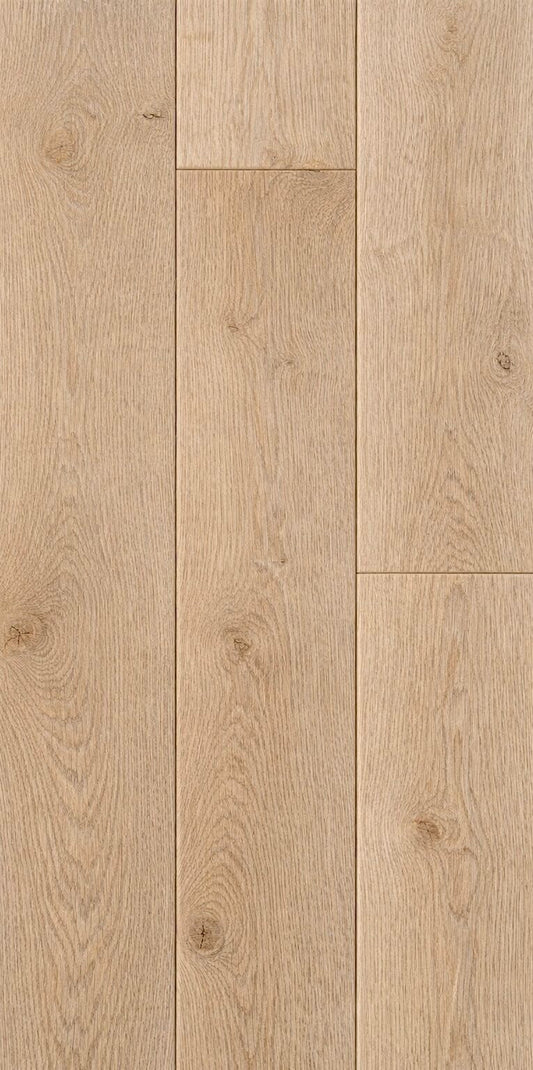
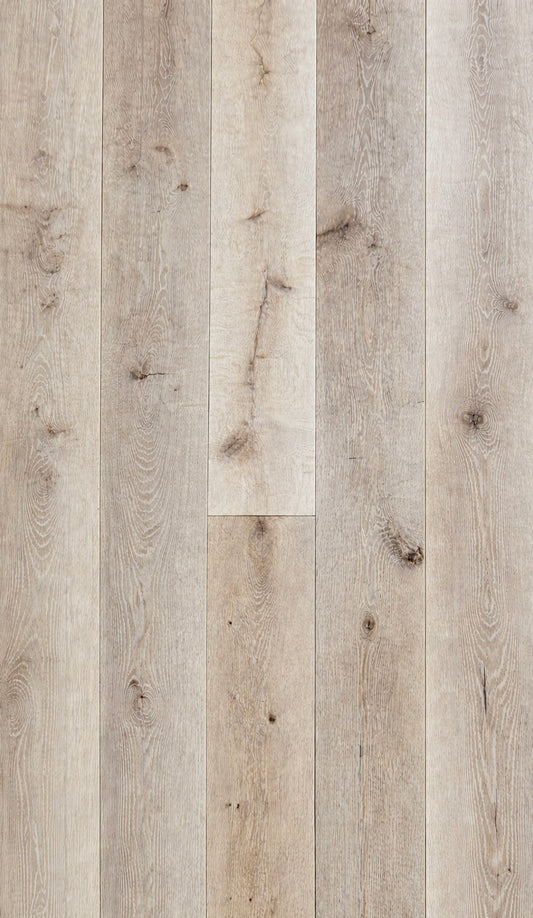
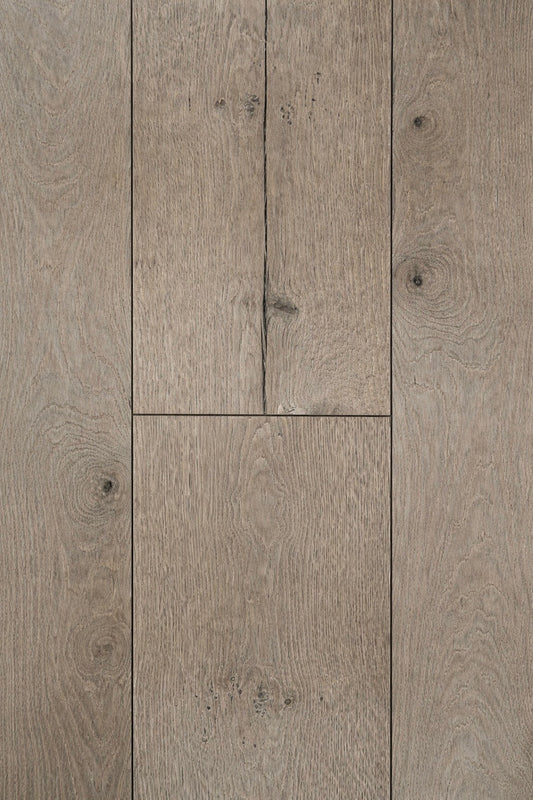
Engineered Hardwood Flooring for Basements
Selected engineered hardwood flooring can bring genuine wood character into finished basements when the product is explicitly approved for below-grade installation and the space has suitable moisture control.
A basement presents different risks from an above-grade bedroom or living room. Concrete moisture, groundwater, humidity, plumbing, drainage, and previous water intrusion must be evaluated before choosing any genuine wood floor.
What Does Below Grade Mean?
Below grade generally describes a floor level located partly or entirely below the surrounding exterior ground level. Even a basement that feels dry may experience moisture vapor moving through its concrete slab or walls.
A basement product should qualify only when the manufacturer publishes below-grade approval. General statements about engineered hardwood stability are not enough.
Verify:
- Below-grade approval
- Concrete compatibility
- Installation method
- Moisture-test limits
- Vapor-control requirements
- Adhesive or underlayment approval
- Environmental conditions
- Substrate preparation
- Expansion requirements
- Care instructions
Why Engineered Hardwood May Be Considered
Engineered hardwood uses a genuine wood veneer supported by layered construction. Compared with many solid hardwood products, selected engineered floors may provide:
- Improved dimensional stability
- Glue-down installation over concrete
- Floating installation where approved
- Wide-plank availability
- Lower-profile options
- Factory-applied finishes
- Genuine wood grain and variation
- Compatibility with selected below-grade spaces
These potential advantages do not make every engineered hardwood product suitable for every basement.
Engineered Hardwood Versus Solid Hardwood
Solid hardwood is generally more restricted below grade because it is milled from one piece of wood and commonly requires mechanical fastening over a suitable wood subfloor.
Selected engineered hardwood may be approved for direct glue-down or floating installation over prepared concrete.
Compare:
- Published grade-level approval
- Concrete compatibility
- Moisture limits
- Installation system
- Finished-floor height
- Veneer thickness
- Core construction
- Indoor humidity requirements
- Refinishing potential
- Manufacturer instructions
Approval should be based on documentation, not assumptions about construction alone.
Engineered Hardwood Versus Vinyl in Basements
Waterproof vinyl is often selected for basements because the planks themselves may resist water. Engineered hardwood provides a genuine wood surface but requires more conservative moisture management.
Compare:
- Real wood versus printed design
- Flood exposure
- Slab moisture
- Comfort
- Sound
- Repairability
- Installation
- Environmental conditions
- Maintenance
- Desired property appearance
A basement with recurring water intrusion is generally a poor environment for genuine hardwood until the underlying issue is fully corrected.
Assessing the Basement
Before ordering flooring, investigate:
- Previous flooding
- Foundation seepage
- Sump-pump history
- Plumbing leaks
- Exterior drainage
- Downspout discharge
- Wall moisture
- Slab cracks
- Musty odors
- Visible efflorescence
- Dehumidification
- Heating and cooling
Cosmetic flooring should not be used to conceal an unresolved moisture problem.
Concrete Moisture Testing
Concrete can release moisture vapor even when its surface appears dry. Testing should follow the flooring, adhesive, and moisture-control manufacturers’ instructions.
Possible evaluation may include:
- In-situ relative-humidity testing
- Moisture-vapor testing where specified
- pH testing
- Surface assessment
- Crack evaluation
- Environmental documentation
- Professional moisture inspection
Consumer handheld meters alone may not provide the required slab evaluation.
Vapor Control
Depending on the system, basement installation may require:
- Moisture-control adhesive
- Separate vapor-mitigation coating
- Approved vapor retarder
- Combination underlayment
- Sealed seams
- Perimeter treatment
- Manufacturer-specific primer
Products must be chemically and mechanically compatible. A generic plastic sheet should not be substituted without written approval.
Glue-Down Installation
Selected engineered hardwood may be glued directly to properly prepared basement concrete.
Confirm:
- Below-grade glue-down approval
- Adhesive model
- Moisture limits
- Trowel size
- Open and working times
- Surface preparation
- Required transfer
- Rolling instructions
- Cure time
- Cleanup process
Some adhesives combine bonding and moisture-control functions, but their protection depends on correct coverage and installation.
Floating Installation
Selected locking or edge-glued engineered hardwood may float over an approved basement underlayment.
Verify:
- Below-grade floating approval
- Underlayment model
- Vapor-retarder requirements
- Seam treatment
- Expansion spacing
- Maximum room dimensions
- Transition requirements
- Fixed-fixture restrictions
- Subfloor flatness
- Attached-pad compatibility
Floating installation does not eliminate the need to test and control slab moisture.
Subfloor Flatness and Cracks
Concrete should be flat within the product’s published tolerance. High areas may need mechanical correction, while low areas may require compatible patching or leveling materials.
Cracks should be assessed to determine whether they are:
- Stable
- Moving
- Structural
- Moisture-related
- Suitable for repair
- Likely to transfer through the installation
Flooring should not be expected to bridge significant movement.
Indoor Humidity
Basements may have higher humidity than upper floors, particularly during warm seasons. Maintain the manufacturer’s approved range with suitable heating, cooling, ventilation, or dehumidification.
Uncontrolled humidity may contribute to:
- Board expansion
- Gapping
- Cupping
- Crowning
- Surface checking
- Finish stress
- Edge movement
- Delamination
Environmental control should continue after installation, not merely during acclimation.
Selecting Species, Grade, and Color
Species options may include white oak, European oak, red oak, maple, hickory, walnut, and other documented hardwoods.
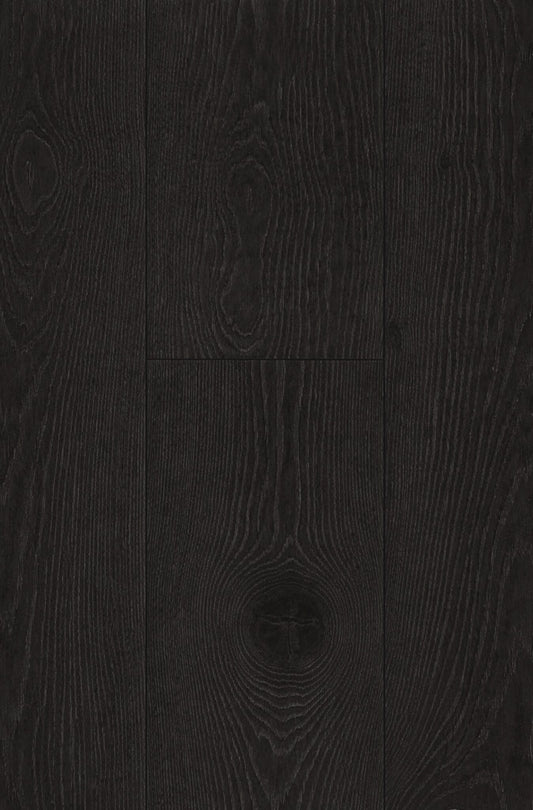
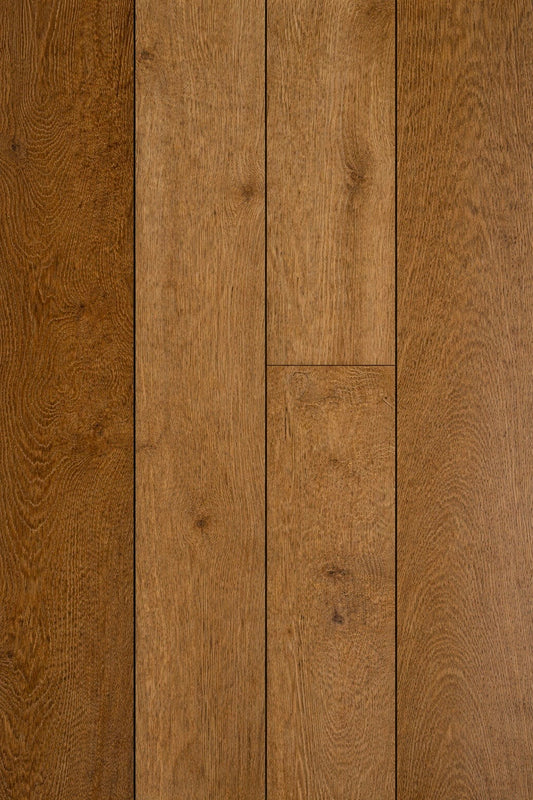
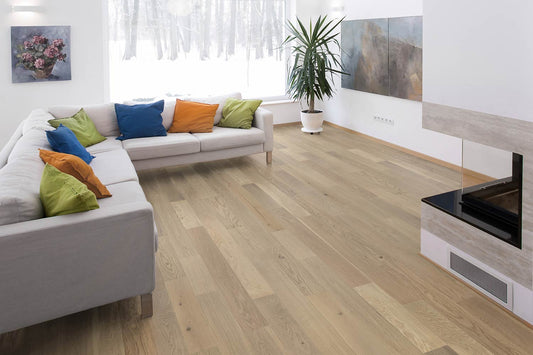
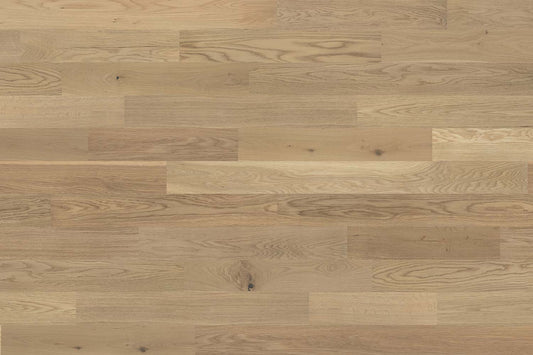
Lighter or mid-tone floors may help a basement appear brighter. Character-grade surfaces can introduce grain and variation, while select-grade products may create a cleaner appearance.
Review samples under the basement’s actual lighting because limited natural light and artificial color temperature can change how a finish appears.
Finished-Floor Height
The complete assembly may include:
- Engineered hardwood
- Adhesive
- Moisture membrane
- Underlayment
- Patching compound
- Leveling material
- Existing approved substrate
Measure around doors, stairs, utility rooms, floor drains, mechanical equipment, and adjoining flooring. Stair-riser consistency and exterior egress requirements may also need attention.
Flood and Plumbing Risk
No engineered hardwood should be treated as floodproof. Consider the location of:
- Water heaters
- Washing machines
- Utility sinks
- Sump pumps
- Floor drains
- Bathrooms
- HVAC equipment
- Exterior basement doors
- Plumbing supply lines
- Sewer backups
Leak detectors, appliance pans, maintained sump systems, and appropriate insurance can reduce—not eliminate—risk.
Cleaning and Maintenance
Routine care may include:
- Vacuuming abrasive debris
- Cleaning with an approved hardwood product
- Removing spills promptly
- Avoiding wet mopping
- Avoiding steam cleaners
- Maintaining humidity
- Using entry mats
- Protecting furniture
- Monitoring for moisture
- Retaining spare boards
Musty odors, discoloration, lifting edges, or unexplained gaps should be investigated rather than covered.
Frequently Asked Questions
Can engineered hardwood be installed in a basement?
Selected products can when they have explicit below-grade approval and all moisture requirements are satisfied.
Is engineered hardwood waterproof?
No. It contains genuine wood and may be damaged by flooding, leaks, or excessive moisture.
Can it be installed directly over concrete?
Selected products can be glued over properly tested and prepared concrete.
Can engineered hardwood float in a basement?
Selected systems can when used with an approved underlayment and vapor-control system.
Does a dry-looking slab still need testing?
Yes. Concrete may release moisture vapor without visible surface water.
Is engineered hardwood better than solid hardwood below grade?
It commonly offers more approved below-grade options, but the exact manufacturer documentation controls.
Can a vapor barrier solve every moisture problem?
No. Active leaks, groundwater, drainage failures, and excessive slab moisture must be properly addressed.
Should basement humidity be controlled year-round?
Yes. Genuine wood requires ongoing environmental control.
What happens if the basement floods?
Affected engineered hardwood may require removal and replacement depending on the water exposure and resulting damage.
Should spare material be retained?
Yes. Matching boards may be difficult to source later if localized replacement becomes necessary.