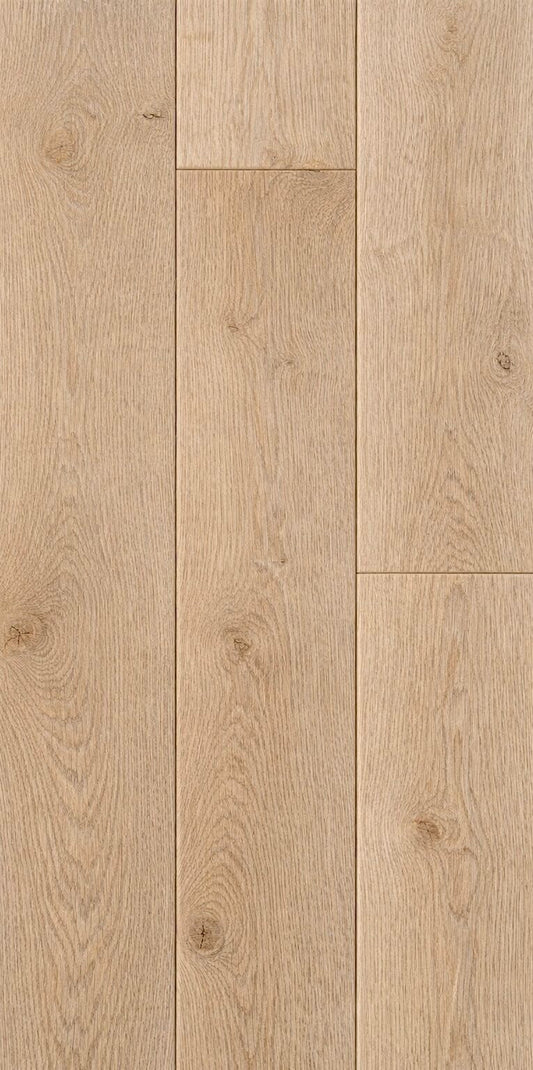
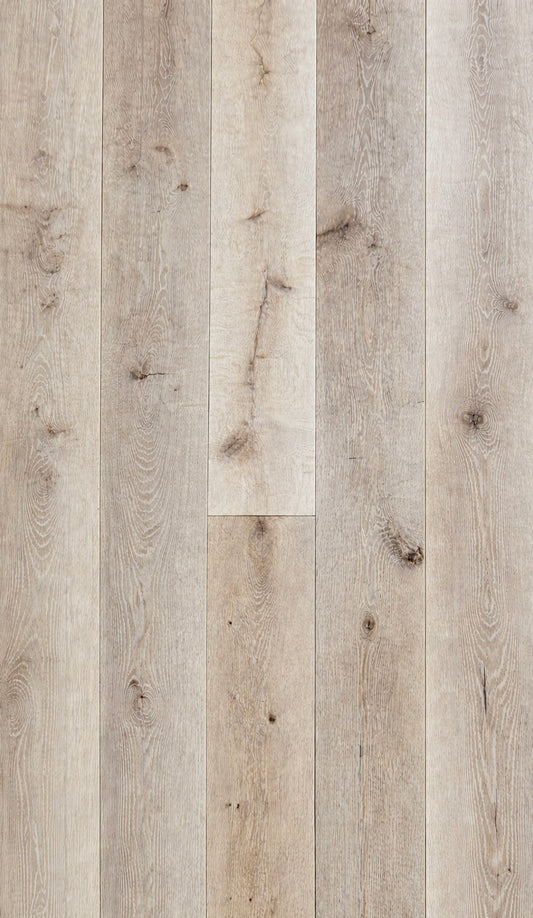
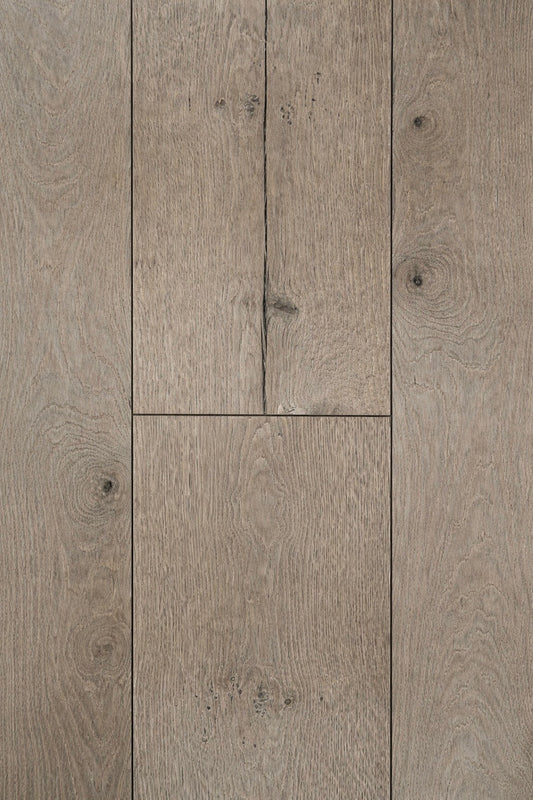
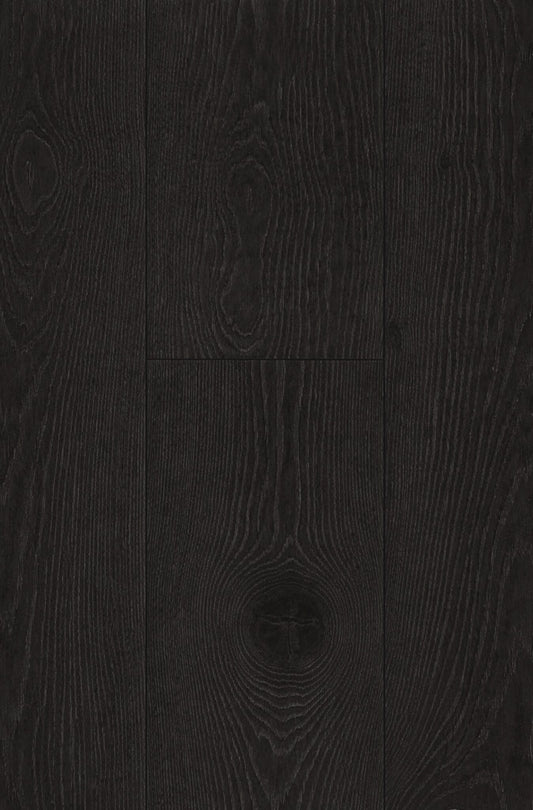
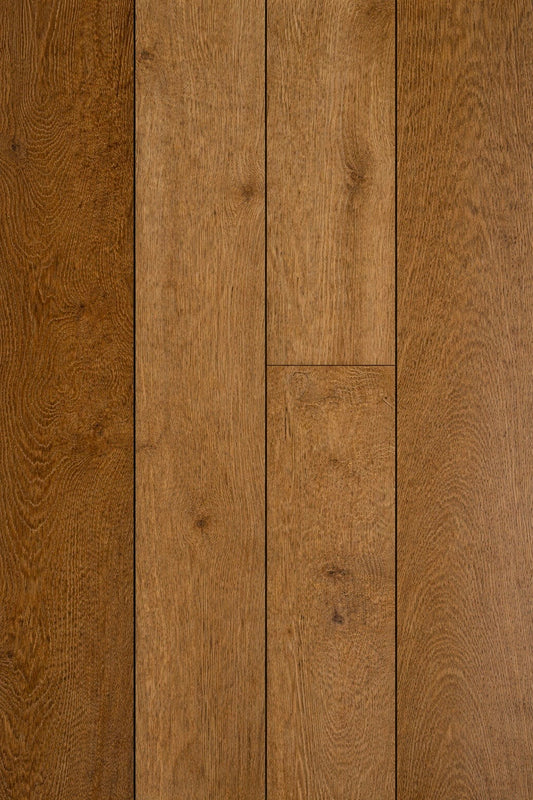
3/4-Inch Engineered Hardwood Flooring
Three-quarter-inch engineered hardwood flooring combines a genuine hardwood surface with a substantial layered core and an overall plank profile of approximately 3/4 inch.
Three-quarters of an inch equals approximately 19 millimeters. Manufacturers may publish nearby metric dimensions, but products should qualify only when their documented total thickness reasonably fits this category. Exact dimensions should always remain visible on the product page.
Understanding 3/4-Inch Engineered Construction
A substantial engineered plank may include:
- Factory-applied finish
- Genuine hardwood veneer
- Multiple cross-oriented core layers
- Stabilizing backing
- Tongue-and-groove edge profile
- Manufacturer-specific balancing layers
The overall thickness does not reveal veneer depth, core quality, or installation approval. These details must be evaluated separately.
Engineered Versus Solid 3/4-Inch Hardwood
Three-quarter-inch thickness is commonly associated with solid hardwood, but engineered flooring can also use a similar total profile.
Solid hardwood is generally milled from one piece of wood. Engineered hardwood uses a genuine wood surface supported by multiple layers.
Compare:
- Construction type
- Veneer depth
- Dimensional stability
- Installation methods
- Grade-level approval
- Concrete compatibility
- Plank width
- Radiant-heat approval
- Moisture requirements
- Professional refinishing guidance
Similar thickness does not make solid and engineered products interchangeable.
Potential Benefits
Depending on the exact product, 3/4-inch engineered hardwood may provide:
- Substantial overall construction
- Genuine hardwood appearance
- Thick veneer options
- Wide- and long-plank formats
- Traditional tongue-and-groove edges
- Nail-down installation where approved
- Glue-assisted installation where approved
- Glue-down installation where approved
- Professional refinishing potential
- Compatibility with selected substantial stair components
These characteristics should be confirmed rather than assumed from thickness.
Three-Quarter Inch Versus Five-Eighths Inch
The nominal difference is approximately one-eighth inch. That difference may affect transitions, doors, appliances, fasteners, and stairs.
Compare:
- Veneer thickness
- Core construction
- Plank dimensions
- Finish system
- Edge profile
- Fastener requirements
- Installation approval
- Finished-floor height
- Subfloor requirements
- Project cost
A thicker product is not automatically more durable or better suited to the building.
Veneer Thickness
A 3/4-inch engineered floor may provide room for a substantial genuine wood veneer, but products vary.
Refinishing potential depends on:
- Published veneer depth
- Wood remaining above the tongue
- Surface texture
- Bevel depth
- Finish chemistry
- Existing damage
- Installation method
- Manufacturer guidance
Aggressive sanding can damage any engineered floor if the veneer is exceeded. Professional assessment is strongly recommended.
Core Construction
The core supports the hardwood veneer and contributes to dimensional performance.
Potential constructions may include:
- Cross-layered plywood
- Hardwood lamellas
- Multi-ply cores
- Manufacturer-specific engineered structures
Compare the number and orientation of layers, backing construction, edge milling, and installation documentation. Total thickness alone should not be used as a substitute for core specifications.
Finished-Floor Height
A 3/4-inch plank creates a relatively substantial floor profile. Adhesive, underlayment, membranes, or additional subfloor panels can increase the completed assembly further.
Measure:
- Exterior doors
- Interior doors
- Appliances
- Cabinets
- Stair risers
- Stair nosing
- Floor vents
- Fireplace transitions
- Sliding doors
- Adjoining flooring
Transition planning should occur before material is ordered.
Stair Considerations
A substantial floor may coordinate with conventional stair components, but the complete installed height can alter stair geometry.
Confirm:
- Nosing profile
- Tread thickness
- Riser height
- Landing transitions
- Attachment method
- Color matching
- Expansion requirements
- Applicable building requirements
Stair components should be ordered and checked alongside the flooring.
Nail-Down Installation
Many substantial tongue-and-groove engineered floors permit nail-down or staple-down installation over approved wood subfloors.
Confirm:
- Fastener type
- Fastener gauge
- Fastener length
- Fastener spacing
- Compressor pressure
- Nailer shoe
- Subfloor thickness
- Joist spacing
- Plank-width limits
- Adhesive-assistance requirements
Fasteners should not be selected based only on plank thickness.
Wide-Plank Installation
Wide 3/4-inch engineered boards may still require glue-assisted nail-down installation. Greater plank thickness does not eliminate moisture movement or subfloor-flatness requirements.
Manufacturer instructions may require:
- Full-spread adhesive
- Approved adhesive beads
- Specific fastener spacing
- Tighter flatness tolerance
- Controlled humidity
- Expansion around fixed objects
- Particular plywood construction
- Limits on continuous installation
Glue-Down Installation
Selected products may permit direct bonding to concrete or wood using an approved adhesive.
Verify:
- Adhesive compatibility
- Concrete moisture limits
- Wood-subfloor approval
- Trowel size
- Working time
- Required transfer
- Rolling instructions
- Cure time
- Cleanup procedure
- Grade-level approval
A substantial plank can require careful adhesive selection and transfer.
Floating Installation
Not every 3/4-inch engineered product can float. Selected products may support floating installation through locking edges or approved tongue-and-groove bonding.
Confirm:
- Written floating approval
- Approved underlayment
- Edge-joining method
- Continuous-room limits
- Expansion requirements
- Transition locations
- Fixed-fixture restrictions
- Vapor protection
Never improvise a floating method for a product approved only for fastening or glue-down.
Subfloor Requirements
The substrate should be flat, dry, clean, structurally sound, and compatible with the selected method.
Concrete preparation may include moisture testing, crack assessment, vapor control, surface preparation, and compatible patching.
Wood preparation may include panel fastening, squeak correction, moisture testing, deflection evaluation, and replacement of damaged areas.
Moisture and Humidity
A thick engineered floor still contains genuine wood and responds to its environment. Maintain the manufacturer’s approved temperature and humidity range before, during, and after installation.
Improper conditions may contribute to:
- Gapping
- Cupping
- Crowning
- Checking
- Finish stress
- Edge movement
- Delamination
- Permanent damage
Delivery and Handling
Thick, wide, and long flooring cartons may be heavy. Plan delivery access and use proper lifting techniques.
Store material flat, fully supported, protected from moisture, and within the climate-controlled installation area according to manufacturer instructions.
Cleaning and Care
Protect the floor by:
- Removing abrasive grit
- Cleaning spills promptly
- Using approved hardwood cleaner
- Avoiding excessive water
- Avoiding steam mops
- Protecting furniture feet
- Using compatible rug pads
- Maintaining indoor humidity
- Following finish-specific maintenance
- Retaining repair stock
Frequently Asked Questions
What does 3/4-inch engineered hardwood mean?
It means the complete engineered plank measures approximately three-quarters inch thick.
How many millimeters is three-quarters inch?
It equals approximately 19.05 millimeters.
Is 3/4-inch engineered hardwood the same as solid hardwood?
No. Engineered flooring uses layered construction, while solid hardwood is milled from one piece of wood.
Is the veneer three-quarters inch thick?
No. The veneer is only the upper genuine wood layer.
Can 3/4-inch engineered hardwood be nailed down?
Many products can, but written approval and specified fasteners are required.
Does it need adhesive assistance?
Wide products may require adhesive assistance even when mechanically fastened.
Can it be installed over concrete?
Selected products may be glued or floated over prepared concrete when approved.
Can it be refinished?
Selected products may permit professional refinishing depending on veneer depth and construction.
Is thicker engineered hardwood more stable?
Not automatically. Core quality, species, installation, moisture, and environmental control also matter.
Is 3/4-inch engineered hardwood waterproof?
No. It contains genuine wood and requires moisture management.