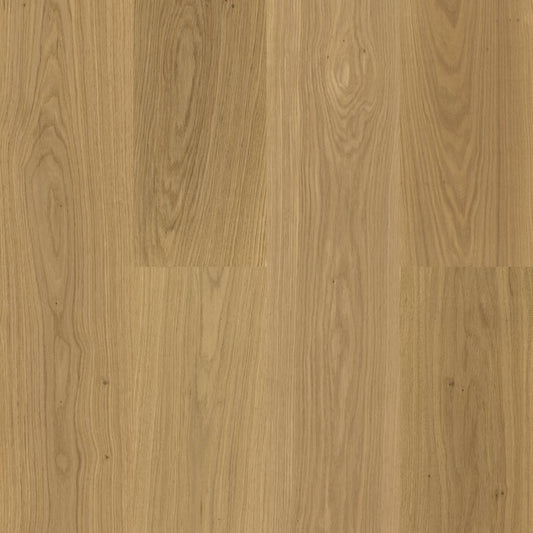
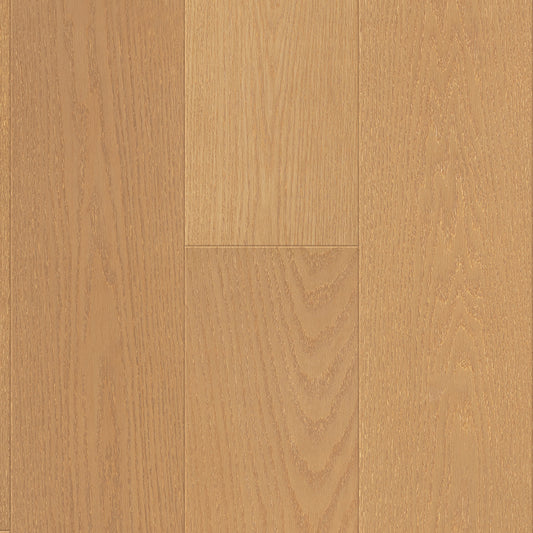
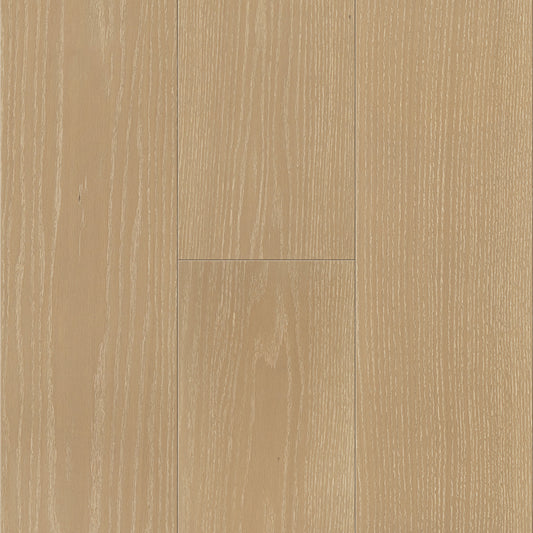
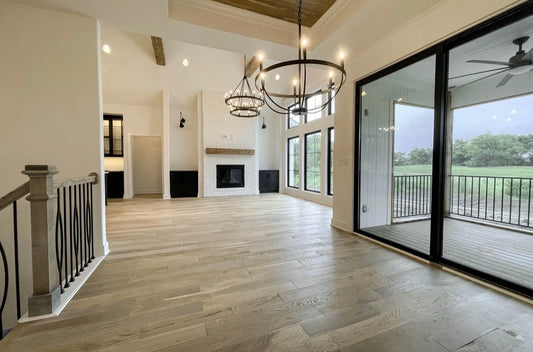
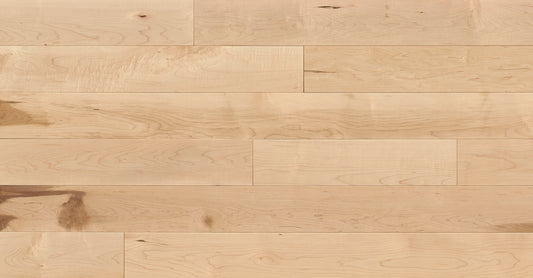
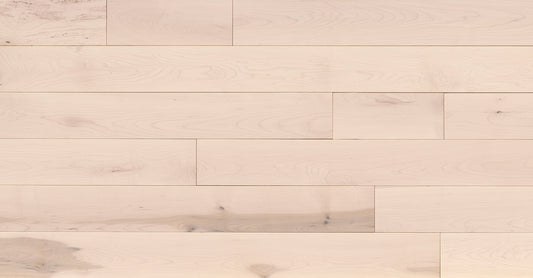
Tongue and Groove Flooring
Tongue and groove flooring uses a projecting tongue along one board edge and a matching groove along the next. These profiles help adjoining boards align as the floor is assembled. For shoppers choosing real wood, the important decisions include solid versus engineered construction, the installation method, the subfloor and the finished appearance.
This collection brings together qualifying solid and engineered hardwood with tongue and groove profiles. Choose by the complete specification rather than assuming every board with this edge can be installed in the same way. A matching profile does not make two different flooring products compatible.
What Is Tongue and Groove Flooring?
A tongue and groove joint connects adjoining boards through their shaped edges. The tongue enters the groove to align the boards and support a consistent surface. The installer still needs the fastening or adhesive system specified for that particular floor.
Tongue and groove describes the edge profile. It does not independently describe the wood species, board thickness, finish, moisture performance or attachment method. A solid hardwood board and an engineered hardwood board may both use this profile while requiring different preparation and installation.
The profile also differs from the decorative bevel visible between boards. A floor can have tongue and groove edges beneath a square edge, small bevel or more pronounced surface detail.
Solid Versus Engineered Tongue and Groove Wood
Solid flooring is made from a single piece of wood. Its character comes from the species, grade, grain and finish. Explore solid hardwood flooring when you want to compare this construction and review the approved fastening methods for the boards you prefer.
Engineered hardwood has a real wood surface bonded to a layered base. The surface provides the visible grain, while the construction below it changes how the board responds to its environment. Engineered products still need moisture control and an appropriate installation method.
Compare tongue and groove engineered hardwood if you specifically want a layered real wood floor. Veneer thickness, total thickness, board dimensions and installation approval should all be considered together.
Does Tongue and Groove Mean Nail Down?
No. Tongue and groove flooring may be approved for nailing, stapling, gluing or a specified floating system, depending on the product. The profile alone does not establish which of these options is suitable.
For a mechanically fastened floor, the installer needs an approved wood subfloor, the correct fastener and suitable spacing. A glued floor needs compatible adhesive and a prepared substrate. A floating tongue and groove installation, where permitted, may require adhesive at the joints and a specified underlayment.
Browse nail down engineered hardwood when fastening is part of your project plan. Always compare the current instructions for the selected board before buying equipment or installation materials.
Choosing a Floor for Your Subfloor
Identify the substrate before selecting the flooring. Plywood, oriented strand board, concrete and an existing floor covering create different installation conditions. The installer should assess flatness, moisture, structural condition and compatibility with the proposed attachment method.
Concrete does not automatically rule out engineered hardwood, but it requires a suitable approved system. Directly driving ordinary flooring cleats into concrete is not an installation method. Moisture testing and compatible adhesive or another approved assembly may be necessary.
For projects on a slab, compare engineered hardwood flooring over concrete. This helps focus the search on the application while keeping the actual board instructions central to the decision.
Board Width, Length and Room Layout
The board dimensions affect how often joints appear and how the floor reads across a room. Narrower boards create more lines and can suit traditional interiors. Wider boards put greater emphasis on the wood surface and may show more grain within each board.
Length matters alongside width. A mix of lengths creates a different rhythm from uniformly long boards. Review the published length format and carton information, particularly when a listing uses random lengths rather than one fixed measurement.
Plan the layout around doorways, focal points and adjoining spaces. Small offcuts, short end joints and narrow finishing rows can distract from a well chosen floor. An installer can help establish the starting position before the first board is fixed.
Surface Finish and Everyday Appearance
A prefinished floor arrives with its surface treatment already applied. This lets you review the intended color and sheen before installation. Compare prefinished hardwood flooring if that approach suits your schedule and design plans.
Finish, grain and color all affect the appearance of daily marks. A very uniform surface may show contrast differently from a wood with more natural variation. Matte and lower sheen options can create a softer visual effect, but sheen alone does not establish durability.
Assess samples beside walls, cabinets and furniture. Review them horizontally in daylight and evening light. Natural wood includes variation, so a small sample should be treated as a guide rather than a promise that every board will look identical.
Moisture and Indoor Conditions
Real wood flooring exchanges moisture with the surrounding air. Indoor conditions, subfloor moisture and installation timing therefore matter, even when the board has an engineered base. Follow the manufacturer's acclimation or conditioning instructions for the specific product.
Do not treat ordinary hardwood as waterproof flooring. Spills should be removed promptly, and persistent moisture problems should be corrected before installation. The installer should check the flooring and substrate using the recommended assessment methods.
Expansion space is another part of moisture planning. A tightly trapped floor cannot respond as intended to environmental changes. Leave the required clearance around fixed objects and plan appropriate transitions where the instructions call for them.
Matching Flooring Heights and Adjacent Rooms
Total board thickness affects thresholds, doors, stair components and the relationship to neighboring surfaces. An adhesive bed or underlayment may also affect the finished height. Work from the complete proposed assembly rather than the board thickness alone.
For kitchens, confirm appliance clearances before installation. A raised floor can change the space available to remove a dishwasher or move other equipment. Door trimming, reducers and stair details are easier to plan before the flooring is ordered.
Matching a new wood floor to an existing one requires more than finding a similar color. Thickness, edge profile, species, finish and age can all affect the result. A deliberate transition may be more practical than an attempted continuous joint between incompatible products.
How to Order Tongue and Groove Flooring
Start with accurate room measurements and account for the layout, cuts and board selection. Complex rooms, diagonal layouts and a need to balance strong grain variation may require more material than a simple rectangular space.
Review carton coverage and whether the supplier sells complete cartons. Keep suitable leftover boards for future repairs. Replacement material from another production run may differ in appearance, particularly with natural wood.
Use hardwood flooring to compare the wider category, then narrow the purchase to boards with the profile, construction and application your project requires. A successful selection connects the visual choice with a workable installation plan.
Frequently Asked Questions
What does tongue and groove flooring mean?
It means the boards have a projecting tongue and a matching groove that align adjoining pieces. The term describes the edge connection, not the species, total thickness or approved attachment method.
Is tongue and groove flooring the same as click lock?
No. Traditional tongue and groove boards fit through matching profiles, while click systems use a locking design. Some floating tongue and groove systems require joint adhesive. Use the instructions for the exact floor.
Can tongue and groove flooring be glued down?
Some products permit adhesive installation, but others require a different method. Confirm the flooring, adhesive and substrate are compatible before planning a glued installation.
Is solid or engineered tongue and groove better?
The appropriate choice depends on the room, subfloor, indoor conditions and installation plan. Compare real wood surface, total thickness and approved applications rather than choosing by edge profile alone.
Can tongue and groove hardwood go over concrete?
Selected engineered products may be suitable with an approved system and properly prepared concrete. Moisture testing, flatness and the required adhesive or assembly remain essential.
Does tongue and groove flooring need expansion gaps?
Real wood flooring needs the clearances specified by its manufacturer. The tongue and groove joint does not eliminate movement or allow the floor to be trapped against walls and fixed objects.