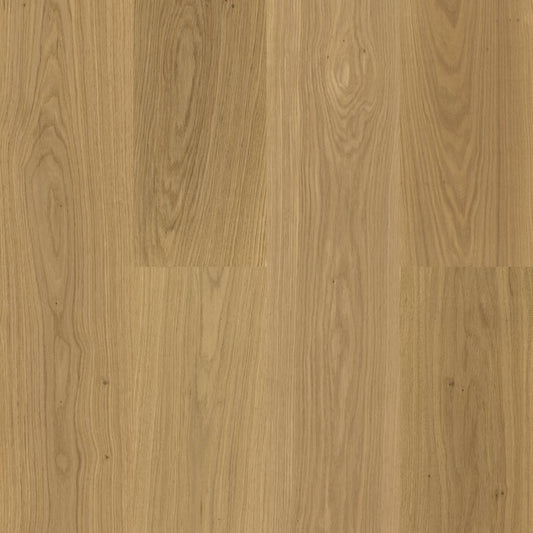
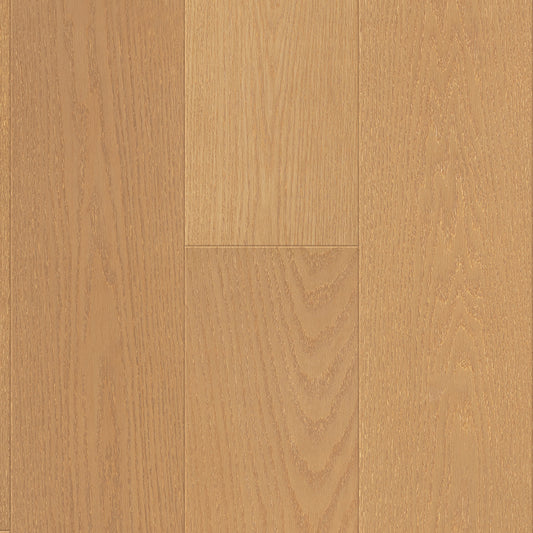
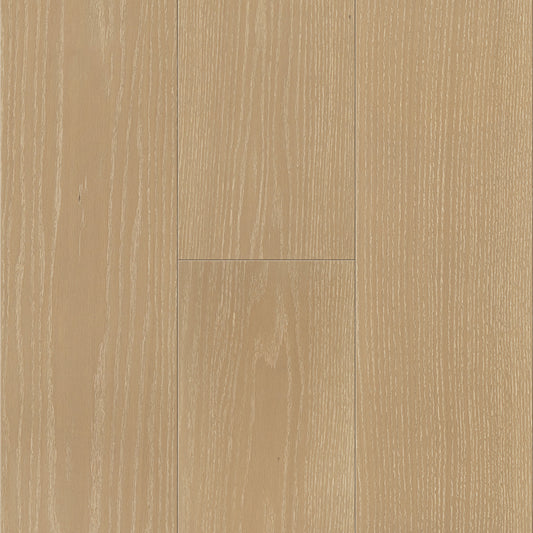
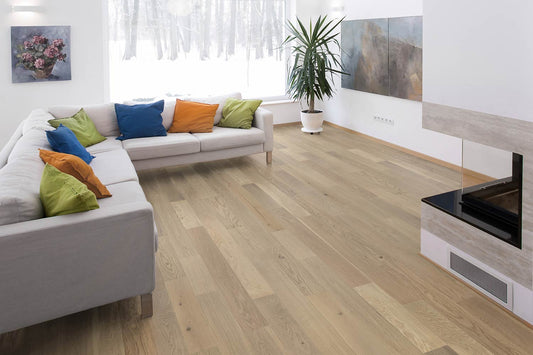
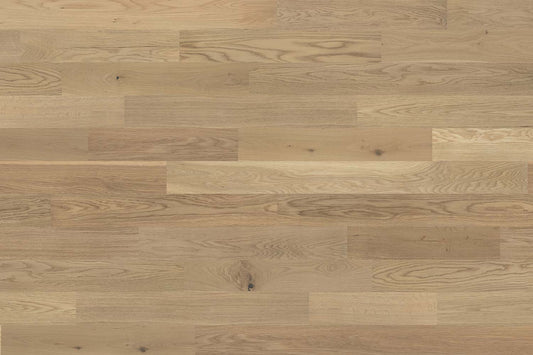
Tongue-and-Groove Engineered Hardwood Flooring
Tongue-and-groove engineered hardwood flooring uses complementary milled edges that align adjoining planks. One edge contains a projecting tongue, while the adjoining edge contains a matching groove.
The edge profile helps position the boards, but it does not independently determine the approved installation method.
Installation Options
Depending on the product, tongue-and-groove engineered hardwood may permit:
- Full-spread glue-down
- Nail-down
- Staple-down
- Glue-assisted nail-down
- Edge-glued floating installation
A tongue-and-groove product approved for nail-down should not automatically be assumed suitable for floating or glue-down installation.
Tongue-and-Groove Versus Click-Lock
Traditional tongue-and-groove boards fit together through complementary edges. Click-lock flooring uses a mechanically shaped joint designed to engage and hold without conventional edge adhesive.
Tongue-and-groove flooring may provide:
- Multiple professional installation options
- Compatibility with substantial plank profiles
- Glue-down approval on selected products
- Nail-down approval on selected products
- Wide-plank availability
- Long-plank availability
Click-lock flooring may simplify selected floating installations, but the complete product should guide the choice.
Glue-Down Installation
When approved for glue-down installation, the boards are bonded directly to a prepared wood or concrete substrate.
Confirm:
- Adhesive compatibility
- Moisture limits
- Trowel specification
- Open and working time
- Required adhesive transfer
- Subfloor flatness
- Grade-level approval
- Cleanup procedure
The tongue and groove should not be glued unless the instructions require it.
Nail-Down Installation
Selected tongue-and-groove planks may be mechanically fastened through the tongue over an approved wood subfloor.
Fastener type, gauge, length, spacing, and pneumatic pressure must match the installation instructions. Wide boards may require adhesive assistance.
Floating Installation
Some tongue-and-groove products can be floated by applying an approved adhesive within designated portions of the plank joint.
This does not mean that every tongue-and-groove floor can float. Use only the joining adhesive and application pattern specified by the manufacturer.
Milling Quality
Properly milled edges help create consistent plank alignment. However, natural wood products may still require professional board selection during installation.
Boards with visible manufacturing damage or unsuitable joints should be set aside and reported before installation continues.
Frequently Asked Questions
What is tongue-and-groove engineered hardwood?
It is engineered hardwood with complementary projecting and recessed plank edges.
Is tongue and groove the same as click lock?
No. Click-lock systems use mechanically engaging joints, while conventional tongue-and-groove edges fit together more simply.
Can tongue-and-groove flooring be floated?
Selected products can be edge glued and floated when expressly approved.
Can it be glued to concrete?
Selected products may permit full-spread glue-down installation over prepared concrete.
Can it be nailed down?
Many substantial tongue-and-groove products permit fastening over approved wood subfloors.
Should the plank joints always be glued?
No. Joint adhesive should be used only when the installation instructions require it.