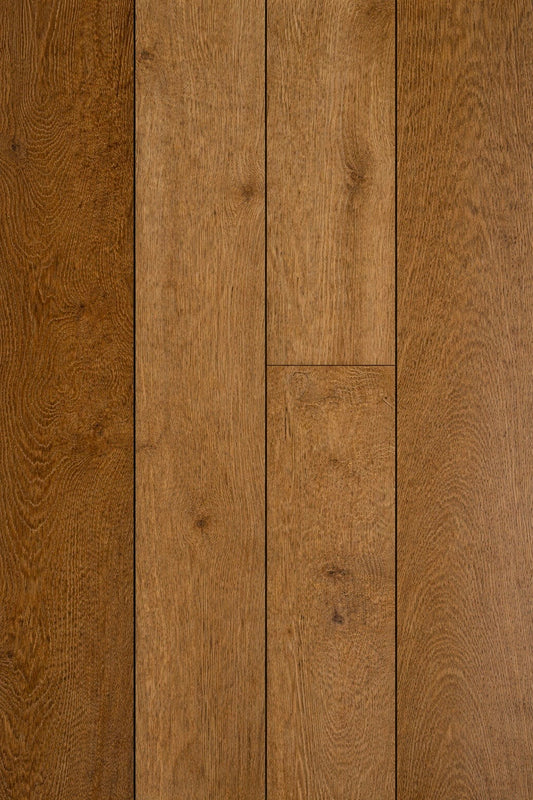
Engineered Hardwood Flooring Over Concrete
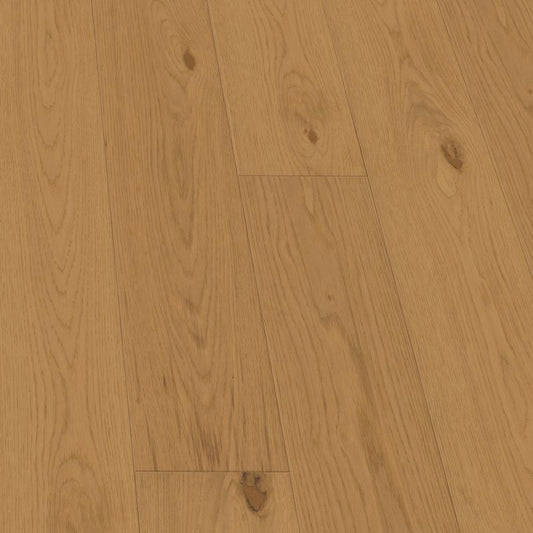
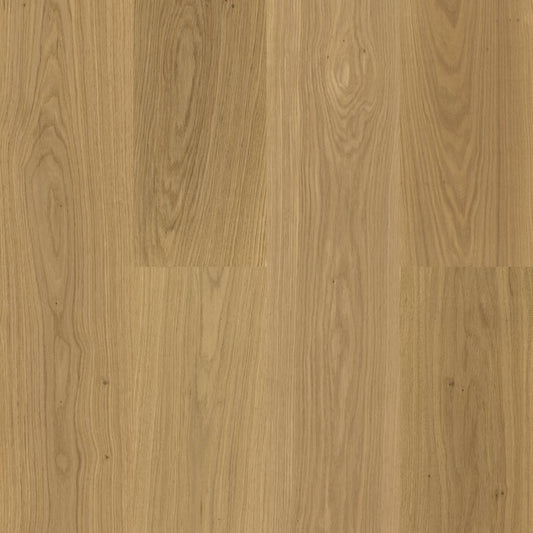
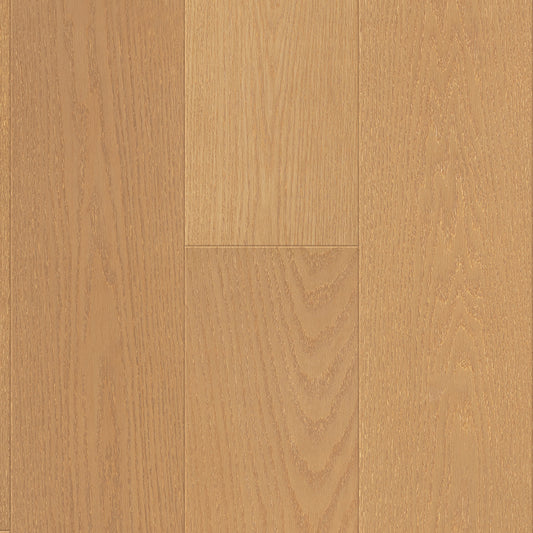
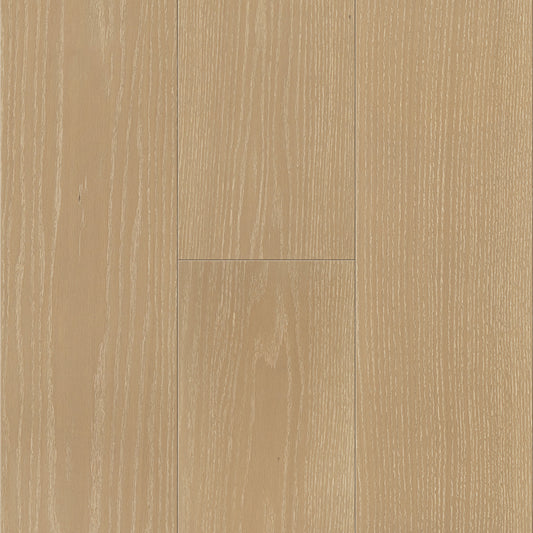
Engineered hardwood flooring over concrete provides genuine wood appearance through products specifically approved for installation on prepared concrete slabs.
Its layered construction can provide greater dimensional stability than comparable solid hardwood, but concrete moisture, flatness, grade level, installation method, and environmental control remain critical.
Only products with written manufacturer approval over concrete should qualify.
Why Engineered Hardwood Is Used Over Concrete
Engineered hardwood uses a genuine hardwood veneer supported by multiple stabilizing layers.
Depending on the product, potential advantages over concrete include:
- Genuine hardwood appearance
- Greater dimensional stability than comparable solid wood
- Glue-down installation options
- Floating installation options
- Wide and long plank formats
- Factory-applied finishes
- Above-grade installation
- On-grade installation
- Below-grade installation where approved
- Compatibility with selected radiant systems
Engineered construction does not make a product waterproof or eliminate slab preparation.
Glue-Down Installation Over Concrete
Full-spread glue-down installation bonds the engineered planks directly to the prepared slab.
The system may require:
- Approved hardwood adhesive
- Concrete moisture testing
- Flatness correction
- Crack evaluation
- Surface cleaning
- Proper slab curing
- Approved trowel size
- Correct adhesive transfer
- Working-time management
- Immediate adhesive cleanup
Some adhesives provide moisture-control properties, but their limits and application requirements must be followed exactly.
Floating Installation Over Concrete
Selected engineered hardwood uses edge-locking or approved tongue-and-groove construction to float over a compatible underlayment.
Confirm:
- Written floating-installation approval
- Approved underlayment
- Vapor-barrier requirements
- Maximum room dimensions
- Expansion space
- Transition requirements
- Attached-pad restrictions
- Subfloor flatness tolerance
- Grade-level approval
- Radiant-heat approval where applicable
A floating installation should not be improvised using a product approved only for glue-down or nail-down installation.
Concrete Moisture Testing
Concrete can contain significant moisture even when the surface appears dry.
Required tests may include:
- In-situ relative-humidity testing
- Calcium-chloride testing
- Manufacturer-approved electronic testing
- pH or alkalinity testing
- Moisture evaluation after HVAC startup
- Testing throughout the installation area
The flooring and adhesive manufacturers may establish different limits. The complete system must meet the most restrictive applicable requirement.
New Concrete Slabs
New concrete requires sufficient curing, but time alone does not establish readiness.
Before installation, verify:
- Slab age
- Moisture-test results
- Surface strength
- Curing compounds
- Sealers
- Flatness
- Cracks
- Interior climate control
- Building enclosure
- Manufacturer requirements
Flooring should not be installed simply because a standard number of curing days has passed.
Existing Slabs
Older concrete can still present moisture and preparation problems.
Inspect for:
- Existing adhesive
- Paint
- Sealers
- Oil
- Dust
- Surface weakness
- Hydrostatic pressure
- Cracks
- Previous moisture damage
- Uneven patching
- Contaminants
- Unexplained discoloration
Contaminated or weak surfaces may require professional mechanical preparation.
Above, On, and Below Grade
Concrete installation approval may differ by grade level:
- Above grade refers to slabs elevated above surrounding ground.
- On grade generally refers to slabs level with surrounding ground.
- Below grade refers to slabs below surrounding ground, such as some basements.
A product approved over above-grade concrete is not automatically approved for a below-grade basement.
Confirm both product and installation-system approval.
Subfloor Flatness
Wide and long engineered planks require a flat substrate. High and low areas may create:
- Hollow spots
- Movement
- Poor adhesive transfer
- Locking-system stress
- Uneven joints
- Edge damage
- Visible deflection
- Installation noise
The slab should be corrected using products compatible with the flooring, adhesive, vapor system, and concrete.
Cracks in Concrete
Not every crack has the same cause or risk. Cracks may result from shrinkage, settlement, structural movement, or other building conditions.
Before covering a crack:
- Determine whether it is active
- Assess vertical displacement
- Review moisture conditions
- Confirm repair-product compatibility
- Follow adhesive requirements
- Follow flooring-manufacturer guidance
- Obtain structural advice when necessary
Flooring and adhesive should not be expected to stabilize a structurally moving slab.
Radiant-Heat Systems
Selected engineered hardwood can be installed over radiant-heated concrete when the complete system is approved.
Confirm:
- Flooring approval
- Adhesive or underlayment approval
- Heating-system type
- Maximum finished-floor temperature
- Gradual startup requirements
- Slab moisture
- Indoor humidity
- Floor-sensor location
- Rug limitations
- Warranty conditions
General concrete approval does not automatically establish radiant-heat compatibility.
Frequently Asked Questions
Can engineered hardwood be installed directly over concrete?
Selected products can be glued directly to prepared concrete using an approved adhesive.
Can engineered hardwood float over concrete?
Selected products can float over approved underlayment and vapor protection.
Can engineered hardwood be nailed to concrete?
Not directly. Nail-down installation requires an approved wood subfloor assembly.
Does concrete need a moisture barrier?
Many installations require an approved vapor-control system, but the exact requirement depends on the product and method.
How dry must concrete be?
The slab must fall within the published moisture limits of the flooring, adhesive, and vapor-control system.
Can engineered hardwood be installed in a basement?
Selected products may be approved below grade. Written confirmation is required.
Is engineered hardwood waterproof over concrete?
No. Engineered hardwood contains genuine wood and requires moisture management.
Does the slab need to be level?
It normally needs to be flat within the published tolerance. Flatness and levelness are not exactly the same.
Can it be installed over radiant-heated concrete?
Selected products can, when the entire flooring and heating assembly is approved.
Should concrete installation be completed professionally?
Yes. Moisture testing, surface preparation, adhesive selection, vapor control, and installation technique are critical.