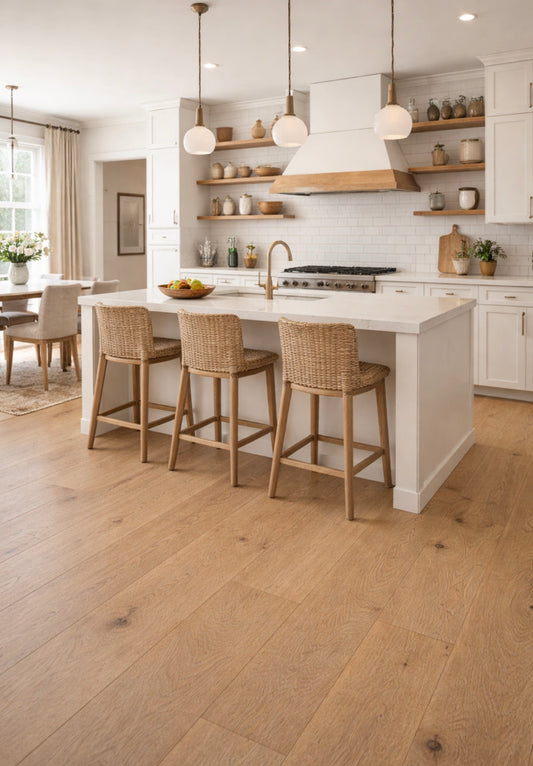
Engineered Hardwood Flooring for Kitchens
Engineered hardwood flooring can bring genuine wood grain, warmth, and architectural continuity into a kitchen. Its layered construction may offer greater dimensional stability than comparable solid hardwood, but it remains a real wood floor and should not be confused with waterproof vinyl, tile, or laminate.
Kitchen suitability depends on the complete product, approved installation, finish, subfloor, moisture control, household habits, and maintenance—not simply the word “engineered.”
Can Engineered Hardwood Be Used in a Kitchen?
Selected engineered hardwood products can be installed in residential kitchens when the manufacturer approves the application. Before ordering, verify the installation guide rather than assuming every engineered floor has identical room approval.
A suitable product should have:
- Genuine hardwood veneer
- Stable engineered core
- Factory-applied finish
- Published kitchen or residential-room approval
- Compatible installation method
- Clear spill-cleanup instructions
- Documented environmental requirements
- Complete manufacturer specifications
Engineered hardwood should generally not be installed in locations exposed to recurring standing water, active leaks, or uncontrolled moisture.
Engineered Hardwood Versus Solid Hardwood in Kitchens
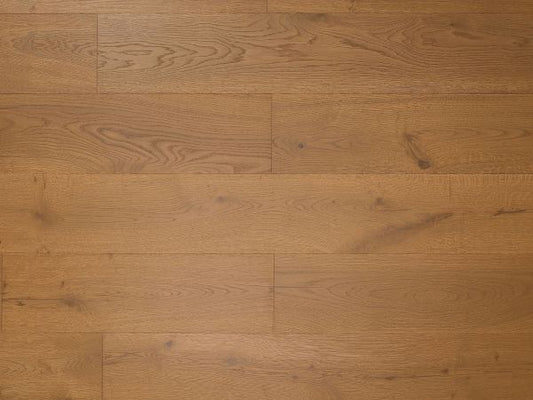
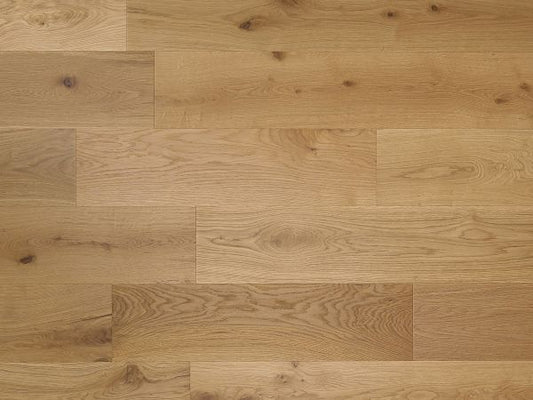
Both materials provide real wood surfaces. Solid hardwood is typically milled from one piece of wood, while engineered hardwood uses a genuine hardwood veneer over layered supporting construction.
Depending on the product, engineered hardwood may provide:
- Improved dimensional stability
- Glue-down options
- Floating options
- Concrete-subfloor compatibility
- Wide-plank formats
- Reduced sensitivity to some environmental changes
Neither material is waterproof. Plumbing leaks, appliance failures, standing water, and long-term moisture can damage both.
Engineered Hardwood Versus Luxury Vinyl
Luxury vinyl is commonly marketed as waterproof and can provide easier moisture-related maintenance. Engineered hardwood provides genuine wood grain and natural variation that printed flooring cannot fully reproduce.
Compare:
- Real wood versus printed design
- Water exposure expectations
- Scratch and dent behavior
- Repair options
- Comfort
- Sound
- Resale preferences
- Installation method
- Maintenance
- Budget
A household prioritizing genuine wood may prefer engineered hardwood. A kitchen with frequent uncontrolled spills may be better suited to a properly selected resilient floor.
Selecting the Wood Species
Possible kitchen species include:
- White oak
- European oak
- Red oak
- Hickory
- Maple
- Walnut
- Acacia
- Other documented hardwood species
Species influences grain, natural color, hardness, denting behavior, and finish response. Hardness should not be treated as a complete durability rating because finish quality, texture, maintenance, footwear, pets, and dropped objects also affect performance.
Finish Selection
The factory finish is the floor’s first line of protection against routine wear and brief surface spills.
Possible systems include:
- UV-cured urethane
- Aluminum-oxide-enhanced urethane
- UV lacquer
- UV-cured oil
- Hardwax oil
- Proprietary factory finishes
No finish makes the wood permanently waterproof. Compare stain resistance, sheen, repair guidance, cleaning requirements, recoating options, and manufacturer documentation.
Surface Texture
Texture changes both appearance and how ordinary marks are perceived.
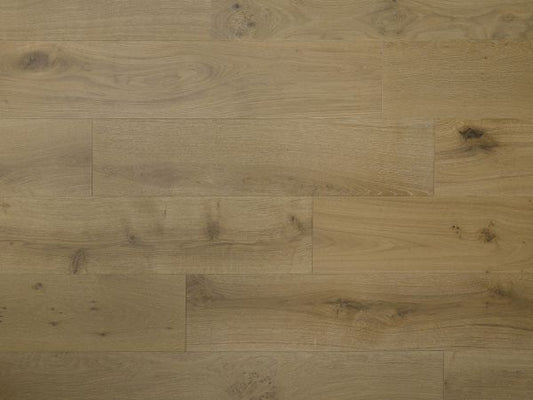
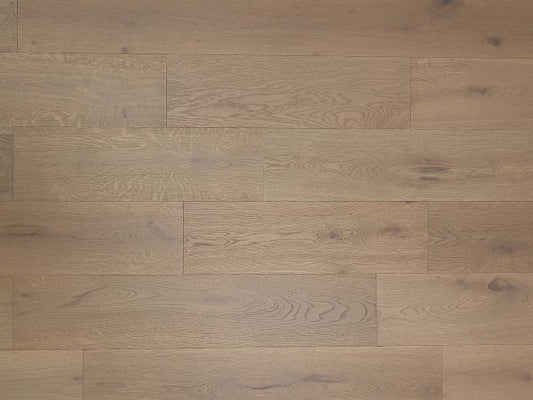
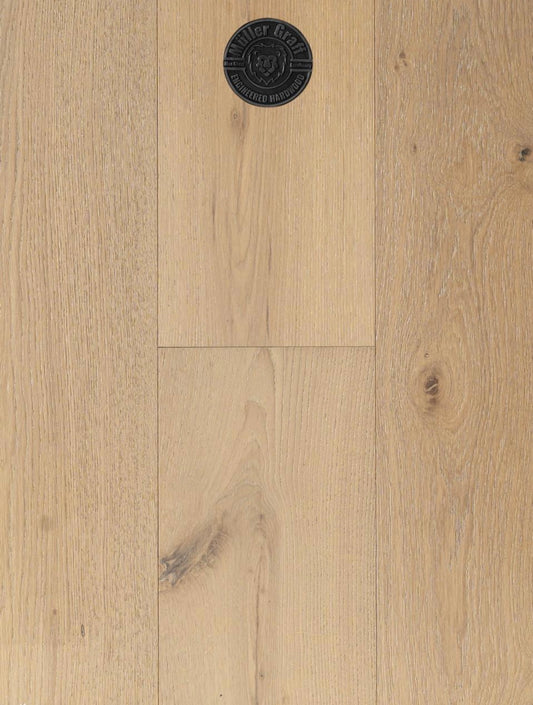
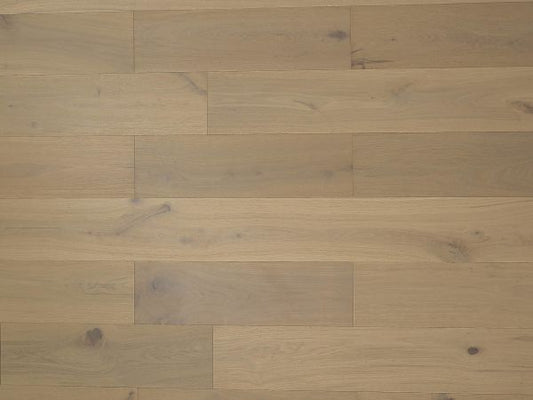
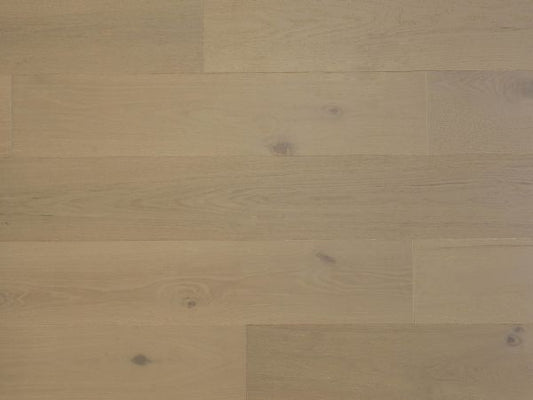
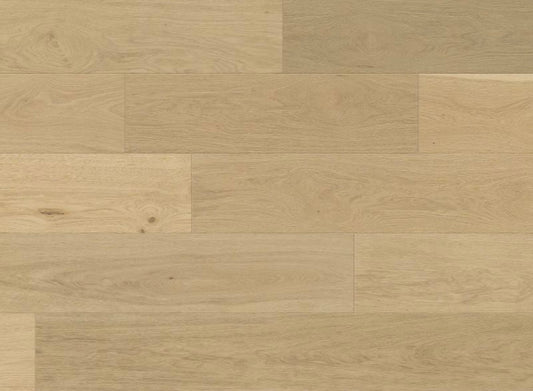
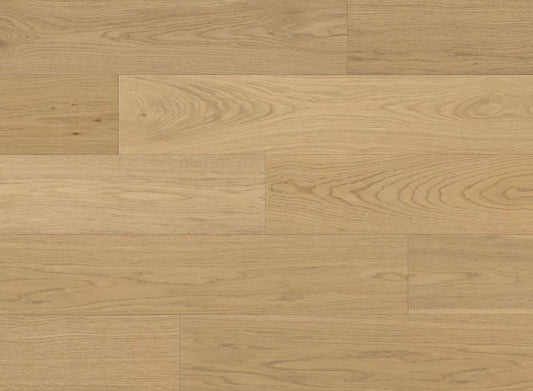
Wire-brushed surfaces may make light scratches and natural grain more visually integrated. Smooth floors can create a cleaner appearance but may reveal certain dents, scratches, dust, or reflections more clearly.
Available options may include:
- Smooth
- Wire-brushed
- Hand-scraped
- Distressed
- Sawn
- Manufacturer-specific textures
Texture does not replace routine cleaning or surface protection.
Color Considerations
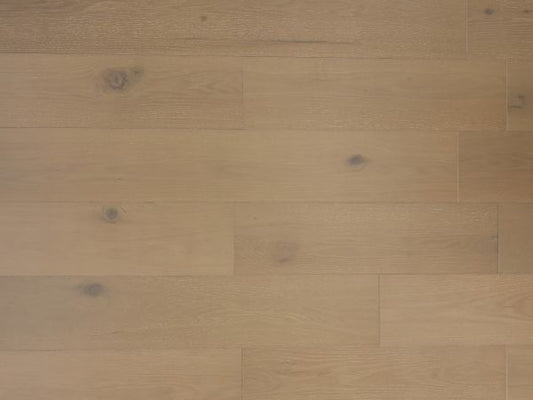
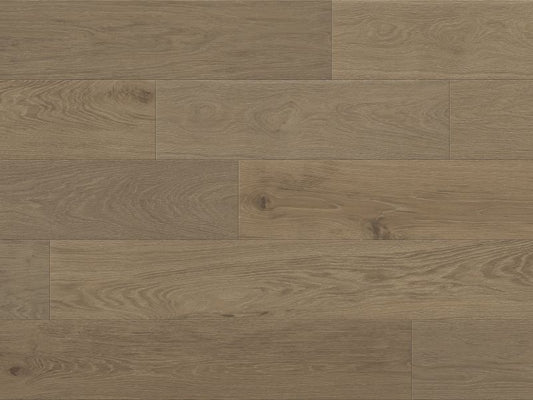
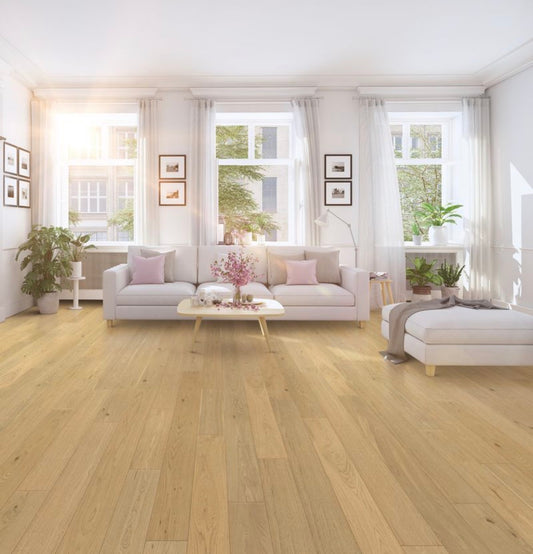
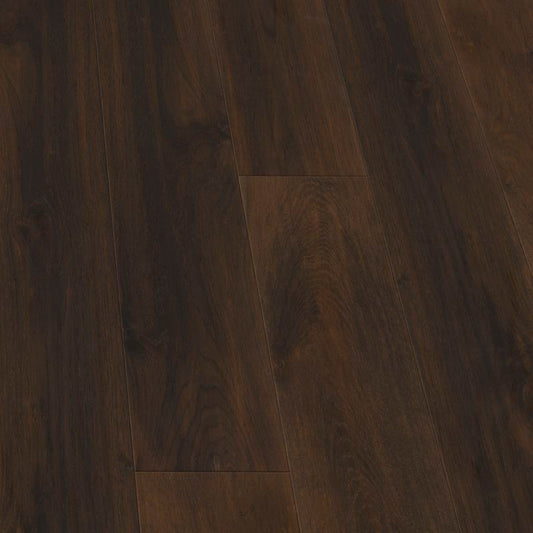
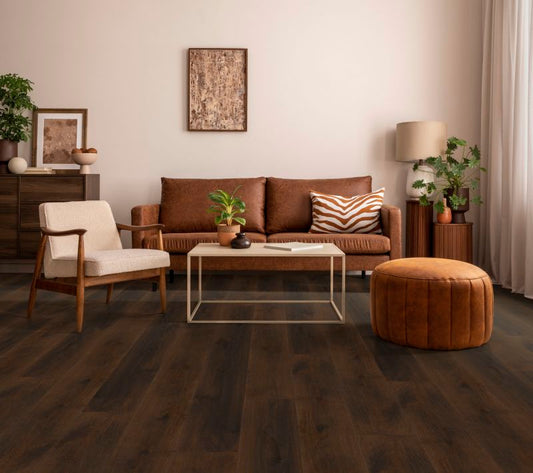
Mid-tone and naturally varied colors may visually disguise crumbs, dust, minor scratches, and everyday kitchen activity better than extremely dark or highly uniform floors.
Potential color families include:
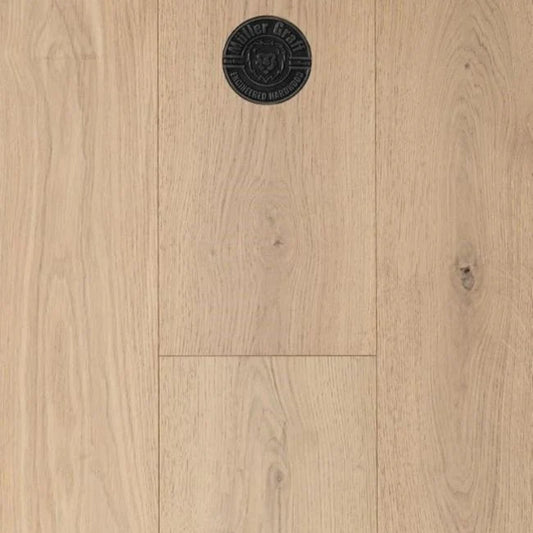
- Natural oak
- Blonde
- Warm beige
- Greige
- Honey
- Medium brown
- Smoked oak
- Dark brown
- Walnut tones
Evaluate samples near the cabinets, countertops, backsplash, appliances, and adjacent flooring under both daylight and evening lighting.
Plank Width and Layout
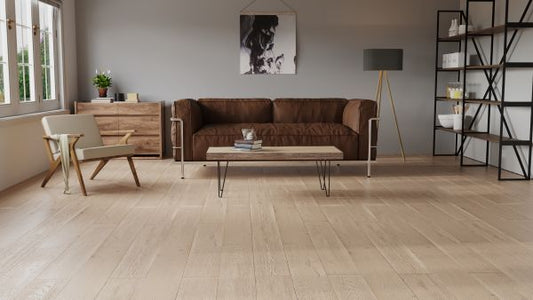
Wide planks can emphasize open kitchens and reduce the number of seams. Moderate-width boards may create a more traditional rhythm and can offer additional layout flexibility.
Consider running boards:
- Along the longest sightline
- Through connected living areas
- Parallel to an island
- Toward a principal window
- Consistently through doorways
Structural or manufacturer requirements may override aesthetic preferences.
Installation Under Cabinets and Islands
Flooring should not automatically be trapped beneath fixed cabinetry or islands. Floating floors generally require room to move and may not be installed beneath fixed fixtures unless expressly permitted.
Glue-down or mechanically fastened products may have different requirements.
Before installation, confirm:
- Cabinet installation sequence
- Island attachment
- Expansion space
- Appliance clearance
- Toe-kick height
- Dishwasher access
- Refrigerator clearance
- Transition placement
- Manufacturer instructions
- Installer recommendations
A dishwasher should remain removable after the finished floor is installed.
Appliance and Plumbing Risks
Common kitchen moisture sources include:
- Dishwasher leaks
- Refrigerator supply lines
- Sink plumbing
- Ice-maker connections
- Water filters
- Pet bowls
- Wet cleaning
- Spilled drinks
- Exterior-door moisture
- Plumbing failures
Use appropriate appliance pans or leak-detection devices where suitable. Inspect water lines regularly and clean spills promptly.
Subfloor Preparation
The substrate should be flat, dry, clean, structurally sound, and compatible with the approved installation method.
Kitchen renovation work may leave:
- Adhesive residue
- Uneven patches
- Removed-wall transitions
- Damaged panels
- Plumbing penetrations
- Height differences
- Contaminants
- Moisture-affected areas
These conditions should be corrected before flooring installation.
Glue-Down, Floating, and Nail-Down Options
Depending on the product, kitchen installation may use:
- Full-spread glue-down
- Floating installation
- Nail-down
- Staple-down
- Glue-assisted fastening
Glue-down can create a firmly supported floor where approved. Floating systems require suitable underlayment, expansion space, and attention around cabinets. Nail-down requires an approved wood subfloor and specified fasteners.
Installation approval should be verified for the exact product.
Transitions and Continuous Flooring
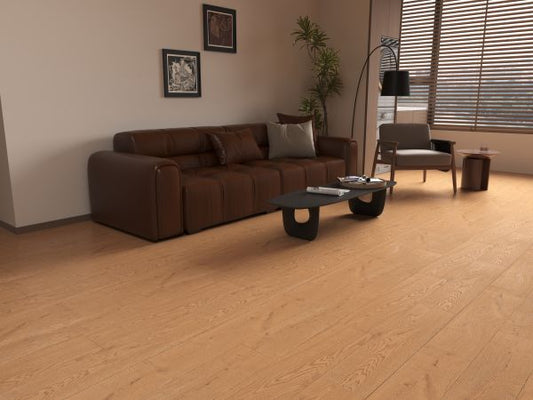
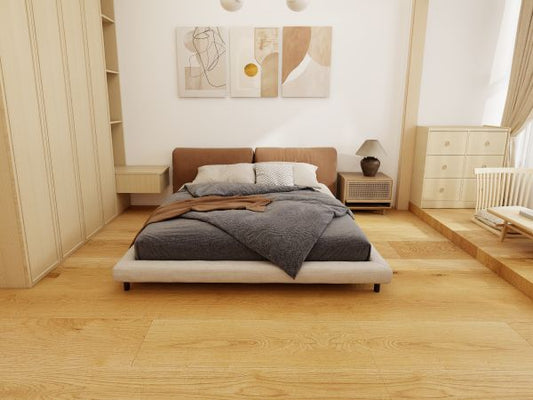
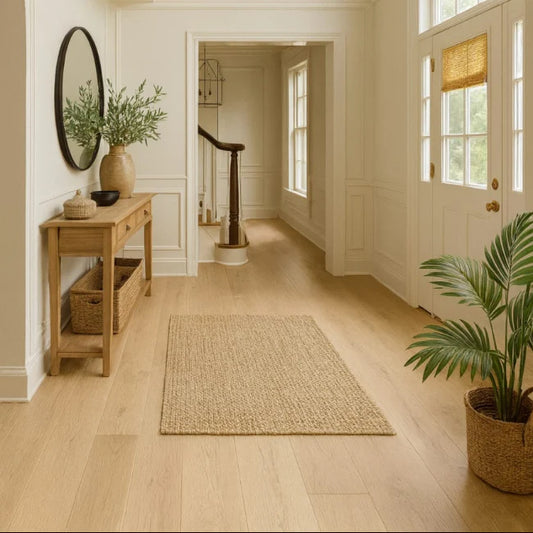
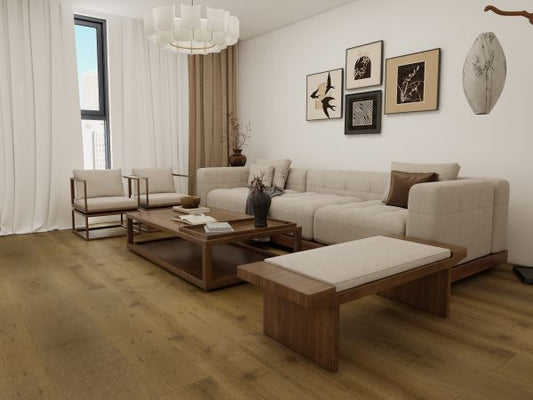
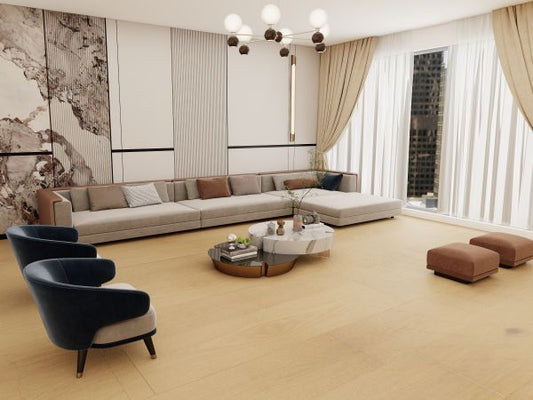
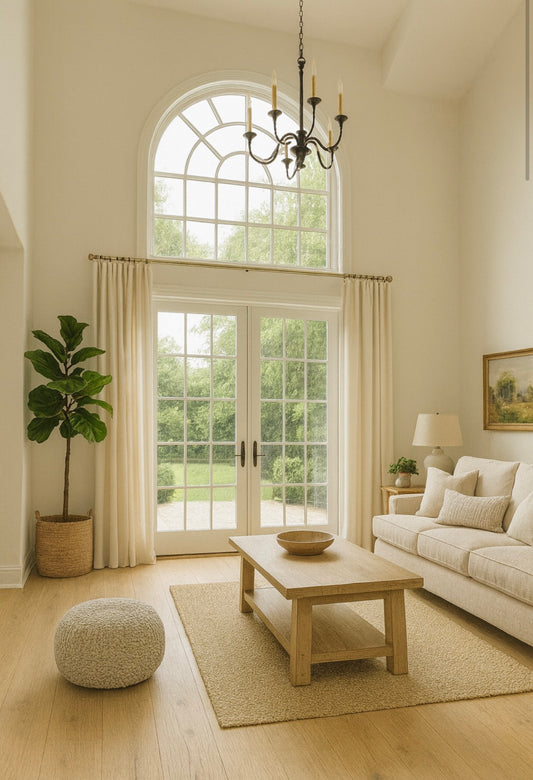
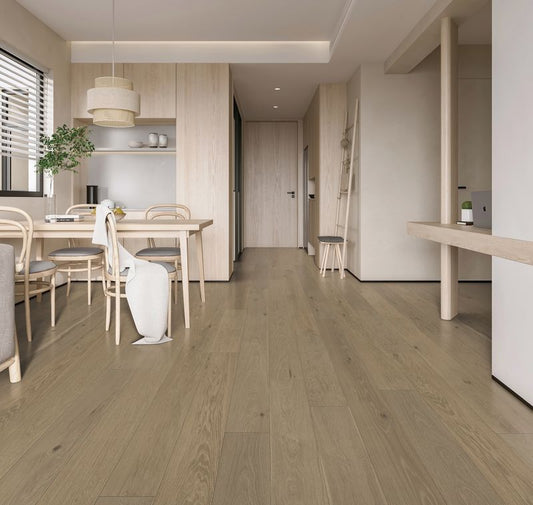
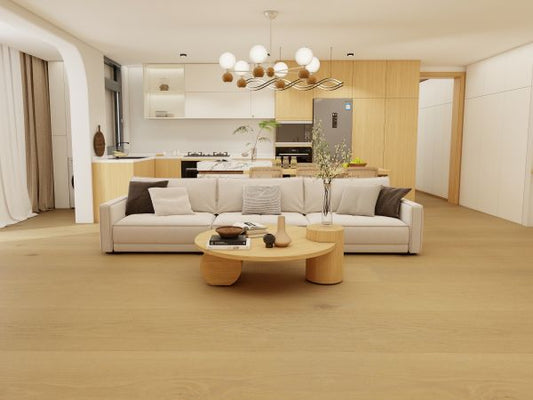
Engineered hardwood can visually connect kitchens with dining rooms, living rooms, hallways, and open-plan spaces.
However, continuous installations may have limits based on:
- Installation method
- Room dimensions
- Direction changes
- Doorways
- Environmental conditions
- Expansion requirements
- Fixed cabinetry
- Subfloor changes
- Connected-room geometry
Transition profiles should be planned before material is ordered.
Spill Management and Cleaning
Kitchen spills should be cleaned promptly rather than left to evaporate.
Routine care may include:
- Vacuuming abrasive grit
- Using an approved hardwood cleaner
- Wiping spills immediately
- Using mats near sinks
- Avoiding rubber-backed mats unless approved
- Protecting furniture
- Avoiding steam mops
- Avoiding excessive water
- Maintaining indoor humidity
- Following finish instructions
Wet mopping and allowing cleaning solution to pool between boards should be avoided.
Pets and High-Traffic Kitchens
Pets can add claws, water bowls, food debris, and tracked moisture. Consider textured finishes, natural color variation, entry mats, trimmed nails, and protective bowl mats.
High-traffic kitchens may benefit from:
- Durable documented finish
- Low or moderate sheen
- Visible grain
- Appropriate species
- Easy access to maintenance products
- Spare material for repairs
- Effective entryway protection
No wood floor is immune to scratches or dents.
Frequently Asked Questions
Is engineered hardwood suitable for kitchens?
Selected products are suitable when the manufacturer approves kitchen installation and moisture is properly managed.
Is engineered hardwood waterproof?
No. It contains genuine wood and can be damaged by standing water or leaks.
What happens if water is spilled?
Brief spills may be manageable when cleaned promptly, but water should not be allowed to remain on or between boards.
Is engineered hardwood better than solid hardwood for kitchens?
It may provide dimensional and installation advantages, but suitability depends on the exact products and conditions.
Can it go beneath kitchen cabinets?
That depends on the installation system. Floating floors generally should not be trapped beneath fixed cabinetry.
Can engineered hardwood be installed under a dishwasher?
Clearance, access, moisture protection, and manufacturer instructions must be considered.
What finish is best for a kitchen?
Choose a well-documented factory finish with appropriate care and performance guidance rather than relying only on its marketing name.
Are dark floors practical in kitchens?
They can be, but some dark, uniform finishes show dust, crumbs, and scratches more readily.
Can kitchen engineered hardwood be refinished?
Potential depends on veneer depth, texture, finish, damage, and manufacturer guidance.
Should spare boards be retained?
Yes. Attic stock may support future repairs after an appliance leak or localized damage.