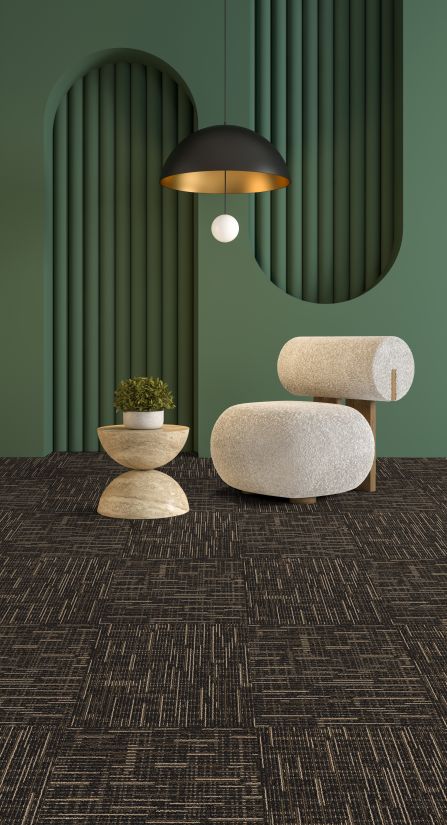
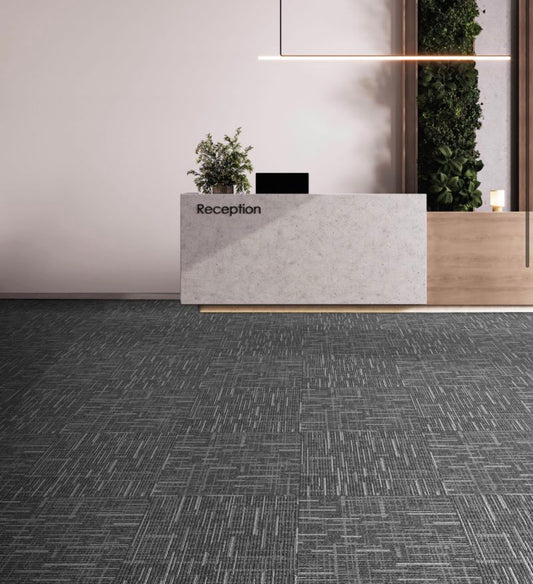
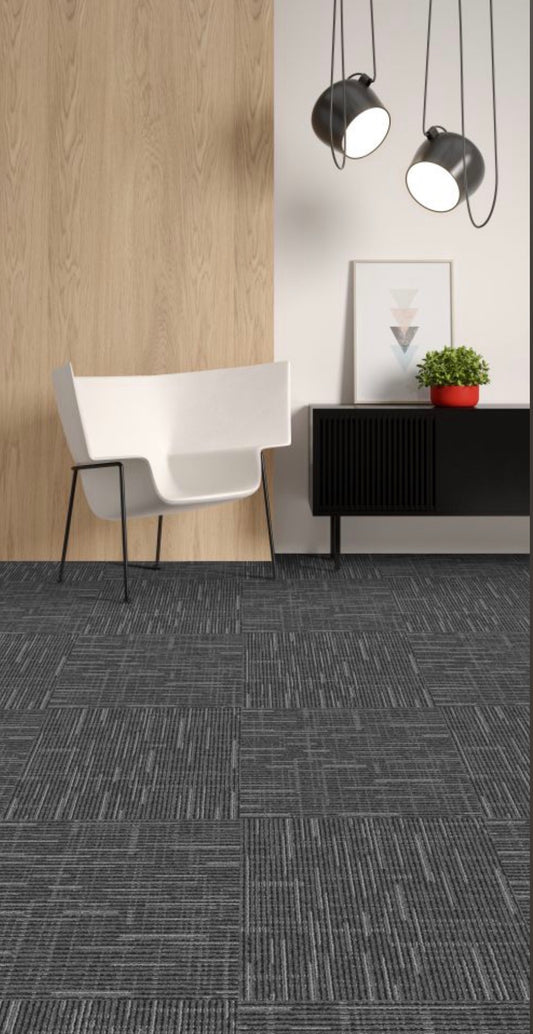
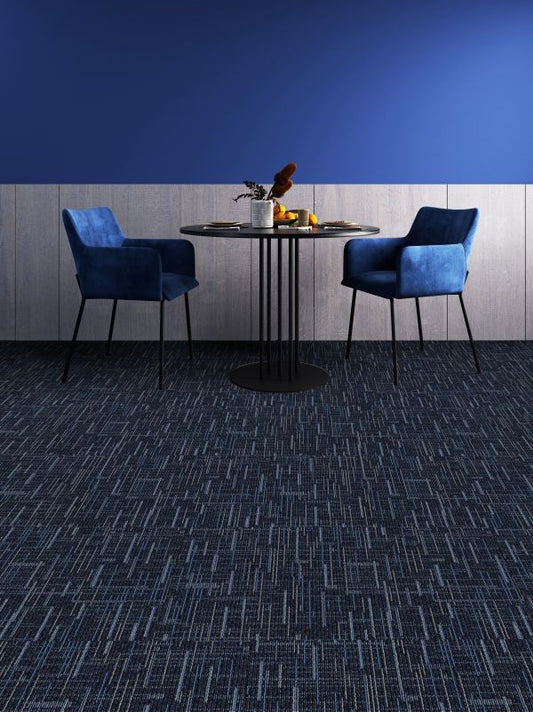
Carpet Tile for Basements
Carpet tile can add warmth, softness, and modular design to a finished basement. It may suit lower-level family rooms, offices, play spaces, hobby rooms, and entertainment areas when the selected product is approved for below-grade installation and the concrete remains within required moisture limits.
Carpet tile should not be installed as a solution for active water intrusion, flooding, or unresolved slab moisture.
Is Carpet Tile Good for Basements?
Carpet tile may be a practical basement option because individual modules can often be removed or replaced. Depending on the qualifying product, it may offer:
- Softer underfoot feel
- Reduced footfall noise
- Modular replacement
- Flexible color and pattern choices
- Low-profile installation
- Defined zones within an open basement
- Residential or commercial durability options
The product’s fiber, backing, adhesive, below-grade approval, and moisture requirements must all be verified.
Check Basement Moisture First
A basement can appear dry while still experiencing moisture vapor through the concrete. Before installation, investigate:
- Previous flooding
- Plumbing leaks
- Wall seepage
- Foundation cracks
- Drainage problems
- High indoor humidity
- Slab moisture
- Condensation
Conduct the testing required by the flooring and adhesive manufacturers. Correct active moisture problems before covering the floor.
Carpet Tile Over Concrete
Selected carpet tiles may be installed over prepared concrete when approved. The slab generally needs to be:
- Clean
- Dry within specified limits
- Flat
- Smooth
- Fully cured
- Structurally sound
- Free from adhesive contaminants
- Prepared for the required installation system
Concrete conditions can affect adhesion, appearance, indoor air quality, and warranty coverage.
Best Basement Uses
Approved carpet tile may work well in:
- Family rooms
- Home offices
- Playrooms
- Media rooms
- Hobby areas
- Guest spaces
- Home gyms with appropriate use
- Lower-level corridors
Do not assume every carpet tile is appropriate for bathrooms, laundry areas, utility rooms, or spaces with floor drains.
Choosing Basement Carpet Tile
Compare:
- Below-grade approval
- Backing construction
- Fiber type
- Pile style
- Tile dimensions
- Installation method
- Moisture limitations
- Stain resistance
- Warranty coverage
- Cleaning instructions
A patterned medium-tone design may help conceal minor debris and traffic marks better than a very light solid color.
Modular Replacement
One advantage of carpet tile is the potential to replace a damaged or permanently stained module without removing the entire floor. Keep extra tiles from the original production run because future dye lots may differ slightly.
Replacement does not correct the source of moisture. If a tile becomes wet, investigate why before installing another one.
Carpet Tile vs Waterproof Vinyl for Basements
Carpet tile provides a textile surface with warmth and sound-softening qualities. Waterproof vinyl offers a hard, easy-clean surface and may be more appropriate in areas exposed to spills or wet shoes.
Consider:
- Moisture risk
- Cleaning needs
- Desired comfort
- Pets
- Room function
- Subfloor condition
- Replacement needs
- Manufacturer approval
Some finished basements use different flooring categories in separate functional zones.
Frequently Asked Questions
Can carpet tile be installed directly over basement concrete?
Selected products may be installed over prepared concrete when the manufacturer approves the application and all moisture requirements are satisfied.
Is basement carpet tile waterproof?
Do not assume so. Carpet tile and its backing have product-specific moisture limitations, and the installation does not waterproof the basement.
What happens if one carpet tile is damaged?
An individual module can often be replaced. Store extra matching tiles for future repairs.
Does carpet tile require adhesive in a basement?
Many products require a manufacturer-approved installation system. Adhesive selection may depend on the backing, concrete, and moisture conditions.
Can carpet tile be used after a basement has flooded?
The cause of the flooding must be corrected, and the structure must be properly dried and evaluated before new flooring is considered.
Is carpet tile warmer than vinyl flooring?
It can feel softer and warmer underfoot, although actual comfort depends on the product, backing, slab temperature, and room conditions.
Explore other flooring options in Vinyl Flooring for Basements, Glue-Down LVP for Concrete Basements, SPC Flooring for Basements, and Laminate Flooring for Basements.