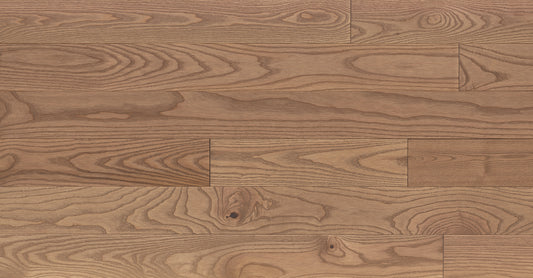
Ash Hardwood Flooring
Ash hardwood flooring provides a real wood surface with natural grain and variation. This collection groups products by verified ash species in solid hardwood construction. It keeps that material distinction clear so you can compare genuine ash without confusing it with ash colored vinyl or laminate.
A wood species and a stain are different choices. Ash can take on a range of finished appearances, while the underlying grain remains part of its character. Assess the species, construction, finish and dimensions together. Samples help you understand the design, and complete instructions help you decide whether the floor fits your installation.
What Is Genuine Ash Flooring?
Genuine ash flooring uses ash wood at the walking surface. Solid ash is wood throughout the board thickness. It differs from engineered hardwood, which has a genuine wood face over a supporting layered construction.
An ash inspired color or decorative name does not establish the species. Check the published material rather than assuming that every product with ash in its title contains ash wood.
Browse hardwood flooring for a wider real wood comparison. Use that overview to separate species choices from construction choices before narrowing the floor by color and surface treatment.
Solid Ash and Overall Thickness
Solid board thickness describes the complete wood profile. It helps you plan transitions to neighboring surfaces and check clearances at doors. It should be assessed alongside the joint design and installation instructions.
The solid ash selection here uses a published 3/4 inch thickness. Verify the exact width and length range against the product information before ordering, particularly if you are trying to coordinate with an existing floor.
Explore 3/4 inch solid hardwood flooring to compare similar overall profiles. Equal thickness does not establish equal species, finish or installation approval, so keep those specifications separate.
Ash Grain and Natural Variation
Real ash grain varies from board to board. The full installation will not look exactly like a single small sample. Board selection, cutting and finishing influence the amount of movement visible across the room.
Review several boards or a broader room representation where possible. Decide whether you want visible natural character to be a major design feature or a quieter background beneath furniture.
Compare the grain with other patterned surfaces. Wood cabinetry and strongly patterned stone can each add visual movement. A floor that complements them does not need to repeat their exact pattern or tone.
Comparing Ash With Other Hardwood Species
Different species can support different interior designs even when the finishes are similar. Oak, maple and ash should be assessed using actual samples rather than selected only by their names.
Browse oak hardwood flooring if you want another grain pattern to compare. Assess the species, finish and board scale together so that the comparison reflects what you will see in the room.
A deeper stain on ash does not change it into another species. Similarly, a pale stain on oak does not make it maple. The species remains a material fact, while the finished appearance is a separate design choice.
Choosing Warm, Neutral or Deeper Finishes
Warm finishes can connect ash flooring with cream walls, natural materials and traditional furnishings. More neutral finishes may provide another balance with contemporary cabinetry. Deeper finishes create additional contrast with lighter fixed surfaces.
Place the sample beside the actual cabinet door, wall color and nearby flooring. Review it flat on the floor, where light reflects as it will after installation. A vertically held sample can give a different impression.
Think about sheen as well as color. Reflections from windows or overhead lights may make some areas look lighter or more uniform. Check the finish under the conditions you experience daily before choosing it.
Board Scale and Random Length Layouts
Width affects the number of visible board divisions across the floor. A narrower solid format creates a different visual rhythm from wide engineered planks, particularly through long hallways and connected rooms.
Random lengths mean that boards vary within a published range. The maximum length does not describe every piece supplied. Discuss the layout using that range and the room’s dimensions.
Measure doorways, alcoves and irregular areas carefully. The direction and cuts should suit the product instructions and the room geometry. Agree on additional material for waste and selection before placing the complete order.
Ash in Living, Dining and Sleeping Spaces
Ash can bring real wood continuity into living rooms, dining rooms and bedrooms. Each room has a different practical use. Dining chairs move frequently, while bedrooms often have more fixed furniture and less entry traffic.
Use suitable furniture protection and keep grit away from contact points. A visible grain pattern can influence how marks appear, but it does not prevent physical damage.
Explore solid hardwood flooring while assessing the room and installation grade. Genuine wood needs suitable indoor conditions and moisture management. The design decision should be supported by technical approval for the intended application.
Installation Methods and Substrate Conditions
Follow the approved attachment method for the exact board. A solid hardwood product may allow specified fastening or adhesive methods, but the permissions should be read rather than assumed.
Wood substrates need suitable support and flatness. Concrete needs separate confirmation of the permitted installation assembly and the required moisture preparation. Correct these conditions before installation instead of relying on the board’s thickness to hide problems.
Compare glue down engineered hardwood flooring if your project leads you toward another real wood construction. Its installation permissions differ from solid ash and still need to be checked for the product you choose.
Factory Finishes, Care and Future Work
A factory applied finish should be evaluated by its stated type, sheen and care instructions. It does not make genuine wood immune to spills, sharp objects or prolonged moisture exposure.
Explore UV lacquered engineered hardwood flooring when comparing another finish and construction category. Use the exact coating information on your chosen ash board for cleaning and maintenance decisions.
Remove abrasive debris, clean spills promptly and protect furniture contact points. Any future refinishing should be assessed by a qualified professional based on the installed floor’s condition, usable wood and previous work. Keep matching boards for possible repairs and maintain the specified indoor environment throughout the year.
Frequently Asked Questions
Is ash hardwood flooring genuine wood?
Yes, when the specification identifies an ash walking surface. This collection focuses on verified solid ash rather than products that use only an ash inspired decorative image.
What is the difference between ash flooring and ash colored vinyl?
Genuine ash is wood. Ash colored vinyl uses a decorative design within a vinyl construction. They have different material behavior, installation requirements and care needs.
Can ash flooring have a darker finish?
Yes, a stain or finish can alter its appearance. The wood species remains ash, so choose by both the verified species and the actual finished sample.
Are all boards in a random length floor the same length?
No. Random length boards vary within a stated range. A published maximum length should not be treated as the length of every piece in a carton.
Is solid ash suitable for every subfloor?
No. Confirm the substrate, installation grade and attachment method for the exact board. Solid hardwood permissions should not be assumed from an engineered hardwood product.
How should ash hardwood be maintained?
Remove grit, clean spills promptly and use the cleaning method permitted for the finish. Protect furniture contact points and maintain the indoor conditions required by the manufacturer.