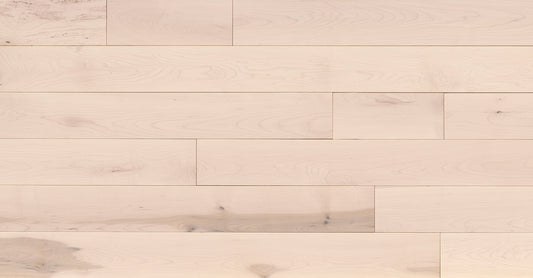
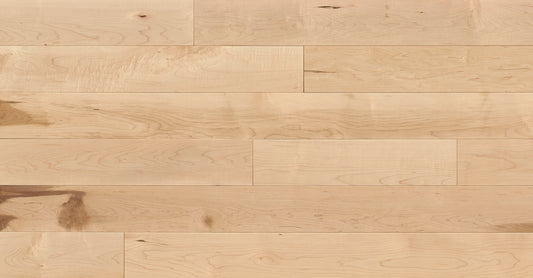
Maple Hardwood Flooring
Maple hardwood flooring brings a genuine wood surface to rooms where natural character and a considered finish matter. This collection focuses on verified maple species in solid hardwood construction. It separates real maple from laminate or vinyl designs that use a maple inspired image.
Start with the material, then compare the finish and dimensions. Maple can look different from one board to another, and a stain changes its appearance without changing the species. Use samples to judge the grain, undertone and sheen together. The right floor also needs to fit the room’s conditions and the installation planned beneath it.
What Makes a Floor Genuine Maple Hardwood?
Genuine maple hardwood uses maple wood as the walking surface. In a solid board, the wood continues through the board thickness. A maple inspired vinyl or laminate design uses a different material and should be compared separately.
The species name describes the wood, while the color describes its finished appearance. A warm or deeper stain does not turn maple into another species. Confirm the stated construction and species before ordering.
Browse hardwood flooring if you are still choosing between materials within the real wood category. That broader comparison helps you separate solid construction from engineered boards and assess the installation options for each.
Solid Maple Construction and Board Thickness
Solid maple offers full wood construction rather than a thin wood face over supporting layers. Overall thickness helps you plan the finished floor profile, transitions and clearance at doors.
The solid options here use a published 3/4 inch thickness. Check the specific listing and manufacturer information for the exact width and length range before purchasing. Dimensions should be confirmed consistently, especially when a project needs to match an adjoining floor.
Compare 3/4 inch solid hardwood flooring when you want to assess similar profiles across different species. A shared thickness does not mean the boards have identical appearance, installation permissions or finish requirements.
Maple Compared With Oak
Maple and oak have different natural grain characteristics. Their finished appearance also depends on staining, board selection, texture and sheen. A photograph of one board is not enough to predict the full visual effect across a room.
Explore oak hardwood flooring for a useful species comparison. Review actual samples side by side so that you can see the distinction under the lighting in your home.
Choose the grain you prefer rather than expecting a color name to settle the decision. If two samples have similar stains, their grain and surface reflection may still create a different result beside cabinets, painted trim or furniture.
Natural, Warm and Stained Finishes
A natural looking maple finish can support bright rooms and a restrained palette. Warmer or stained finishes can create a different relationship with cream walls, wood furniture and stone surfaces.
Judge the sample beside fixed finishes first. Cabinetry, countertops and adjacent flooring are more difficult to change than cushions or rugs. Compare undertones without trying to force an exact match between every wood surface.
Sheen matters alongside color. A floor may appear brighter when viewed toward a window and deeper when viewed from the opposite direction. Place samples horizontally and review them during daylight and with your usual evening lights.
Plank Width, Random Lengths and Layout
Board width affects how often joints divide the floor and how much grain is visible on each piece. A narrower solid board format creates a different rhythm from an extra wide engineered plank.
Random length flooring contains boards within a stated range. The maximum length does not mean every board has that dimension. Ask the installer to assess the layout using the actual length information rather than assuming a fixed length format.
Plan the direction through connected rooms and check cuts near doorways. The layout should suit the room’s shape, substrate and installation instructions. A measured material allowance needs to account for those cuts and any board selection.
Maple for Living Rooms and Bedrooms
Maple can form a consistent real wood foundation across living rooms, bedrooms and hallways. Consider traffic routes and furniture movement alongside the design. A quieter bedroom presents different daily demands from a main entrance route.
Explore engineered hardwood flooring for bedrooms if you want to compare a different real wood construction for that room. Approval and installation requirements still need to be checked for the exact board.
In living areas, protect furniture contact points and keep abrasive debris off the floor. A finish may influence how marks appear, but it does not prevent every scratch or dent. Match the household’s care routine to a genuine wood surface.
Installation and Subfloor Preparation
The installation method must be approved for the specific solid board. Nail, staple and glue down methods have different requirements, so do not transfer an instruction from one hardwood product to another.
Compare solid hardwood flooring while planning the substrate and installation grade. Wood subfloors need suitable support, fastening and flatness. Concrete requires separate confirmation of the permitted assembly and moisture preparation.
Review the complete product instructions before scheduling work. Discuss conditioning, room conditions, movement details and transitions with the installer. Correct preparation supports the appearance and the performance of the finished floor.
Moisture, Cleaning and Indoor Conditions
Maple is real wood and responds to moisture and changes in the indoor environment. Follow the manufacturer’s specified conditions before, during and after installation. The same requirements matter during seasons when the home is less occupied.
Clean spills promptly and avoid leaving water on the surface. Use cleaning tools and products that are permitted for the finish. A wood floor should not be treated as waterproof vinyl because it has a protective coating.
Remove grit regularly and use suitable entrance mats. Check furniture pads periodically so that trapped debris does not remain against the floor. Address leaks or unusual movement early rather than waiting for visible damage to increase.
Comparing Your Complete Project
Measure the area and discuss additional material for cuts and layout with the installer. Confirm transitions, trim and any adhesive or fastening supplies at the same time.
The material price is only one part of the comparison. Preparation and installation details can change the project cost. Check the finished height at doors and beside adjoining materials before making the final selection.
Explore prefinished hardwood flooring when factory applied finishes are part of your wider comparison. Assess the published coating and care guidance on the exact maple board you choose, then keep some matching material for possible repairs.
Frequently Asked Questions
Is maple hardwood flooring real wood?
Yes, when the specification identifies a genuine maple walking surface. This collection focuses on verified solid maple rather than printed maple inspired designs.
Is maple flooring the same as oak flooring?
No. Maple and oak are different species. Their grain, finish and board selection can produce different appearances even when the stains have a similar color.
Does a maple color name guarantee maple wood?
No. A decorative name can also appear on vinyl or laminate. Check the construction and stated species before treating a product as genuine maple hardwood.
Can solid maple flooring be installed over concrete?
Only where the specific product and installation assembly permit it. Confirm the substrate, moisture requirements and approved attachment method before planning that application.
Is maple hardwood waterproof?
A real wood floor should not be treated as waterproof because it has a protective finish. Clean spills promptly and follow the manufacturer’s moisture and cleaning instructions.
Can solid maple flooring be refinished?
Refinishing depends on the usable wood above the joints, the installed condition and any previous sanding. Have a qualified hardwood professional assess the floor before committing to that work.