
Collection: Flooring for Medical Offices
Compare flooring for medical offices with documented commercial approvals, practical maintenance requirements, stable installation systems, and applicable warranties. Review glue-down LVT, commercial vinyl, carpet tile, and other qualified options by area.
-
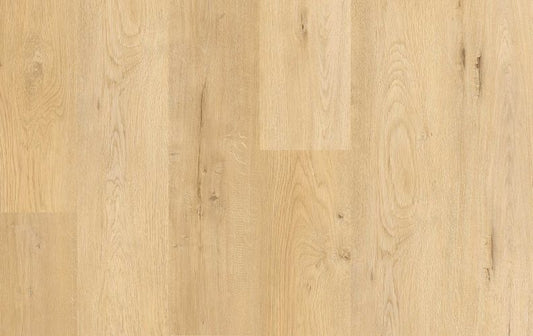
Active Spaces - Reno | 20 mil 2.5mm 7.25x48 Glue Down LVP | Aperion
Vendor:Aperion$2.28 / sq. ft. $110.00 per carton · 48.34 sq. ft. / carton2.5mm20mil7x48 -
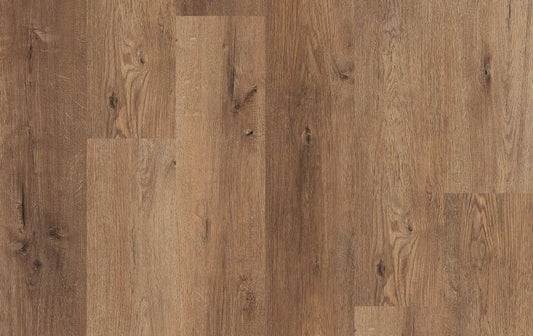
Active Spaces - Riviera Beach | 20 mil 2.5mm 7.25x48 Glue Down LVP | Aperion
Vendor:Aperion$2.28 / sq. ft. $110.00 per carton · 48.34 sq. ft. / carton2.5mm20mil7x48 -
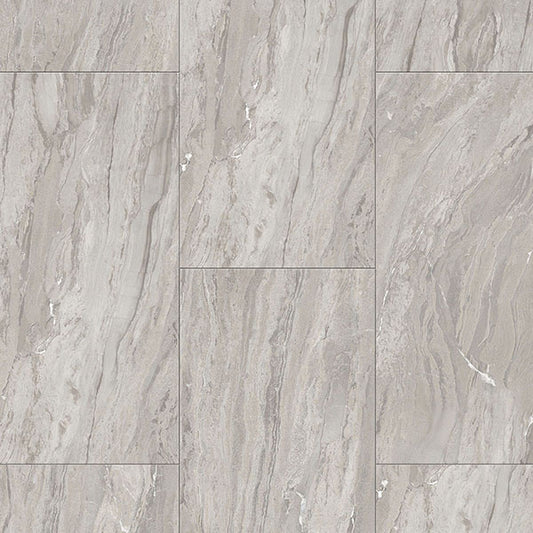
Rockwell Bradford 30mil 3mm 12x24 Tile Look LVT | Infinity Floors
Vendor:Infinity Floor$2.13 / sq. ft. $64.00 per carton · 30.03 sq. ft. / carton3.0mm30mil12x24 -
VaccuBond LVT Light Commercial Granite Grey 2.5mm 12mil 9x48
Vendor:VaccuBond LVT$3.89 / sq. ft. $140.00 per carton · 36.0 sq. ft. / carton2.5mm12mil9x48 -
VaccuBond LVT Light Commercial Rustic Olive 2.5mm 12mil 9x48
Vendor:VaccuBond LVT$3.89 / sq. ft. $140.00 per carton · 36.0 sq. ft. / carton2.5mm12mil9x48 -
VaccuBond LVT Light Commercial Starboard 2.5mm 12mil 9x48
Vendor:VaccuBond LVT$3.89 / sq. ft. $140.00 per carton · 36.0 sq. ft. / carton2.5mm12mil9x48 -
Formalay - Contour Flex | 20mil 5mm 9x60 Looselay LVP | Lions Floor
Vendor:Lions Floor$4.00 / sq. ft. $90.00 per carton · 22.5 sq. ft. / carton5.0mm20mil9x60 -
Formalay - StrataView | 20mil 5mm 9x60 Looselay LVP | Lions Floor
Vendor:Lions Floor$4.00 / sq. ft. $90.00 per carton · 22.5 sq. ft. / carton5.0mm20mil9x60 -
Formalay - Alex Form | 20mil 5mm 9x60 Looselay LVP | Lions Floor
Vendor:Lions Floor$4.00 / sq. ft. $90.00 per carton · 22.5 sq. ft. / carton5.0mm20mil9x60 -
Rockwell Hudson 30mil 3mm 12x24 Tile Look LVT | Infinity Floors
Vendor:Infinity Floor$2.13 / sq. ft. $64.00 per carton · 30.03 sq. ft. / carton3.0mm30mil12x24 -
Peckham Collection | Nunhead 20mil 2.5mm 7x48 LVP Glue Down EIR
Vendor:Monarch Floors$2.00 / sq. ft. $82.00 per carton · 41.094 sq. ft. / carton2.5mm20mil7x48 -
Rockwell Somerset 30mil 3mm 12x24 Tile Look LVT | Infinity Floors
Vendor:Infinity Floor$2.13 / sq. ft. $64.00 per carton · 30.03 sq. ft. / carton3.0mm30mil12x24 -
Forge Haze 4+1 Glue Down LVT 20mil 5mm 9x60 | Infinity Floors
Vendor:Infinity Floor$3.99 / sq. ft. $103.69 per carton · 25.99 sq. ft. / carton5.0mm20mil9x60 -
VaccuBond LVT Light Commercial Mineral Grey 2.5mm 12mil 9x48
Vendor:VaccuBond LVT$3.89 / sq. ft. $140.00 per carton · 36.0 sq. ft. / carton2.5mm12mil9x48 -
VaccuBond LVT Light Commercial Tioga 2.5mm 12mil 9x48
Vendor:VaccuBond LVT$3.89 / sq. ft. $140.00 per carton · 36.0 sq. ft. / carton2.5mm12mil9x48 -
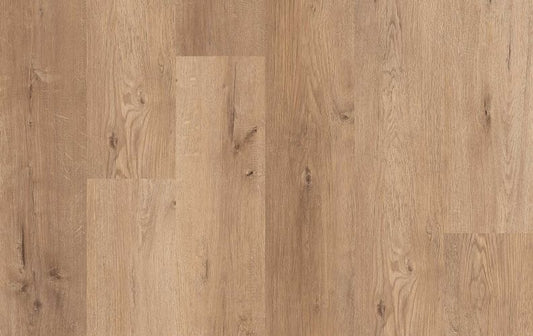
Active Spaces - Rochester | 20 mil 2.5mm 7.25x48 Glue Down LVP | Aperion
Vendor:Aperion$2.28 / sq. ft. $110.00 per carton · 48.34 sq. ft. / carton2.5mm20mil7x48







Selecting Flooring for a Medical Office
Medical offices contain several types of spaces, and each can place different demands on the flooring. Reception areas, corridors, examination rooms, administrative offices, staff spaces, and storage areas should be evaluated individually.
This collection focuses on products with documented commercial approval and applicable warranty coverage. Inclusion does not mean every product is suitable for every healthcare-related project. The architect, designer, facility manager, installer, and applicable authorities should approve the final specification.
Start With the Specific Area
Reception and Waiting Areas
Reception spaces can experience concentrated foot traffic, tracked-in grit, movable seating, and frequent cleaning. Consider documented commercial wear performance, entrance-mat planning, seam layout, transitions, maintenance procedures, and the visibility of dirt between cleaning cycles.
Corridors
Corridors may experience continuous traffic and rolling equipment. Review rolling-load and indentation information when relevant, along with substrate preparation, adhesive requirements, transition placement, and the effect of direct sunlight.
Examination and Treatment Rooms
Flooring for these rooms should be selected according to the facility’s written requirements, maintenance program, equipment, and applicable regulations. Do not assume that a residential waterproof claim establishes suitability for a clinical environment.
Review seams, wall transitions, approved cleaners, chemical limitations, indentation performance, and the specified installation system.
Administrative and Private Offices
Administrative areas may permit a broader range of products, including commercial carpet tile or certain resilient flooring. Acoustic comfort and appearance may receive more emphasis, but commercial approval and maintenance requirements remain important.
Glue-Down LVT for Medical Offices
Glue-down luxury vinyl tile and plank is often considered for commercial offices because it offers a low-profile installation and can support localized replacement. Its suitability depends on the exact product and project specification.
Important factors include:
- Commercial wear-layer specifications
- Commercial warranty term
- Substrate flatness
- Moisture-test limits
- Approved adhesive
- Required rolling procedure
- Traffic and furniture restrictions during adhesive curing
- Seam placement
- Indentation and rolling-load information
- Approved cleaning products
Glue-down flooring does not eliminate the need for expansion planning or moisture control. Follow the manufacturer’s complete installation system.
Explore qualifying glue-down LVP and commercial-grade vinyl flooring.
Commercial Carpet Tile
Carpet tile may be considered for administrative offices, consultation rooms, staff areas, or other spaces where the project permits textile flooring. It can provide design flexibility and allow individual tiles to be replaced.
Evaluate:
- Commercial classification
- Fiber and backing construction
- Installation method
- Dye-lot and replacement planning
- Chair-caster requirements
- Maintenance equipment
- Stain-treatment documentation
- Applicable facility standards
Carpet tile should not be placed in a clinical area merely because it is commercially rated. The facility’s design and maintenance standards control its use.
Explore commercial carpet tile.
Floating Flooring in Medical Offices
Some SPC, WPC, or laminate products carry commercial warranties, but a floating installation requires careful evaluation in a medical-office setting.
Consider:
- Manufacturer approval for the exact use
- Maximum installation-area limits
- Required transitions
- Heavy fixed objects
- Rolling equipment
- Expansion space
- Subfloor flatness
- Attached-pad compression
- Sound-control requirements
- Replacement access
A commercial warranty alone does not confirm suitability for every equipment load or floor plan.
Cleanability Without Unsupported Claims
Flooring should be evaluated using the manufacturer’s published cleaning and maintenance instructions. Confirm that the facility’s planned cleaning products, methods, and frequency are compatible with the floor.
Do not infer infection-control, antimicrobial, sterilization, or pathogen-resistance performance unless the manufacturer provides specific documentation and the project professional accepts it.
Ask for written information covering:
- Routine cleaner recommendations
- Prohibited chemicals
- Spill-response procedures
- Finish or coating maintenance
- Machine-cleaning limitations
- Required pads, brushes, or equipment
- Stain and discoloration exclusions
Rolling Loads and Indentation
Medical-office furniture and equipment can create concentrated static or rolling loads. Product thickness or wear-layer thickness alone does not establish resistance to indentation.
When relevant, obtain documented performance information and review:
- Equipment weight
- Wheel or caster type
- Contact area
- Frequency of movement
- Direction changes
- Subfloor hardness
- Adhesive selection
- Protection during furniture movement
Use appropriate furniture glides or protective systems where recommended.
Slip Considerations
Slip resistance depends on the flooring surface, contaminants, cleaning practices, footwear, transitions, and site conditions. A textured appearance does not guarantee a particular level of slip performance.
Where the project requires test data or a specific standard, request current documentation for the exact product and consult the responsible design professional.
Moisture and Subfloor Preparation
Commercial resilient flooring depends heavily on substrate preparation. Before installation, determine:
- Concrete moisture-test requirements
- Applicable pH limits
- Flatness tolerances
- Existing adhesive conditions
- Crack and joint treatment
- Porosity
- Required primer or patch
- Approved mitigation system, if needed
A surface that appears dry can still fall outside the flooring or adhesive manufacturer’s limits. Testing and documentation should occur before material installation.
Adhesive and Project Downtime
The adhesive is part of the flooring system. Use the exact adhesive and application method approved for the product, substrate, and facility conditions.
Plan for:
- Material and room conditioning
- Open or working time
- Trowel requirements
- Floor rolling
- Initial traffic restrictions
- Furniture and rolling-load restrictions
- Cleaning restrictions
- Ventilation requirements
Coordinate installation phases with office operations. Published cure times and jobsite conditions should guide reopening—not a generic schedule.
Color and Pattern Planning
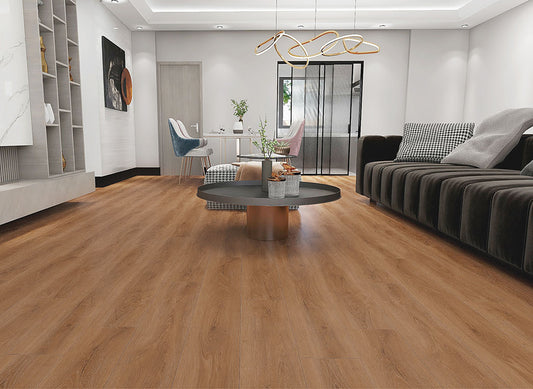
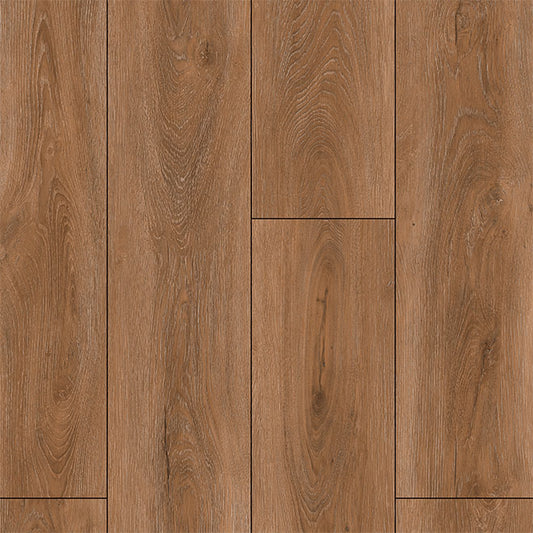
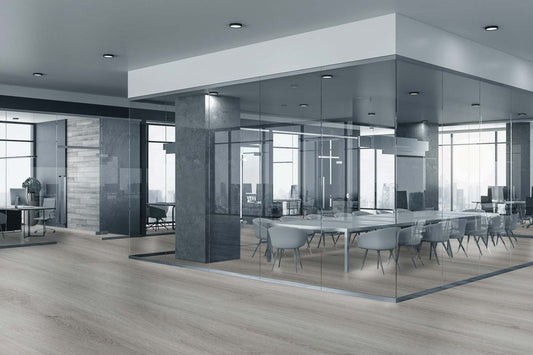
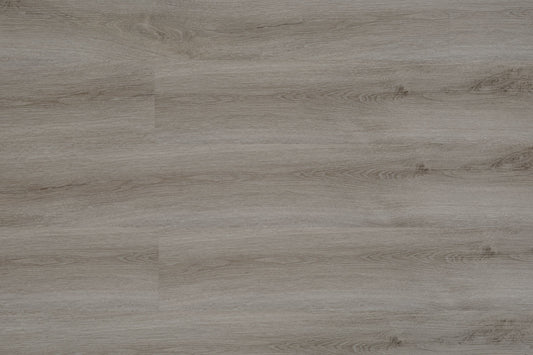
Medium-value, softly varied flooring can help create a balanced commercial interior and may make some tracked-in debris less visually prominent than very light or very dark solid colors. However, no color eliminates cleaning needs.
Consider:
- Contrast with walls and doors
- Wayfinding requirements
- Transition visibility
- Furniture and casework
- Lighting temperature
- Pattern direction
- Replacement-piece appearance
- Production-lot variation
Order samples large enough to evaluate pattern scale in the intended space.
Submittals and Documentation
Before approving medical-office flooring, collect:
- Current technical data sheet
- Commercial warranty
- Installation instructions
- Adhesive documentation
- Maintenance guide
- Product testing required by the project
- Safety and environmental documents where specified
- Physical samples
- Transition and accessory information
- Maintenance-team approval
These documents help prevent a visually acceptable product from being installed outside its technical limitations.
Frequently Asked Questions
Is waterproof vinyl automatically suitable for medical offices?
No. Waterproof plank construction does not establish commercial approval, chemical compatibility, rolling-load performance, or suitability for a healthcare-related project.
Is glue-down LVT a good medical-office option?
It can be, when the exact product has appropriate commercial approval and the substrate, adhesive, maintenance program, and performance requirements are compatible.
Can carpet tile be used in a medical office?
Possibly in approved administrative or office areas. The facility’s design criteria and maintenance requirements determine where it may be used.
Do medical offices require commercial warranties?
Products should carry warranty coverage appropriate to their commercial use. The warranty should be reviewed for exclusions related to equipment, maintenance, moisture, chemicals, and installation.
Can flooring be advertised as antimicrobial?
Only when that claim is specifically documented by the manufacturer and used within its stated limitations. Do not infer clinical or infection-control performance from a general product description.
Explore related flooring
Browse related flooring collections, brands and styles before making your final choice.