
Collection: Best Flooring for Idaho Homes
Choose flooring for your Idaho home around the rooms and routines that matter to you. Explore SPC, WPC, engineered hardwood and laminate for busy entrances, family kitchens, quiet bedrooms and finished basements. Compare practical features and natural-looking styles to find the right fit for your space.
-
Mountain collection - Black Mountain | 20mil Pure SPC™ Waterproof Flooring | 8mm w/ 1.5mm Bioguardian™ Pad | 9x60
Vendor:Republic Floors$4.39 / sq. ft. $164.30 per carton · 37.4 sq. ft. / carton8.0mm20mil9x60Sale -
Countryside Collection – Aspen | 20mil Pure SPC™ Waterproof Flooring | 8mm w/ 1.5mm Bioguardian™ Pad | 9x60
Vendor:Republic Floors$4.79 / sq. ft. $179.00 per carton · 37.4 sq. ft. / carton8.0mm20mil9x60Sale -
New World New York 20 mil 6.5mm 9x60 SPC Vinyl plank | Aperion / Caspar Flooring Direct
Vendor:Aperion$3.49 / sq. ft. $78.63 per carton · 22.5 sq. ft. / carton6.5mm20mil9x60Sale -
New World Maryland 20 mil 6.5mm 9x60 SPC Vinyl plank | Aperion / Caspar Flooring Direct
Vendor:Aperion$3.73 / sq. ft. $84.00 per carton · 22.5 sq. ft. / carton6.5mm20mil9x60



Best Flooring for Idaho Homes
The best flooring for an Idaho home is the material that fits its rooms, household routines and installation conditions. A busy entrance needs a different evaluation from a quiet bedroom. A concrete basement needs its own preparation, and a room where you want genuine wood should be compared differently from a kitchen focused on easy cleanup.
Idaho has substantial regional variation, including drier southern areas and wetter conditions in parts of the north and higher terrain. Focus on the environment maintained inside the property, the moisture reaching the floor and the construction underneath it.
Start With How Each Room Is Used
Before comparing colors, identify the demands of the room. Think about wet shoes, pets, cooking spills, furniture movement and how often the space is cleaned. Decide which priorities apply throughout the house and which are specific to one area.
For entrances and kitchens where waterproof plank materials are important, explore SPC flooring for Idaho homes. SPC provides a dense rigid core and a firm feel, with surface specifications that vary by product.
If living-room or bedroom comfort matters more, compare WPC flooring for Idaho homes. Its composite construction typically offers a more forgiving feel than dense SPC. Both categories need suitable indoor conditions and properly prepared substrates.
When You Want Genuine Wood
Engineered hardwood gives a home a real wood surface with natural grain and variation. It can be an appealing choice for dining rooms, bedrooms and living areas where material character is part of the design.
Browse engineered hardwood flooring for Idaho homes to compare species, veneer thickness and board dimensions. Confirm the installation method and the indoor environmental requirements before selecting a floor.
Real wood requires appropriate moisture care. It should not be assumed waterproof because the board is engineered. Plan carefully around entry doors, sinks and pet bowls, and choose room applications that suit the exact product.
Where Laminate Makes Sense
Laminate offers a wood-look surface with an abrasion classification that helps compare everyday surface wear. It is useful to review for family living areas, bedrooms and hallways where realistic styling and a durable surface are priorities.
Our laminate flooring for Idaho homes page explains the distinction between AC rating, total thickness and moisture classification. Each describes a different aspect of the floor.
If moisture is important, look for the exact product's published classification. An AC4 or AC5 rating does not make laminate waterproof or approve it for every kitchen. Check the full specification and installation details together.
Flooring for Wet Shoes, Grit and Busy Entrances
An entrance connects the home with the conditions outdoors. Where shoes bring in moisture, grit or winter debris, easy cleanup and a sensible protective routine are valuable. The flooring should also coordinate with nearby living areas.
Compare flooring for entryways when the front door, mudroom or garage entry is central to your project. Suitable mats and frequent debris removal reduce the material being carried across the house.
Waterproof flooring still needs spills removed promptly. It does not prevent water from reaching surrounding surfaces or the substrate. A leak or persistent moisture problem should be corrected rather than covered with new flooring.
Concrete Foundations and Finished Basements
Concrete installation involves moisture testing and preparation even when the slab appears dry. Check flatness, cracks, structural condition and the required vapor protection. The flooring manufacturer's instructions determine the permitted assembly.
Basements also require confirmation that the exact product is approved below grade. Occasional dampness, drainage issues and active leaks should be investigated before choosing the finish floor.
Attached padding does not correct an uneven slab or automatically replace a required vapor retarder. Hardwood, laminate, SPC and WPC each need the preparation and installation approach appropriate to the selected product.
Seasonal Homes and Cabin Projects
An Idaho property used for weekends or seasonal visits may have different conditions from a continuously occupied home. Consider what happens when the heating or cooling is reduced and the building sits empty.
Explore flooring for cabins when evaluating that type of project. The exact flooring must permit the temperature and humidity maintained throughout the year, including periods when the property is unoccupied.
Do not assume a waterproof plank is approved for an unheated building. The moisture classification concerns the material, while environmental limits govern the conditions in which the installed floor can perform.
Plank Dimensions and a Consistent Home Design
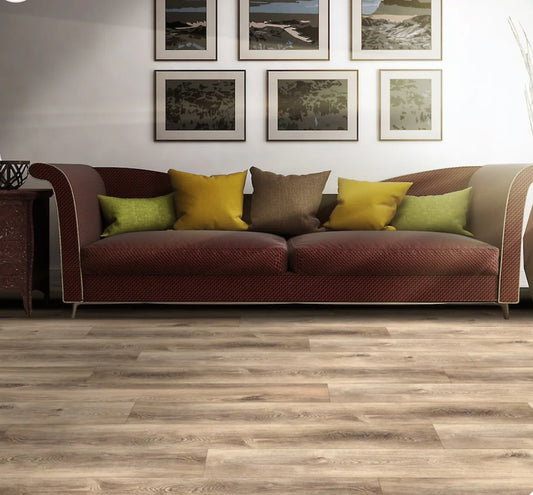
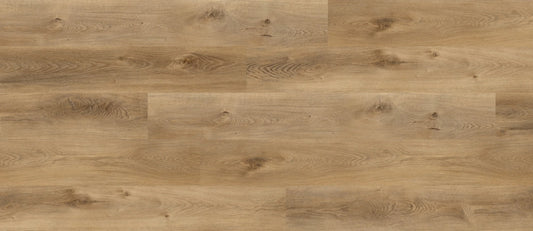
A single flooring style can connect a kitchen, dining space and living room. Wide planks may create a calmer appearance, while smaller boards offer more visible board definition. Sample size and room proportions help you judge the result.
Check the flooring beside cabinets, stone surfaces, painted trim and furniture. Place samples flat in daylight and under evening lighting. Larger samples or several boards reveal more of the grain and variation than a small piece alone.
A continuous design still needs installation planning. Check expansion spacing, maximum layout dimensions and doorway transition requirements. Finished heights should be coordinated with stairs, exterior doors and existing floors.
Heating, Sunlight and Indoor Control
Heating can change indoor humidity during colder periods, while direct sunlight can create concentrated warmth near windows. Compare those conditions with the requirements for the exact floor rather than assuming one material suits every Idaho interior.
For radiant heat, confirm product and system compatibility before ordering. Operating limits, monitoring and startup procedures vary. A general description of a material is not enough to approve the installation.
Maintaining the correct indoor environment is especially relevant for real wood and other products with specified humidity limits. Check how the home will be managed after installation as well as during it.
Comparing Specifications Before Ordering
Look at core construction, total thickness, surface protection, backing, plank size and installation method together. For engineered hardwood, include face veneer and species. For laminate, include abrasion rating and moisture classification.
Measure the project and allow additional material for cuts, layout and reasonable future repairs. Check the selected transitions and stair details before ordering. More complex room shapes need additional planning.
There is no single material that automatically wins for every Idaho room. The best choice comes from matching the floor to the home's actual conditions and the way the household uses each space.
Frequently Asked Questions
What is the best flooring for Idaho homes?
SPC, WPC, engineered hardwood and laminate can all be suitable. The right choice depends on room use, subfloor conditions, moisture exposure and the desired feel and appearance.
What should I choose for an entrance with wet shoes?
Compare approved waterproof flooring and review surface protection and cleaning requirements. Use suitable mats and remove water and grit promptly.
Is engineered hardwood a good choice for an Idaho living room?
It can be when the product is approved for the installation and the home maintains its required indoor temperature and humidity conditions.
Can I install flooring in a finished basement?
Selected products permit below-grade installation. Concrete preparation, moisture conditions and the exact product's approval determine suitability.
Does laminate's AC rating tell me whether it is waterproof?
No. AC rating concerns abrasion. Moisture performance is a separate classification that must be verified for the exact flooring.
Which floor is suitable for a seasonal Idaho cabin?
Choose only a product approved for the conditions maintained throughout the year. Unheated or intermittently occupied buildings need a specific compatibility check.
Explore related flooring
Browse related flooring collections, brands and styles before making your final choice.