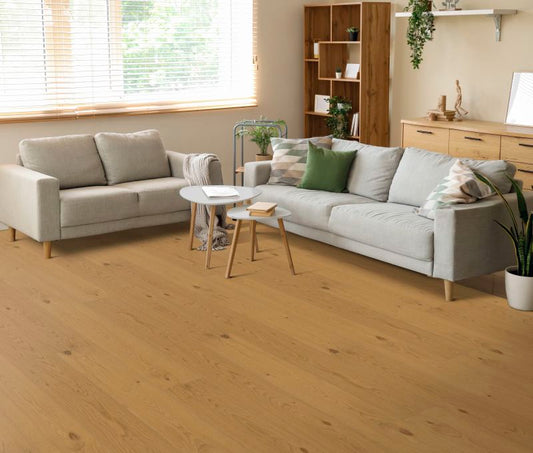
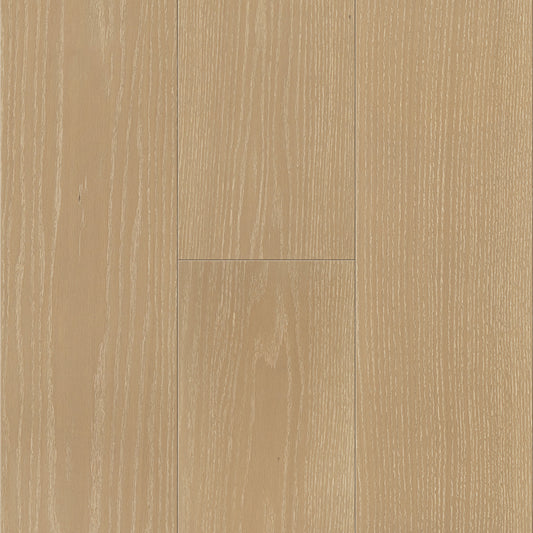
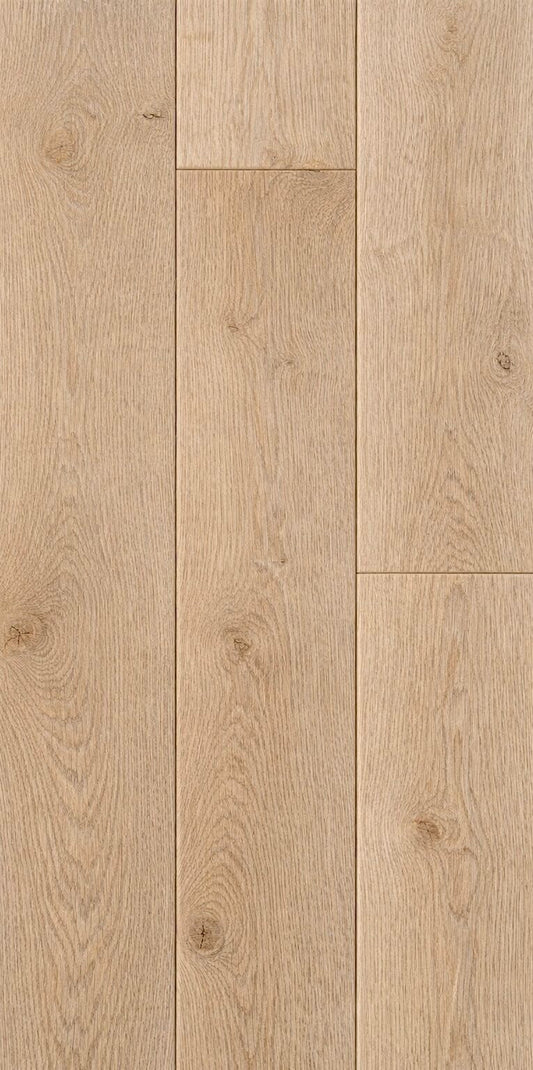
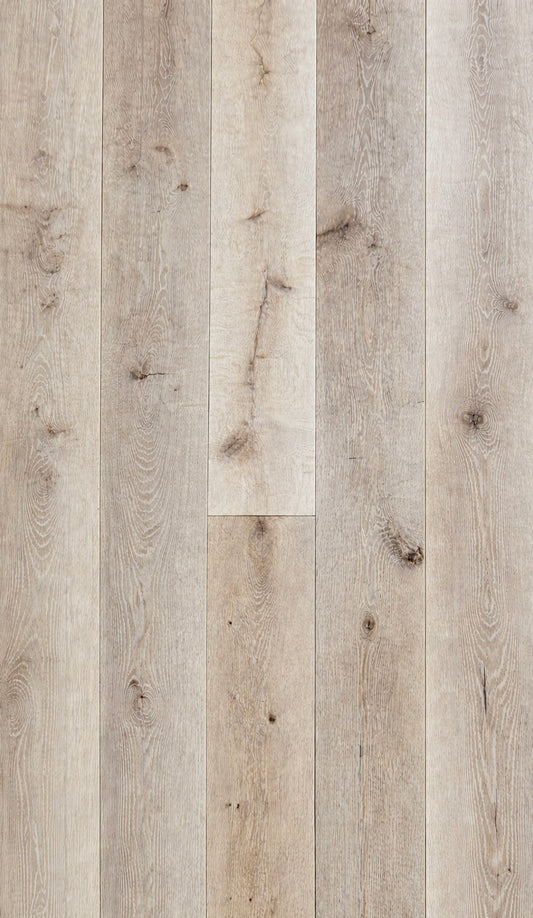
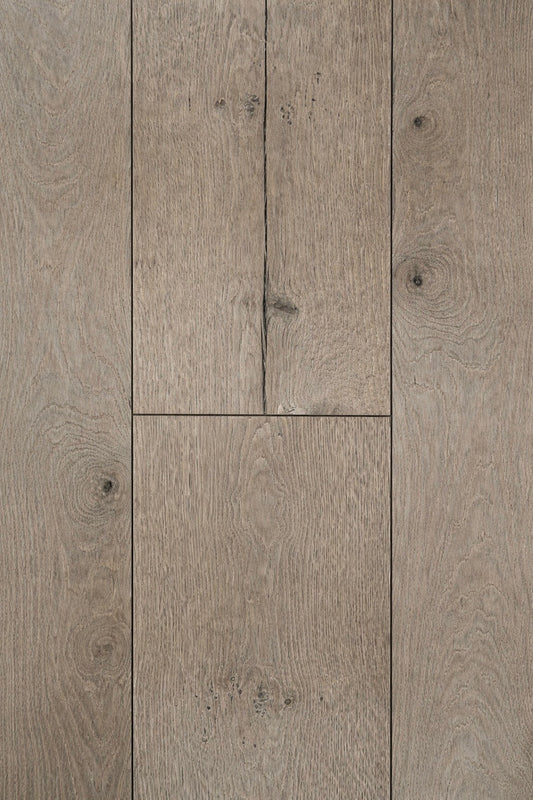
Engineered Hardwood Flooring for Living Rooms
Engineered hardwood flooring for living rooms combines a genuine wood surface with a stable layered core and factory-applied finish.
Its natural grain and broad range of plank dimensions can complement traditional, modern, rustic, transitional, and organic interior designs.
Living-room suitability still depends on household traffic, pets, sunlight, furniture, moisture exposure, subfloor conditions, and maintenance expectations.
Benefits in Living Areas
Depending on the product, engineered hardwood may provide:
- Genuine wood appearance
- Natural grain variation
- Warm residential character
- Wide-plank options
- Long-plank options
- Multiple surface textures
- Matte and satin finishes
- Multiple installation methods
- Professional refinishing potential
- Room-to-room design continuity
No genuine hardwood is scratch-proof, dent-proof, or maintenance-free.
Choosing a Wood Species
Popular living-room species may include:
- White oak
- European oak
- Red oak
- Hickory
- Maple
- Walnut
- Birch
- Acacia
Species affects grain, natural color, hardness, and visual character. The factory finish and complete plank construction also influence performance.
Selecting the Right Color
Light flooring may create:
- Airy visual character
- Scandinavian-inspired interiors
- Soft modern styling
- Strong contrast with dark furniture
- Bright open-plan spaces
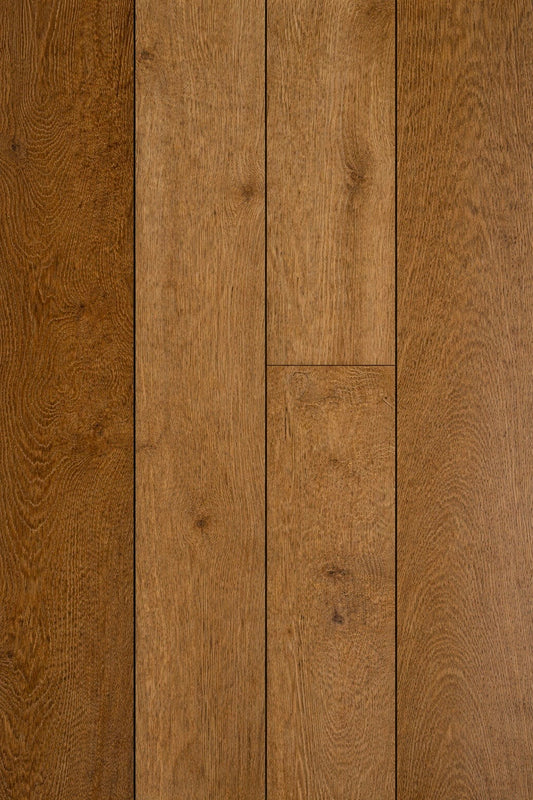
Medium flooring may provide:
- Balanced warmth
- Broad furniture compatibility
- Traditional or transitional styling
- More forgiving everyday appearance
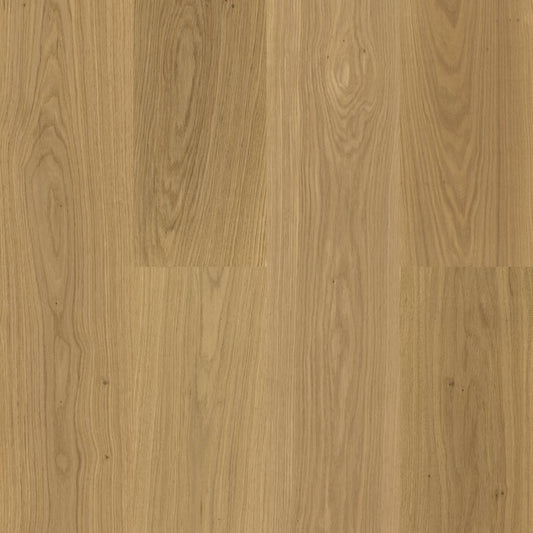
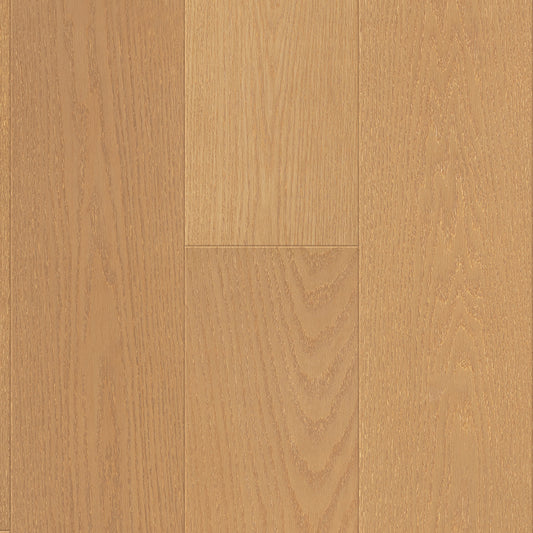
- Natural oak character
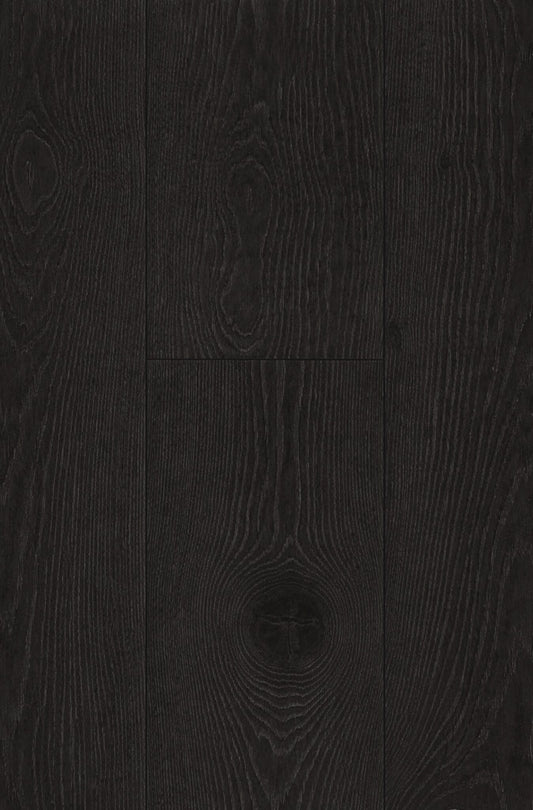
Dark flooring may create:
- Strong visual contrast
- Formal character
- Rich wood tones
- Dramatic interiors
- Greater visibility of dust under some lighting
Samples should be evaluated inside the actual room.
Wide Versus Narrow Planks
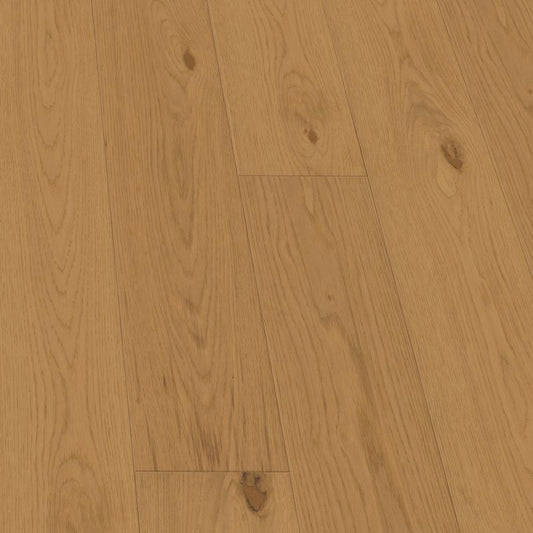
Wide planks display more grain and create fewer seams. Narrower boards create additional lines and may produce a more traditional hardwood layout.
Compare:
- Room dimensions
- Ceiling height
- Natural light
- Furniture scale
- Plank length
- Character variation
- Installation direction
- Connected rooms
- Subfloor condition
- Desired style
Neither width is inherently more durable.
Matte and Textured Finishes
Low-gloss and wire-brushed surfaces may reduce reflection and make minor dust or surface marks less visually prominent than highly polished floors.
Available textures may include:
- Smooth
- Wire brushed
- Hand scraped
- Lightly distressed
- Band sawn
- Open grain
- Manufacturer-specific textures
Texture influences appearance, cleaning, and future refinishing.
Furniture Protection
Living rooms often contain heavy furniture and frequently moved seating.
Protect the floor by:
- Using appropriate furniture pads
- Replacing worn protectors
- Lifting rather than dragging furniture
- Using approved rug pads
- Checking reclining furniture mechanisms
- Protecting concentrated loads
- Keeping caster wheels clean
- Avoiding sharp metal contact
Furniture pads should be inspected regularly for trapped grit.
Area Rugs
Area rugs can add comfort and protect high-traffic locations, but confirm that the rug backing or pad is compatible with the factory finish.
Consider:
- Finish compatibility
- Color change from sunlight
- Moisture beneath the rug
- Dye transfer
- Air circulation
- Rubber or latex restrictions
- Rug movement
- Cleaning requirements
Move rugs periodically when appropriate to encourage more even light exposure.
Sunlight and Fading
Genuine wood may change color when exposed to natural or artificial ultraviolet light.
To promote more even aging:
- Use window treatments
- Rotate rugs
- Rearrange furniture periodically
- Follow manufacturer care guidance
- Avoid prolonged moisture beneath rugs
- Understand species-specific color changes
No hardwood should be described as completely fade-proof unless supported by explicit testing and warranty language.
Pets and Everyday Traffic
Homes with pets should consider:
- Finish durability
- Wood hardness
- Surface texture
- Gloss level
- Color variation
- Pet nail maintenance
- Entry mats
- Spill cleanup
- Approved cleaning products
- Indoor humidity
Textured, medium-toned flooring may make ordinary marks less visually prominent, but it remains genuine wood.
Frequently Asked Questions
Is engineered hardwood suitable for living rooms?
Yes. It provides genuine wood appearance and is widely used in residential living spaces.
What color works best in a living room?
The best color depends on lighting, furniture, wall colors, room size, and the desired design style.
Are wide planks suitable for living rooms?
Yes. Wide planks can create fewer seams and emphasize natural grain.
Is engineered hardwood suitable for homes with pets?
It can be, but no genuine hardwood is scratch-proof. Finish, texture, color, and pet care matter.
Can an area rug be used?
Yes, with a rug pad approved for the flooring’s factory finish.
Does sunlight change hardwood color?
It can. Species, stain, finish, and exposure determine the extent of color change.
Is engineered hardwood waterproof?
No. Spills should be cleaned promptly and excessive moisture avoided.
Can living-room engineered hardwood be refinished?
Selected products may be professionally refinished depending on veneer thickness and manufacturer guidance.
Should samples be ordered before choosing?
Yes. Review samples flat on the floor during daylight and evening lighting.
What specifications should buyers compare?
Compare species, veneer, core, finish, texture, plank dimensions, installation method, maintenance requirements, and warranty.