
Collection: Laminate Flooring for Hallways
Shop laminate flooring for hallways in durable wood-look styles for busy passages, entry connections, and room-to-room transitions. Compare AC ratings, plank sizes, moisture protection, colors. easy online ordering
-
Comfort Heights - City Pointe | AC4 12mm 9.25x60 Laminate | Lions Floor
Vendor:Lions Floor$3.49 / sq. ft. $66.90 per carton · 19.16 sq. ft. / carton12.0mm9 1/4 x 5' -
Comfort Heights - Camden Ridge | AC4 12mm 9.25x60 Laminate | Lions Floor
Vendor:Lions Floor$3.49 / sq. ft. $66.90 per carton · 19.16 sq. ft. / carton12.0mm9 1/4 x 5' -
Black Forest Collection - Shadow Oak | AC4 12mm 7.7x51 | Waterproof Laminate - Muller Graff
Vendor:Muller Graff$3.39 / sq. ft. $55.00 per carton · 16.22 sq. ft. / carton12.0mm7.7x51 -
Bear Woods - Kashmir Beige | 12mm AC5 Waterproof Laminate Flooring | 9” x 72” Extra Long Planks
Vendor:Republic Floors$4.09 / sq. ft. $94.80 per carton · 23.19 sq. ft. / carton12.0mm9x72 -
Bear Woods - Himalayan Blue | 12mm AC5 Waterproof Laminate Flooring | 9” x 72” Extra Long Planks
Vendor:Republic Floors$4.09 / sq. ft. $94.80 per carton · 23.19 sq. ft. / carton12.0mm9x72 -
Bear Woods - Alaskan Tan | 12mm AC5 Waterproof Laminate Flooring | 9” x 72” Extra Long Planks
Vendor:Republic Floors$4.09 / sq. ft. $94.80 per carton · 23.19 sq. ft. / carton12.0mm9x72 -
Haven Heights Harbor Court AC3 10mm 9.25x60 Laminate (Pad Attached)
Vendor:Lions Floor$2.99 / sq. ft. $92.30 per carton · 30.92 sq. ft. / carton10.0mm12mil9 1/4 x 60 -
Haven Heights Elm Terrace AC3 10mm 9.25x60 Laminate (Pad Attached)
Vendor:Lions Floor$2.99 / sq. ft. $92.30 per carton · 30.92 sq. ft. / carton10.0mm12mil9 1/4 x 60 -
Haven Heights Harlow Commons AC3 10mm 9.25x60 Laminate (Pad Attached)
Vendor:Lions Floor$2.99 / sq. ft. $92.30 per carton · 30.92 sq. ft. / carton10.0mm12mil9 1/4 x 60 -
Haven Heights Laurel Court AC3 10mm 9.25x60 Laminate (Pad Attached)
Vendor:Lions Floor$2.99 / sq. ft. $92.30 per carton · 30.92 sq. ft. / carton10.0mm12mil9 1/4 x 60 -
Haven Heights Larkspur Place AC3 10mm 9.25x60 Laminate (Pad Attached)
Vendor:Lions Floor$2.99 / sq. ft. $92.30 per carton · 30.92 sq. ft. / carton10.0mm12mil9 1/4 x 60 -
Haven Heights Oakview Place AC3 10mm 9.25x60 Laminate (Pad Attached)
Vendor:Lions Floor$2.99 / sq. ft. $92.30 per carton · 30.92 sq. ft. / carton10.0mm12mil9 1/4 x 60 -
Haven Heights Cedar Fields AC3 10mm 9.25x60 Laminate (Pad Attached)
Vendor:Lions Floor$2.99 / sq. ft. $92.30 per carton · 30.92 sq. ft. / carton10.0mm12mil9 1/4 x 60 -
Haven Heights Pinecrest Walk AC3 10mm 9.25x60 Laminate (Pad Attached)
Vendor:Lions Floor$2.99 / sq. ft. $92.30 per carton · 30.92 sq. ft. / carton10.0mm12mil9 1/4 x 60 -
Bavaria Oak Maplewood – 8mm AC5 7.67x50.7” Waterproof Laminate Flooring | Kronospan/Muller Graff
Vendor:Muller Graff$2.19 / sq. ft. $53.20 per carton · 24.33 sq. ft. / carton8.0mm7.6x50.7 -
Bavaria Oak Sandstone – 8mm AC5 7.67x50.7” Waterproof Laminate Flooring | Kronospan/Muller Graff
Vendor:Muller Graff$2.69 / sq. ft. $65.56 per carton · 24.33 sq. ft. / carton8.0mm7.6x50.7
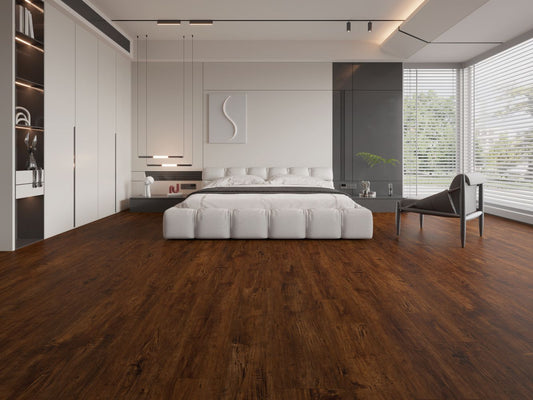
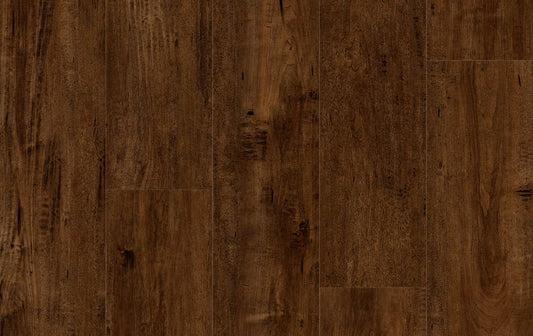
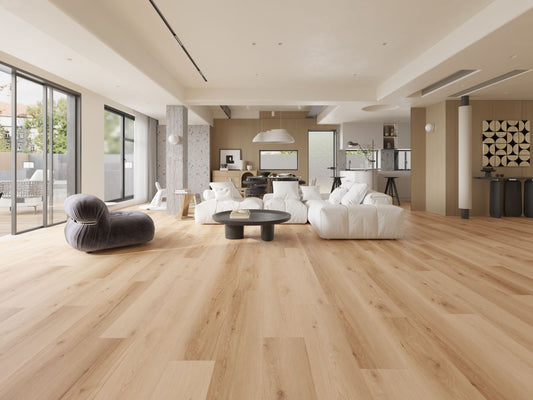
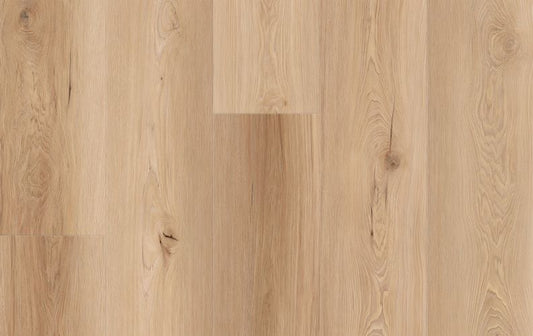

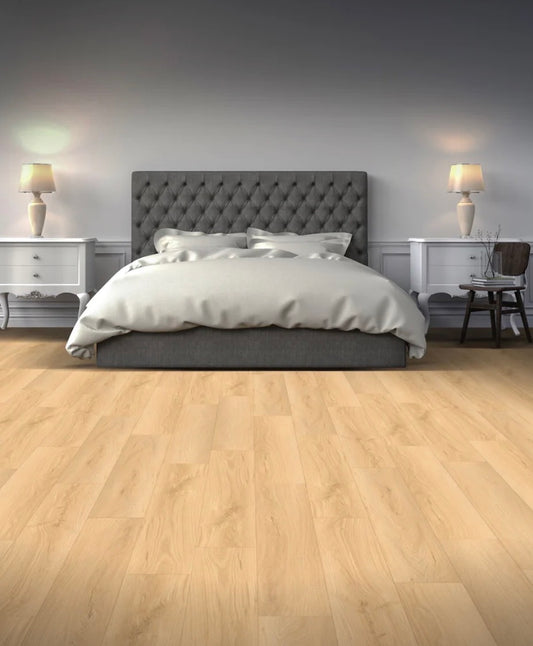
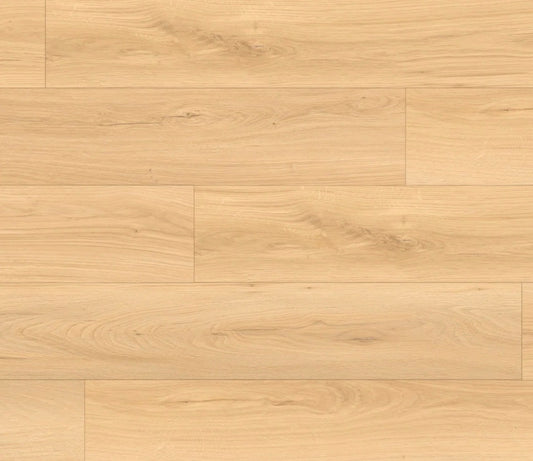
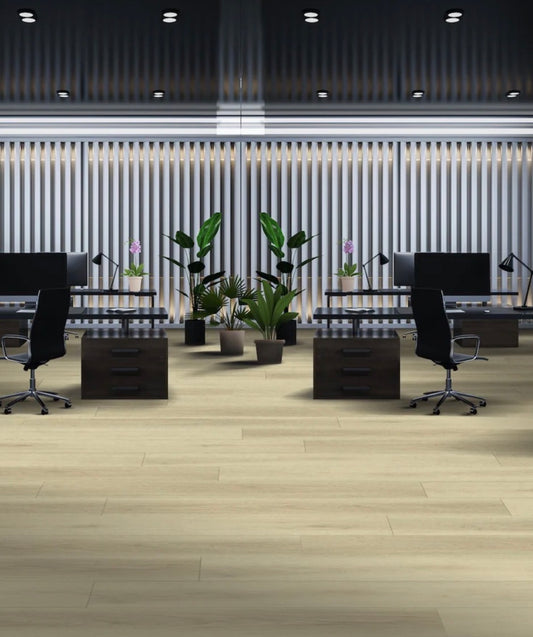
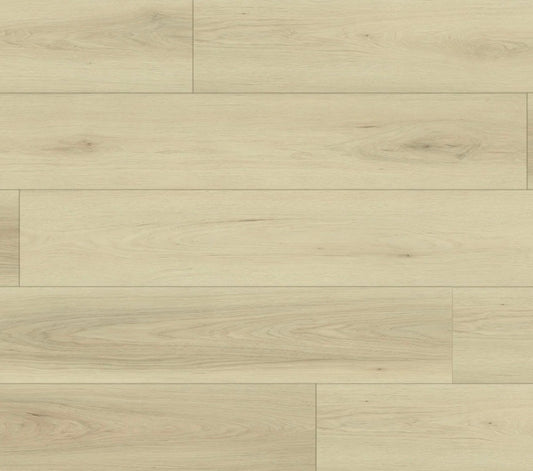
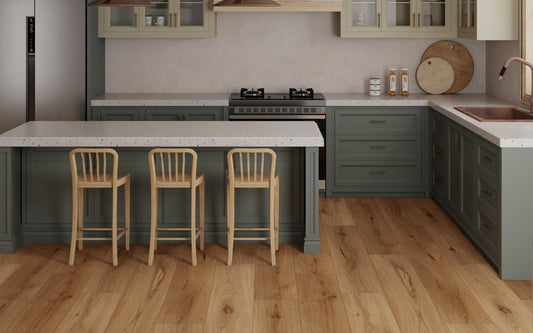
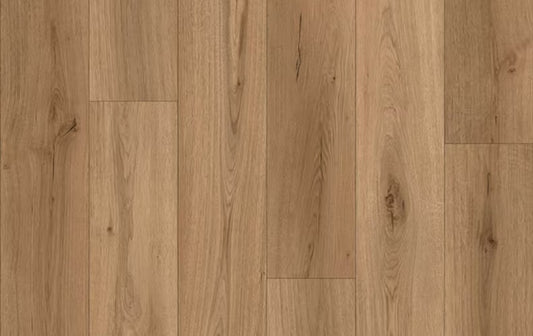
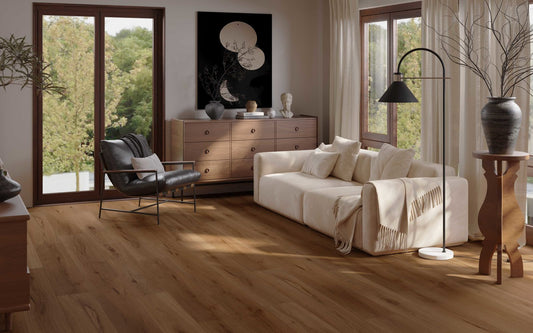
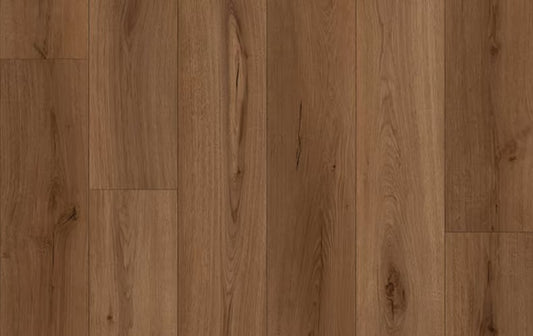
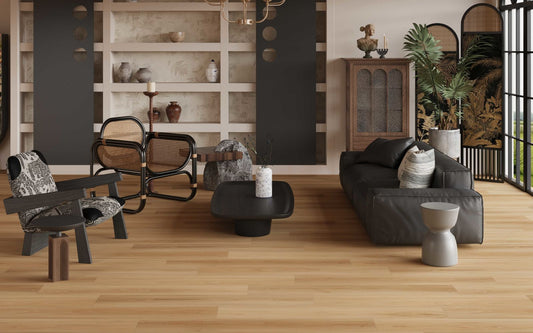
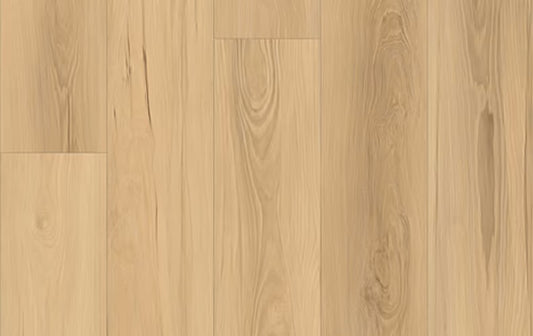
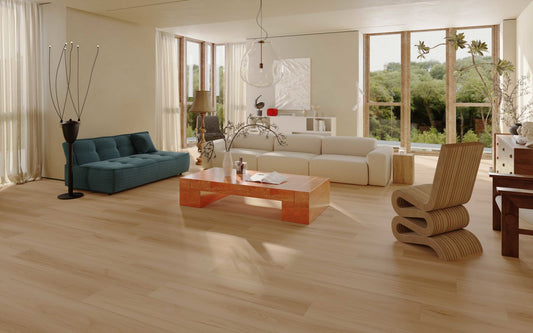
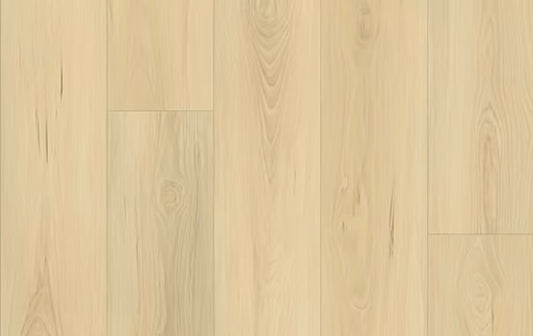
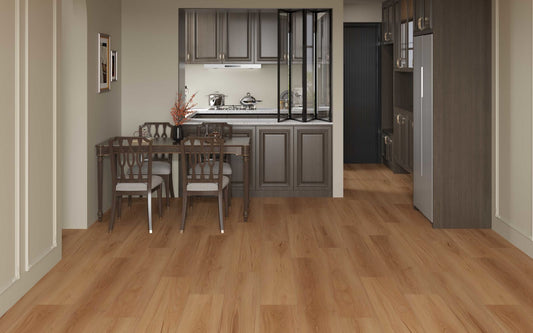
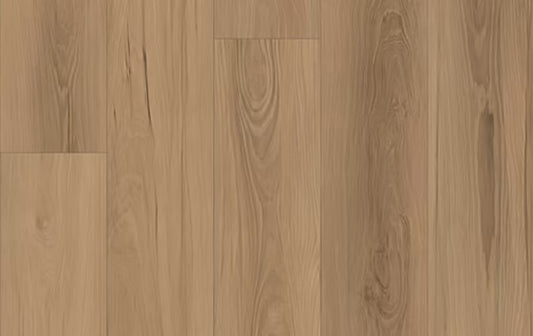
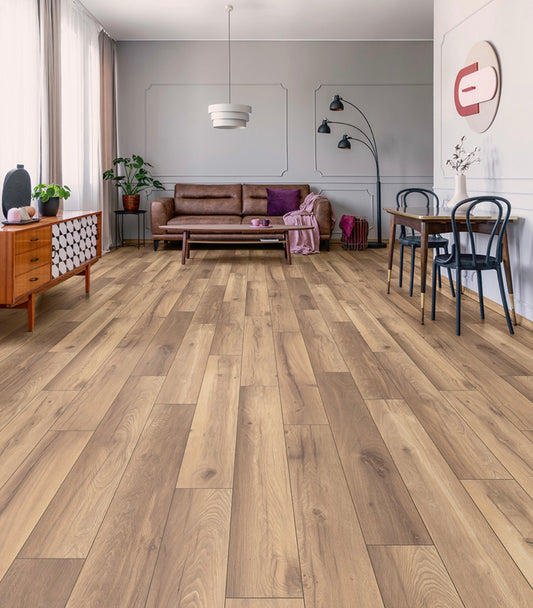
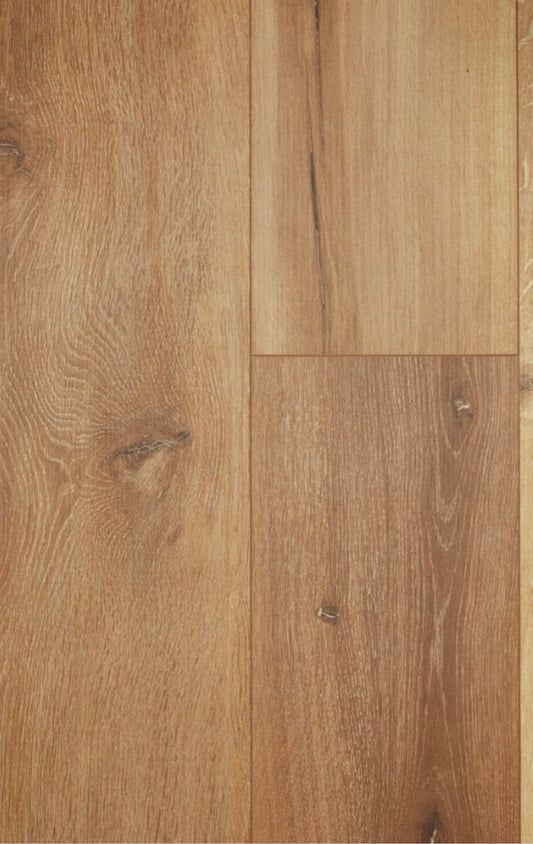
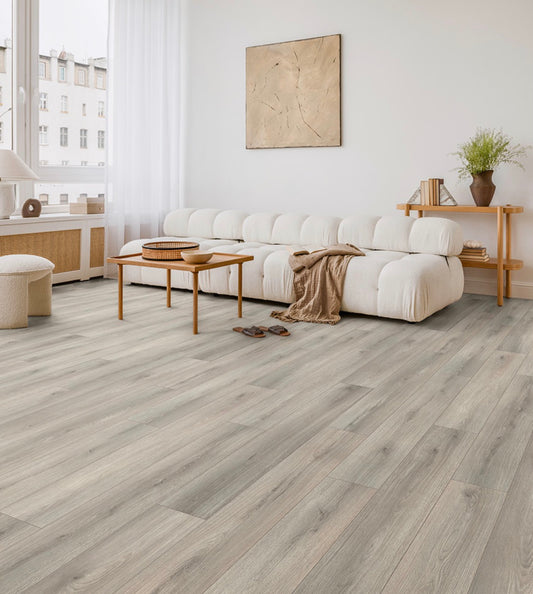
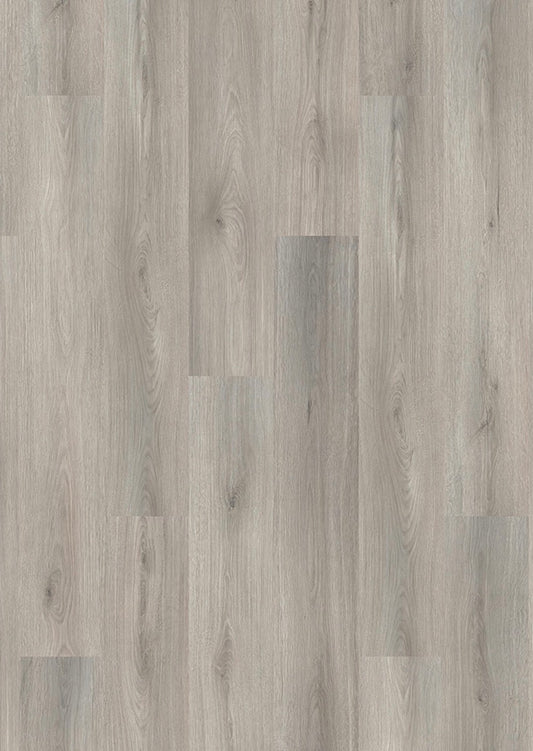
Laminate Flooring for Hallways
Laminate flooring for hallways combines a wood-look surface with practical construction for narrow, frequently traveled spaces. Hallways connect bedrooms, living areas, entrances, closets, and stairways, so their floors often receive concentrated traffic throughout the day.
A hallway floor may need to handle:
- Repeated foot traffic
- Shoes carrying dirt or grit
- Pets moving between rooms
- Doorway transitions
- Furniture being moved
- Limited natural light
- Long sightlines
- Connections to several floor coverings
The best choice depends on traffic, hallway dimensions, adjoining rooms, moisture exposure, and installation requirements.
Choosing an AC Rating for a Hallway
AC3 laminate may suit ordinary residential hallways when approved by the manufacturer. AC4 may be preferred for busier households, rental properties, or main passages. AC5 may suit especially demanding residential use and qualifying commercial corridors.
Compare:
- Verified AC rating
- Residential warranty
- Commercial approval where applicable
- Expected traffic level
- Number of occupants
- Presence of pets
- Connection to an exterior entrance
A higher rating does not make the floor waterproof or eliminate the need for routine care.
Best Plank Direction for a Hallway
Planks are often installed parallel to the hallway’s longest dimension to emphasize length and reduce the number of visible end joints across the passage. However, the correct direction can also depend on:
- Manufacturer instructions
- Subfloor construction
- Main light source
- Connections to adjoining rooms
- Continuous-run limitations
- Expansion-joint requirements
- Installer layout planning
A single continuous direction may create a cleaner appearance, but technical installation requirements should take priority over appearance.
Narrow and Wide Planks in Hallways
Plank width changes how a narrow passage appears. Narrower planks may create more individual board lines, while wide planks can produce a calmer, more open visual.
Consider:
- Actual hallway width
- Number of full plank rows
- Width of perimeter cuts
- Doorway placement
- Closets and alcoves
- Pattern variation
- Overall home style
Dry-layout calculations can help prevent extremely narrow pieces along one wall.
Hallway Colors and Wood Looks
Hallways frequently receive uneven lighting and can show dust carried from adjoining rooms. Useful visual options may include:
- Medium oak tones
- Natural brown colors
- Warm neutral shades
- Light wood looks
- Matte finishes
- Varied grain patterns
- Embossed textures
Very dark floors may show light dust, while very pale uniform floors may reveal dark debris. Samples should be viewed in both daytime and evening lighting.
Laminate Near Entryways
A hallway connected directly to an exterior door may encounter wet footwear, snow, rainwater, sand, or road salt.
Evaluate:
- Verified moisture classification
- Entry-mat placement
- Spill-cleanup requirements
- Perimeter-sealing instructions
- Door clearance
- Transition placement
- Manufacturer room approval
Standing water should be removed promptly even when a product carries a waterproof or water-resistant claim.
Hallway Transitions and Doorways
Hallways can intersect several rooms within a short distance. Transition planning should account for:
- Different flooring heights
- Bedroom doorways
- Bathroom entrances
- Stair landings
- Carpet edges
- Tile connections
- Expansion gaps
- Maximum continuous-run dimensions
Transition requirements vary between manufacturers. Do not omit required moldings solely to achieve a continuous appearance.
Hallway Subfloor Preparation
Narrow spaces can make movement, squeaks, and uneven joints especially noticeable. Before installation, the substrate should be:
- Flat
- Dry
- Clean
- Structurally stable
- Properly fastened
- Free from protruding fasteners
- Moisture tested where applicable
Thick laminate and attached backing cannot compensate for a subfloor outside the published flatness tolerance.
Hallways With Children and Pets
Busy family hallways may benefit from:
- AC4 or qualifying AC5 construction
- Matte surface texture
- Verified moisture protection
- Strong locking joints
- Medium-tone visuals
- Appropriate residential warranty
- Easy-to-follow cleaning instructions
No laminate is scratch-proof. Pet nails should be maintained, and dirt should be removed before it can abrade the surface.
Reducing Hallway Noise
Footstep sound can feel more noticeable in a long, enclosed passage. Depending on the product and assembly, sound may be influenced by:
- Laminate thickness
- Attached backing
- Separate approved underlayment
- Subfloor material
- Installation quality
- Wall and ceiling construction
- Furnishings in adjoining rooms
Do not add extra underlayment beneath a product unless the manufacturer permits it.
Cleaning a Laminate Hallway
Hallways may need more frequent dry cleaning than low-traffic rooms.
Practical care can include:
- Sweeping grit regularly
- Using approved hard-floor vacuum settings
- Placing mats near exterior entrances
- Cleaning spills promptly
- Using manufacturer-approved cleaners
- Protecting the floor while moving furniture
Avoid saturated mops and unapproved steam cleaning.
Frequently Asked Questions
Is laminate flooring suitable for a busy hallway?
Yes, when the product’s AC rating, warranty, moisture classification, and installation approval match the hallway’s conditions.
Should hallway laminate run lengthwise?
It commonly runs parallel to the longest wall, but subfloor construction, adjoining rooms, expansion requirements, and manufacturer instructions also affect direction.
Is AC3 laminate enough for a hallway?
AC3 may suit normal residential use. AC4 or AC5 may be preferable for heavier traffic, pets, rentals, or commercial applications.
What laminate color works well in a dark hallway?
Light to medium wood tones can brighten the space, while varied grain and matte textures may help disguise everyday dust.
Do hallways require transition strips?
They may. Requirements depend on doorway locations, continuous-run limits, expansion needs, and changes in flooring height.
Can hallway laminate connect continuously to bedrooms?
Possibly, if the manufacturer’s maximum-run and expansion instructions allow it.
Is waterproof laminate necessary near an entrance?
Verified waterproof laminate may provide useful spill protection, but water must still be cleaned promptly and installation instructions followed.
Can attached pad make a hallway quieter?
It may influence sound, but performance depends on the complete floor-ceiling assembly rather than the plank alone.
Explore related options in Vinyl Flooring for Hallways, Engineered Hardwood Flooring for Hallways, and Best Flooring for Hallways.
Explore related flooring
Browse related flooring collections, brands and styles before making your final choice.