Choosing Flooring for Rental Turnovers
The best flooring for a rental turnover is not necessarily the product with the lowest initial price. Owners and property managers also need to consider installation time, labor, repairability, cleaning requirements, product continuity, and whether the warranty applies to the property’s actual use.
A single-family rental may fall under different warranty terms than an apartment building, leasing office, corridor, or other multifamily space. Always confirm the manufacturer’s definitions before purchasing.
Important Turnover-Flooring Priorities
Fast, Predictable Installation
A flooring system with a familiar installation method can make scheduling more predictable. Click-lock planks may reduce adhesive-related steps in appropriate rooms, while glue-down products can offer a low-profile installation and localized replacement strategy.
The subfloor still controls the schedule. Demolition, moisture problems, unevenness, adhesive removal, or damaged underlayment can add time regardless of the flooring selected.
Practical Replacement Strategy
Rental flooring can be damaged by isolated incidents. Before choosing a product, consider whether individual planks or tiles can be accessed and replaced and whether replacement material can be stored.
Glue-down LVT and carpet tile can support localized replacement when installed correctly. A floating floor may require disassembly from a wall to reach a damaged plank, depending on its position and locking system.
Product Availability
A product that cannot be matched later may force a much larger replacement. Consider buying clearly labeled attic stock from the same production run. Store it in a clean, dry, climate-appropriate location.
No manufacturer or retailer can guarantee that a color, dimension, or locking profile will remain available indefinitely.
Documented Performance
Words such as “durable” should be supported by specifications. Depending on the flooring type, useful information can include:
- Vinyl wear-layer thickness
- Laminate abrasion classification
- Commercial or residential warranty
- Indentation or rolling-load data
- Moisture classification
- Surface-finish information
- Approved room and property types
Flooring Types to Compare
SPC Flooring
SPC is a rigid-core vinyl construction commonly offered in click-lock planks. It may be useful when the project needs a floating installation and the specific product is approved for the property.
Compare total thickness, wear layer, attached backing, locking system, subfloor tolerances, and warranty. A waterproof-plank classification does not make the entire room or installation waterproof.
Explore click SPC flooring.
Glue-Down LVT
Glue-down luxury vinyl tile or plank can be a strong candidate when low profile, dimensional stability, and localized replacement are priorities. It requires careful substrate preparation and the correct adhesive.
Installation quality can significantly affect the result. Review moisture limits, adhesive working time, rolling requirements, and the period before traffic or furniture placement.
Explore glue-down LVP.
Laminate Flooring
Laminate can provide wood-look visuals at a range of price points. Compare abrasion rating, moisture classification, plank thickness, attached pad, edge treatment, and warranty coverage.
Use only products approved for the property type. Residential warranty language may exclude certain rental, multifamily, or commercial situations.
Explore laminate flooring.
WPC Flooring
WPC is another click vinyl construction that may provide a different feel underfoot than SPC. Product thickness, wear layer, attached pad, indentation limitations, and approved use should be compared individually.
Explore click WPC flooring.
Carpet Tile
Carpet tile may be useful in certain bedrooms, offices, leasing areas, or other approved spaces because individual tiles can sometimes be replaced. Consider stain performance, backing, installation method, dye-lot consistency, and commercial classification.
Explore carpet tile.
Click Flooring Versus Glue-Down Flooring
Click flooring can be appealing when rapid installation and reduced adhesive use are priorities. However, damaged planks may be more complicated to reach, and the system requires adequate expansion space, compatible transitions, and a subfloor within tolerance.
Glue-down flooring requires more substrate and adhesive preparation, but individual pieces can often be replaced more directly. It can also reduce transition-height problems in large projects.
The right answer depends on:
- Unit layout
- Subfloor condition
- Downtime
- Installer experience
- Expected traffic
- Repair plan
- Moisture conditions
- Manufacturer approval
Colors That Work for Rental Properties
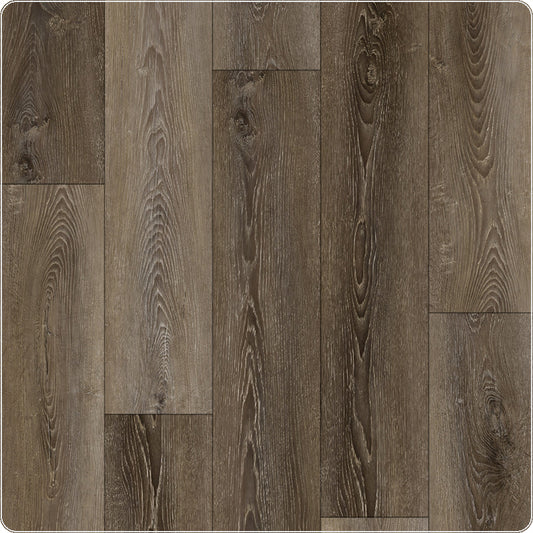
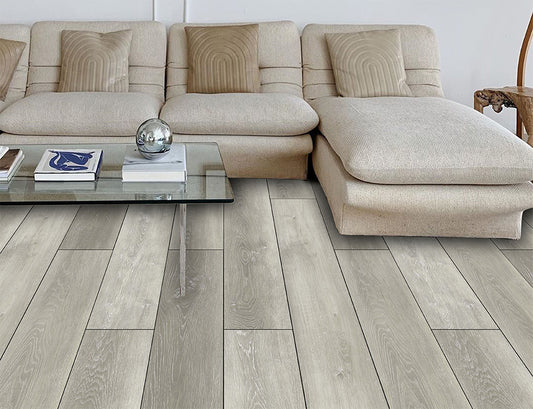
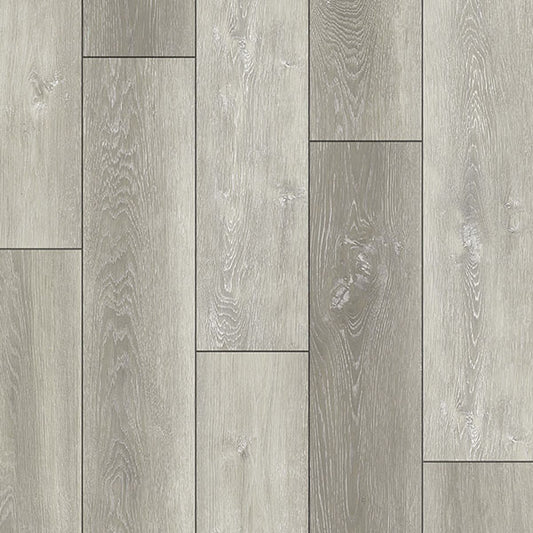
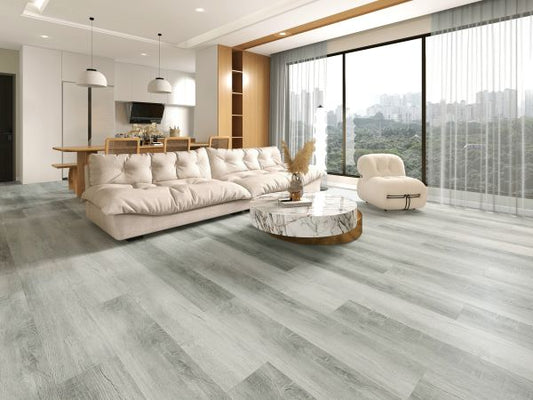
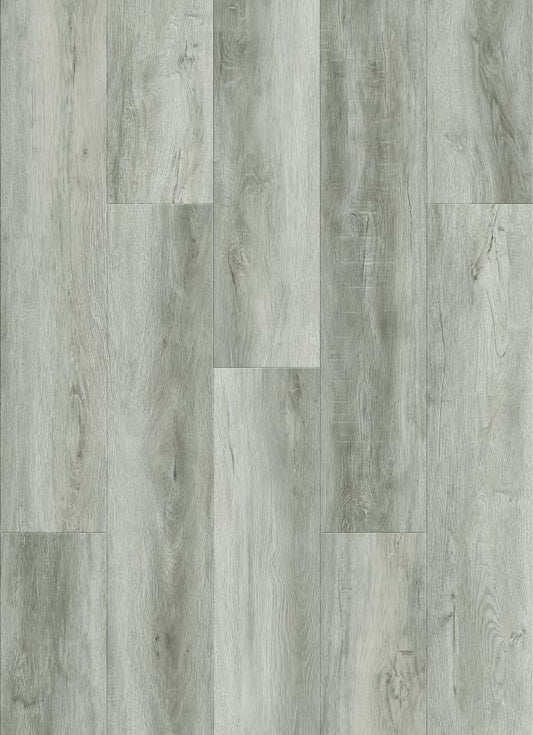
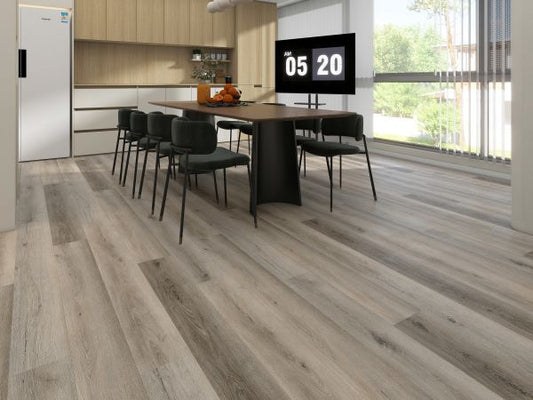
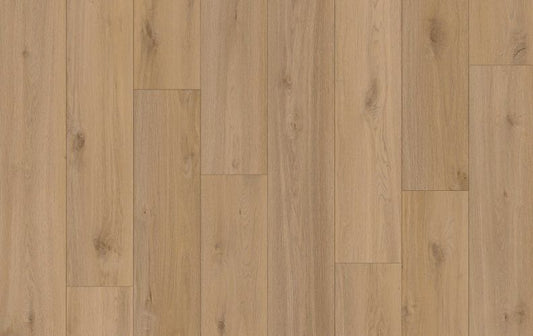
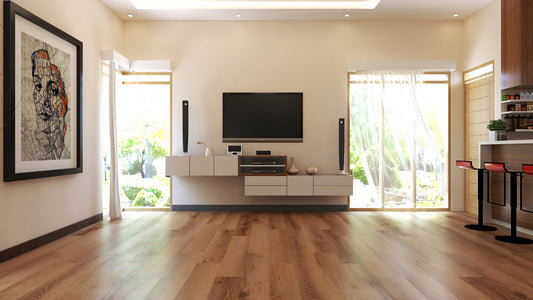
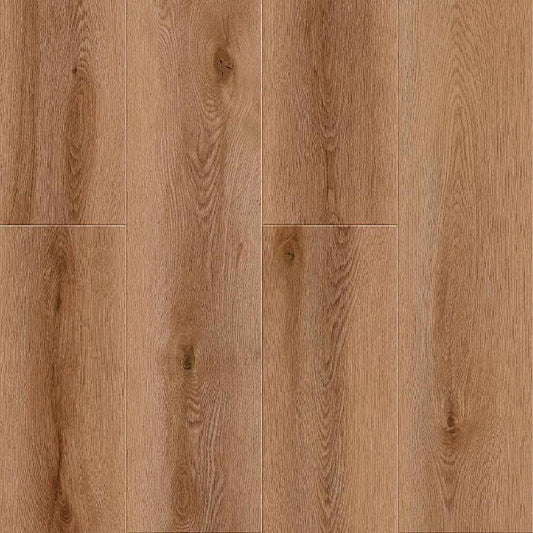
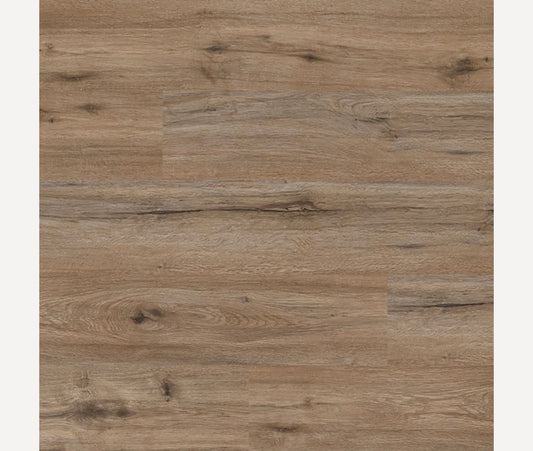
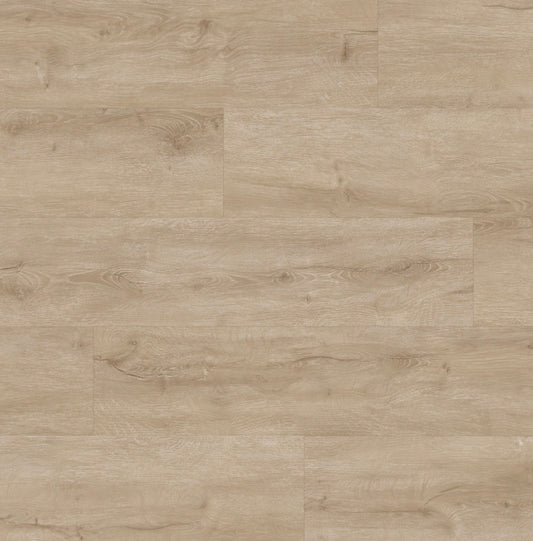
Many property managers favor mid-tone, low-contrast wood looks because they can coordinate with a range of paint, cabinet, and furnishing choices. Highly uniform dark floors may make certain dust or surface marks more visible, while extremely light floors may show some stains more clearly.
A practical rental visual often includes:
- Moderate color variation
- A restrained grain pattern
- Neutral warm or balanced undertones
- A low-to-medium sheen
- Coordination with standard replacement paint and cabinets
No pattern can completely conceal dirt, scratches, or damage.
Room-by-Room Planning
The same flooring does not have to be used everywhere.
For living areas and bedrooms, consider comfort, replacement strategy, sound requirements, and visual continuity. In kitchens and entry areas, review moisture classification and cleaning instructions. For stairs, confirm that compatible stair components and approved installation methods are available.
Bathrooms, laundry areas, and below-grade rooms require particular attention to moisture limitations. Approval must be confirmed for the exact product.
Multifamily and Commercial Considerations
Apartment buildings and other multifamily properties may have acoustic, fire, transition, accessibility, and warranty requirements beyond those of a detached residence. Upper-floor installations may also need an approved sound-control assembly.
Common corridors, leasing offices, and shared amenities should use products explicitly approved for their commercial setting. A residential warranty should not be treated as commercial coverage.
Calculating the Real Project Cost
Evaluate more than material price per square foot. A turnover budget can include:
- Existing-floor removal
- Subfloor repair or leveling
- Moisture mitigation
- Adhesive or underlayment
- Moldings and transitions
- Installation labor
- Furniture or appliance movement
- Waste and attic stock
- Future repair labor
- Vacancy time
A moderately priced product with a reliable installation and repair plan can be more economical than a cheaper floor that requires widespread replacement.
Samples and Test Areas
Review samples in the actual unit under natural and artificial light. For larger portfolios, consider installing a controlled test area before standardizing a product across multiple units.
Document the product name, color, SKU, production information, installation materials, and care requirements. This helps future teams identify the flooring correctly.
Rental-Turnover Checklist
Before ordering, confirm:
- The product is approved for the property type.
- Applicable residential or commercial warranty terms are understood.
- The subfloor has been evaluated.
- Moisture requirements are documented.
- The installer approves the installation system.
- Transitions and stair parts are available.
- Cleaning procedures are practical for the maintenance team.
- Adequate waste and replacement stock are included.
- Product information is recorded for future turnovers.
Frequently Asked Questions
What flooring is fastest to install during a turnover?
Some click-lock products can be installed efficiently when the subfloor is ready. However, preparation, demolition, layout, transitions, and site conditions can have a greater effect on the schedule than the locking system alone.
Is waterproof flooring best for every rental?
Not automatically. Waterproof may describe the plank construction, not the entire installation. Warranty, wear performance, repairability, subfloor conditions, and approved application remain important.
Is glue-down LVT difficult to replace?
Individual pieces can often be replaced, but the work requires proper removal, substrate preparation, adhesive, and a matching replacement product.
How much extra flooring should a property manager keep?
The appropriate amount depends on unit count, layout, expected repairs, and product availability. Discuss waste and long-term attic stock separately with the installer.
Does a residential warranty cover rental units?
Not always. Warranty definitions vary. Confirm whether rentals, multifamily housing, and commercial spaces are included or excluded for the exact product.