
Collection: White Oak Vinyl Flooring | Natural Wood-Look LVP
Shop timeless white oak vinyl flooring featuring realistic beige, tan, and neutral wood tones. Explore durable, easy-care LVP styles for kitchens, living rooms, bedrooms, and open-plan homes with nationwide residential delivery.
-
Natural essence plus Tresor 20mil 6.5mm 9x60 | Lions Floor
Vendor:Lions Floor$3.69 / sq. ft. $84.50 per carton · 22.88 sq. ft. / carton6.5mm20mil9x60 -
Darcy imperial 20mil 5mm 9x60 SPC Vinyl Plank | United Weavers / Caspar Flooring Direct
Vendor:United Weavers$2.99 / sq. ft. $77.60 per carton · 25.99 sq. ft. / carton5.0mm20mil9x60 -
Indoor Delight Woodland Charm 20mil 6.5mm 9x72 SPC Vinyl Plank | Lions Floor
Vendor:Lions Floor$3.99 / sq. ft. $90.30 per carton · 22.65 sq. ft. / carton6.5mm20mil9x72 -
Comfort Heights - Baywood Place | AC4 12mm 9.25x60 Laminate | Lions Floor
Vendor:Lions Floor$3.49 / sq. ft. $66.90 per carton · 19.16 sq. ft. / carton12.0mm9 1/4 x 5' -
CITADEL AZAKA OAK 32mil 8mm 9x48 SPC Vinyl Plank
Vendor:NextGen$4.29 / sq. ft. $92.00 per carton · 21.45 sq. ft. / carton8.0mm32mil9x48 -
BevelMark Carver Line 20mil 8mm 9x72 SPC Vinyl Plank | Lions Floor
Vendor:Lions Floor$4.29 / sq. ft. $115.60 per carton · 26.92 sq. ft. / carton8.0mm20mil9x72 -
BevelMark Shadow Reveal 20mil 8mm 9x72 SPC Vinyl Plank | Lions Floor
Vendor:Lions Floor$4.29 / sq. ft. $115.60 per carton · 26.92 sq. ft. / carton8.0mm20mil9x72 -
Lone Star Spirit XL Sea Shell 20mil 6.5mm 9x72 SPC Vinyl Plank
Vendor:Lions Floor$3.99 / sq. ft. $90.30 per carton · 22.65 sq. ft. / carton6.5mm20mil9x72 -
Infinity Floor Highland Snowbank 20mil 5mm 7x48 SPC vinyl plank
Vendor:Infinity Floor$3.49 / sq. ft. $83.40 per carton · 23.896 sq. ft. / carton5.0mm20mil7x48 -
Lone Star Spirit XL Artisan Touch 20mil 6.5mm 9x72 SPC Vinyl Plank
Vendor:Lions Floor$3.99 / sq. ft. $90.30 per carton · 22.65 sq. ft. / carton6.5mm20mil9x72 -
Infinity Floor Highland Clear 20mil 5mm 7x48 SPC vinyl plank
Vendor:Infinity Floor$3.49 / sq. ft. $83.40 per carton · 23.896 sq. ft. / carton5.0mm20mil7x48 -
Darcy Glimmer 20mil 5mm 9x60 SPC Vinyl Plank | United Weavers / Caspar Flooring Direct
Vendor:United Weavers$2.99 / sq. ft. $77.60 per carton · 25.99 sq. ft. / carton5.0mm20mil9x60 -
Darcy Barnwood 20mil 5mm 9x60 SPC Vinyl Plank | United Weavers / Caspar Flooring Direct
Vendor:United Weavers$2.99 / sq. ft. $77.60 per carton · 25.99 sq. ft. / carton5.0mm20mil9x60 -
Trenta - Bliss | 20mil 6.5mm 9x60 | Lions Floor
Vendor:Lions Floor$3.59 / sq. ft. $82.20 per carton · 22.88 sq. ft. / carton6.5mm20mil9x60 -
CITADEL NOBI OAK 32mil 8mm 9x48 SPC Vinyl Plank
Vendor:NextGen$4.29 / sq. ft. $92.00 per carton · 21.45 sq. ft. / carton8.0mm32mil9x48 -
BevelMark Profile Edge 20mil 8mm 9x72 SPC Vinyl Plank | Lions Floor
Vendor:Lions Floor$4.29 / sq. ft. $115.60 per carton · 26.92 sq. ft. / carton8.0mm20mil9x72




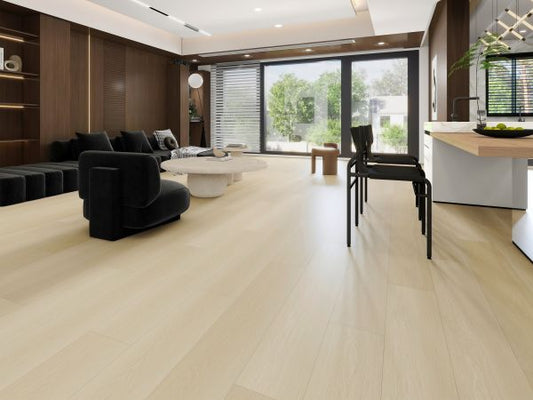
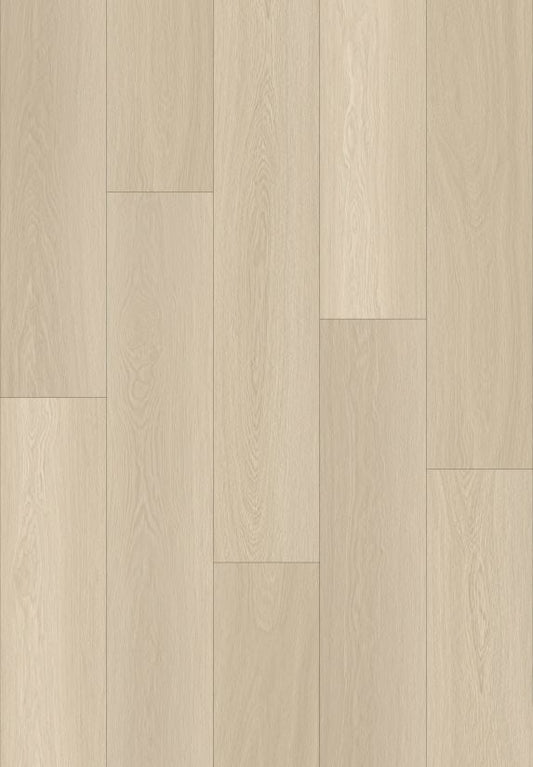
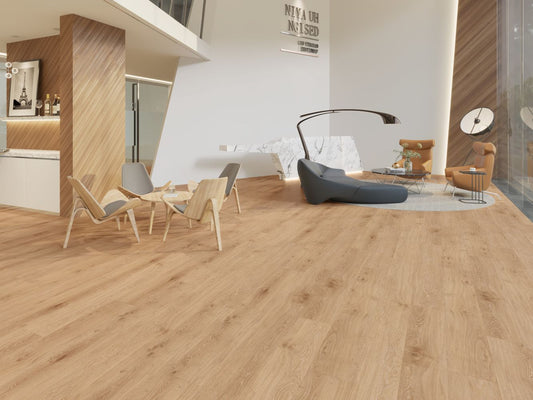
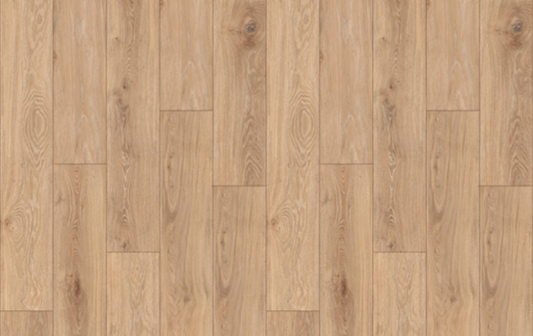
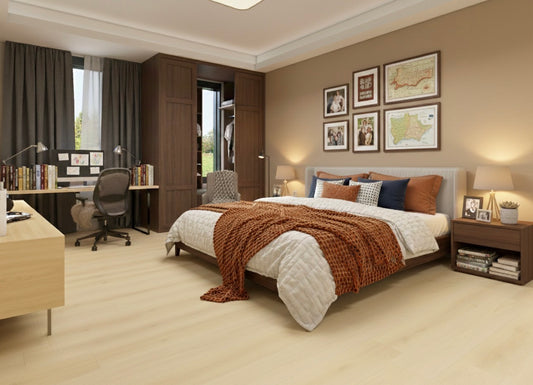
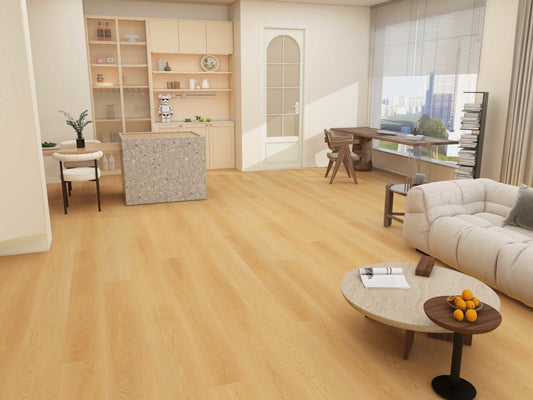
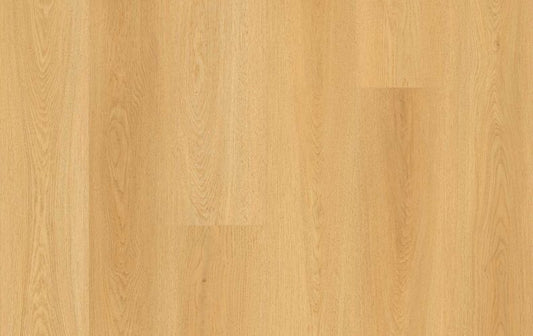
White Oak Vinyl Flooring for Timeless, Natural Interiors
White oak vinyl flooring brings the balanced color, subtle grain, and understated character of natural white oak into the home without the maintenance requirements of traditional hardwood.
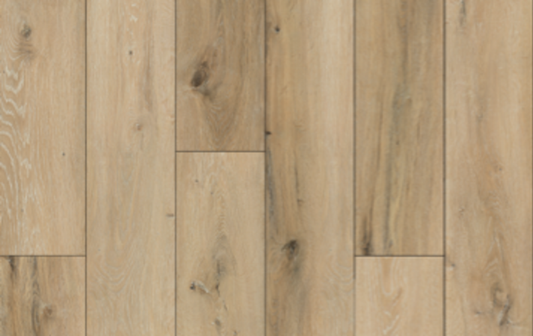
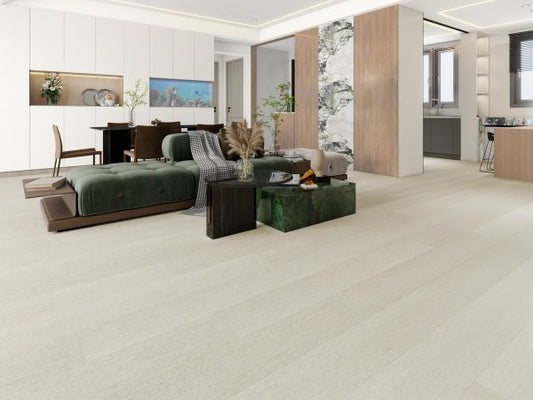
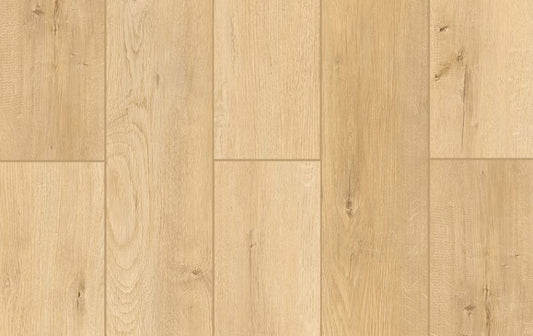
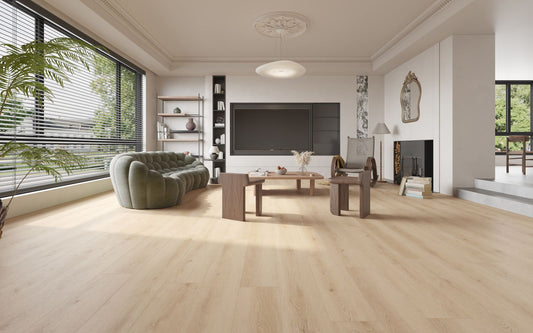
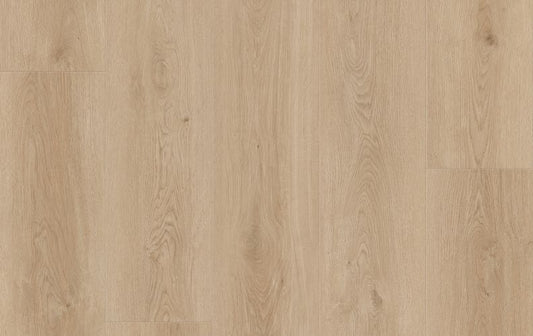
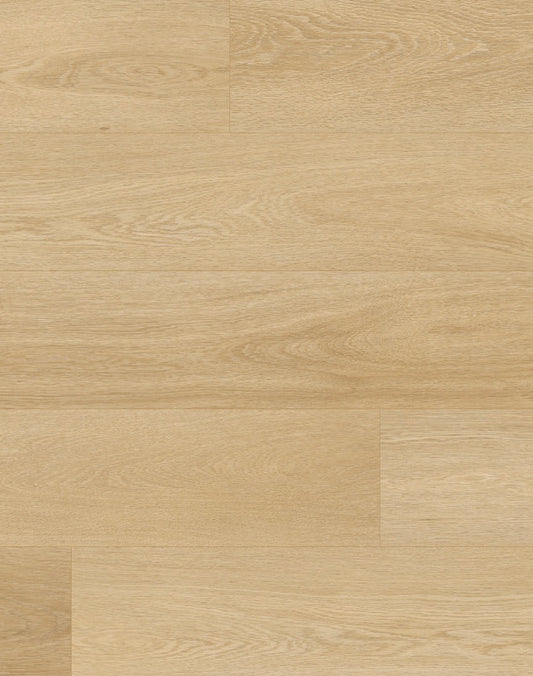
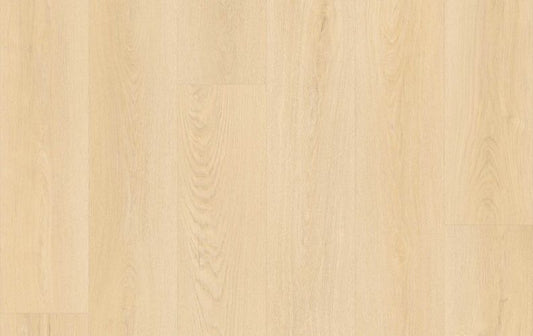
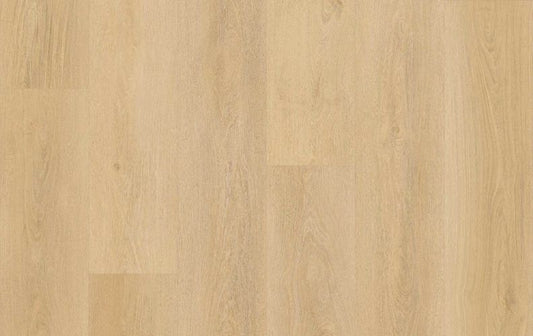
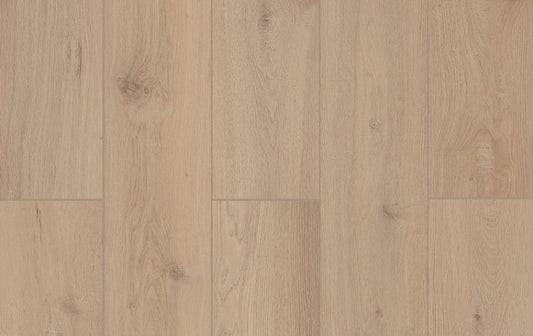
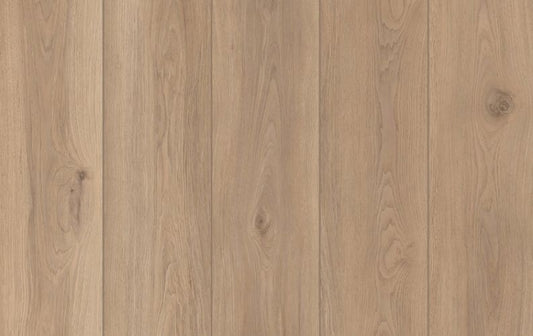
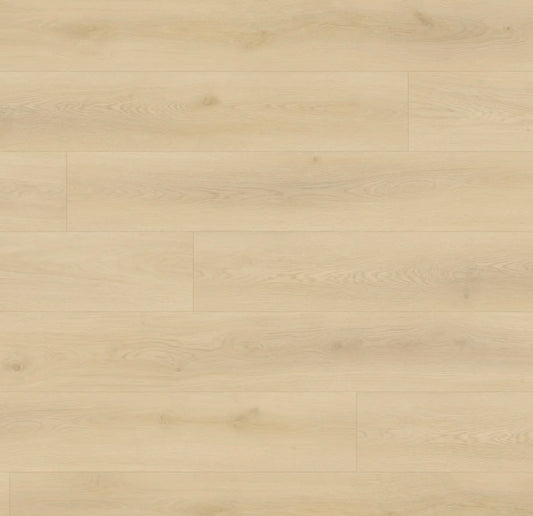
Rather than appearing pure white, white oak flooring typically features a blend of beige, light brown, soft tan, pale greige, and muted natural wood tones. This versatile coloring allows white oak luxury vinyl plank to complement modern kitchens, relaxed living rooms, bedrooms, hallways, apartments, and open-plan homes.
Homeowners often choose white oak LVP because it provides a bright, refined appearance while remaining warmer and more natural than many gray flooring styles.
Why Is White Oak Flooring So Popular?
White oak has become a popular flooring look because it sits comfortably between very pale blonde flooring and deeper natural brown tones.
It can make an interior feel lighter without appearing washed out, while its neutral undertones coordinate with a wide variety of wall colors, cabinets, countertops, furniture, and decorative styles.
White oak vinyl plank flooring works especially well in:
- Contemporary homes
- Transitional interiors
- Modern farmhouse spaces
- Coastal-inspired rooms
- Scandinavian interiors
- Minimalist homes
- Traditional properties
- Open-concept living areas
Its versatility also makes it easier to update furniture or wall colors in the future without needing to replace the floor.
What Color Is White Oak Vinyl Flooring?
White oak flooring is not generally bright white. The name refers to the oak appearance being recreated rather than the exact color of the plank.
Depending on the collection, white oak vinyl flooring may feature:
- Soft beige undertones
- Pale tan coloring
- Light natural brown
- Subtle greige tones
- Cream-colored grain
- Muted honey details
- Mineral streaks
- Gentle shade variation
Some styles are clean and neutral, while others include whitewashed, weathered, rustic, or lightly gray visuals.
Because flooring names vary between manufacturers, two products described as white oak can look very different. Physical samples provide the most accurate way to compare undertones, texture, grain, and shade variation inside your home.
Warm, Neutral, and Cool White Oak Flooring
The undertone of the flooring will influence how it coordinates with the rest of the room.
Warm white oak
Warm white oak flooring may contain cream, beige, pale honey, or soft golden undertones. These styles pair naturally with warm white walls, cream furniture, brass hardware, beige countertops, and traditional wood finishes.
Neutral white oak
Neutral white oak balances warm and cool coloring. It is often the easiest option to coordinate with changing décor because it works with many cabinet, wall, and furniture colors.
Cool white oak
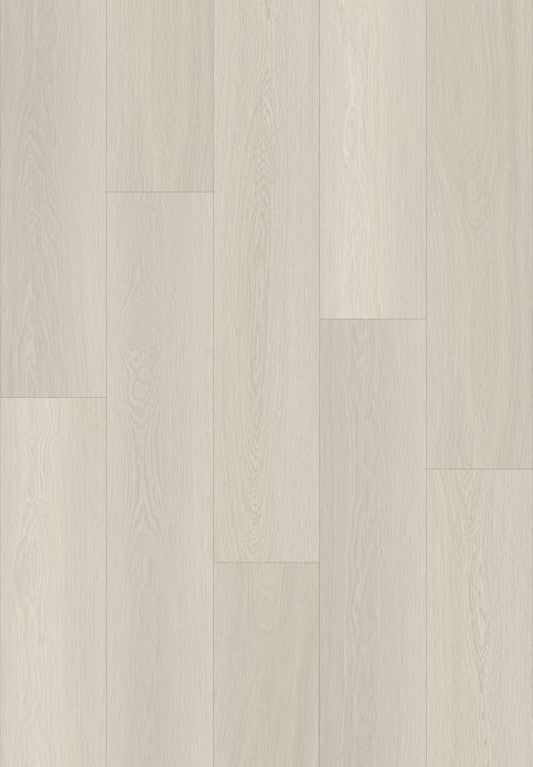
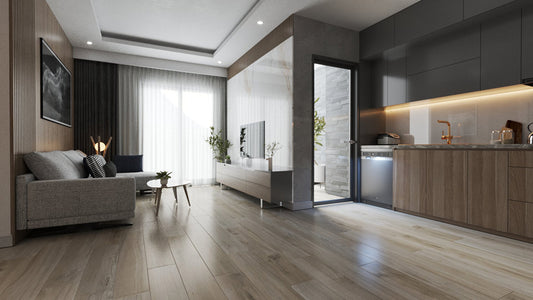
Cooler white oak flooring may contain greige, taupe, pale gray, or whitewashed undertones. These styles can work well in contemporary interiors with crisp white cabinets, stainless-steel appliances, black accents, and cooler wall colors.
Always check samples in both natural daylight and evening lighting because the apparent undertone may change throughout the day.
White Oak Flooring With White Cabinets
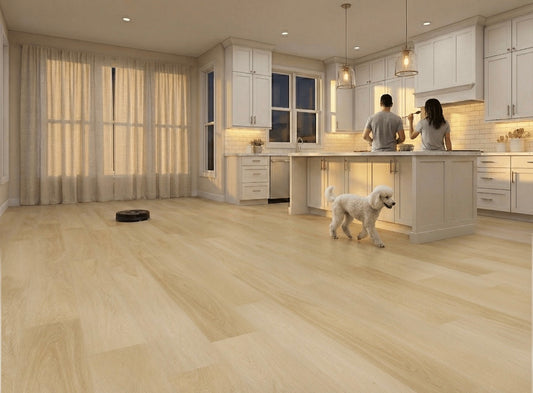
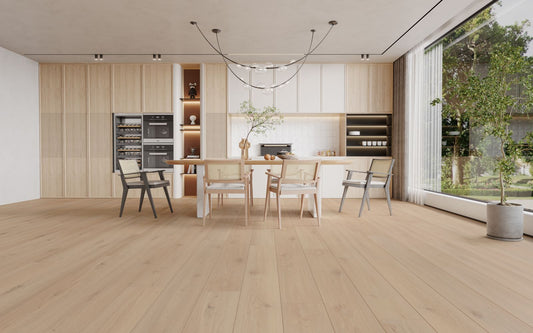
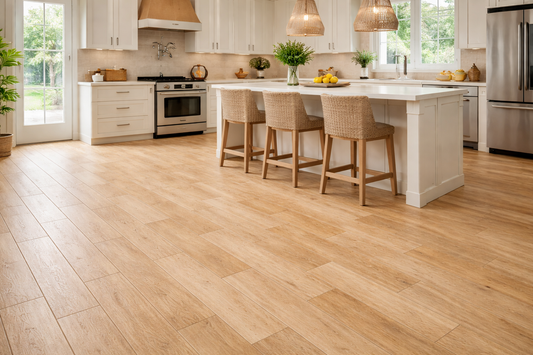
White oak vinyl flooring pairs beautifully with white kitchen cabinets because the wood grain adds warmth and texture while maintaining a bright, clean appearance.
Warm white cabinets generally coordinate well with beige or lightly honey-toned white oak. Crisp white cabinetry may work better with neutral or greige white oak flooring.
When choosing a floor, compare it directly with:
- The cabinet color
- Countertops
- Backsplash materials
- Hardware finishes
- Wall paint
- Nearby furniture
- Natural and artificial lighting
The goal is not necessarily to match every finish. A balanced amount of contrast can make the kitchen feel more intentional and visually interesting.
White Oak Flooring With Dark Cabinets
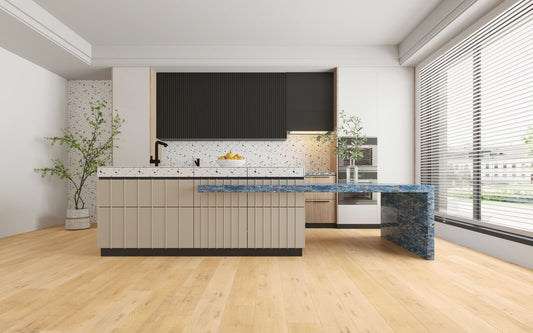
White oak flooring can create an attractive contrast with black, navy, dark green, espresso, walnut, or charcoal cabinets.
The lighter floor helps prevent the room from feeling too heavy, while the dark cabinetry provides depth and definition.
A natural white oak with beige or muted brown grain can also help connect dark cabinets with lighter walls and countertops.
This contrast works especially well in kitchens with large islands, black hardware, brass fixtures, white quartz, or natural stone.
White Oak Flooring With Honey Oak Cabinets
White oak vinyl flooring can work with honey oak cabinets when the flooring is lighter, calmer, or more neutral than the cabinetry.
Look for white oak styles with:
- Beige undertones
- Muted tan coloring
- Minimal orange
- Soft greige detail
- Low-contrast grain
- Matte finishes
Avoid selecting flooring that nearly matches the cabinets but has a slightly different yellow or orange undertone. Clear contrast often looks more intentional than an imperfect match.
Best Wall Colors for White Oak Flooring
White oak vinyl flooring coordinates with a wide range of paint colors.
Popular options include:
- Warm white
- Soft cream
- Beige
- Greige
- Pale taupe
- Light gray
- Sage green
- Muted olive
- Dusty blue
- Soft clay
- Charcoal accent colors
Warm white oak usually pairs best with cream, beige, and warm white walls. Neutral or cool white oak may coordinate well with greige, pale gray, crisp white, and muted blue.
Paint samples and flooring samples should be viewed together in the room because surrounding light can change both colors.
White Oak Vinyl Flooring for Kitchens
White oak LVP is a practical kitchen flooring option because it combines natural wood style with easy everyday maintenance.
Depending on the selected product, benefits may include:
- Waterproof or water-resistant plank construction
- Easy cleanup after spills
- Comfortable performance compared with tile
- Compatibility with open-plan layouts
- Multiple wear-layer options
- Wide-plank designs
- Click-lock or glue-down installation
- Coordination with many cabinet colors
Confirm that the individual product is approved for kitchen installation and follow the manufacturer’s requirements around cabinets, permanent islands, appliances, transitions, and expansion spacing.
White Oak Flooring for Living Rooms and Bedrooms
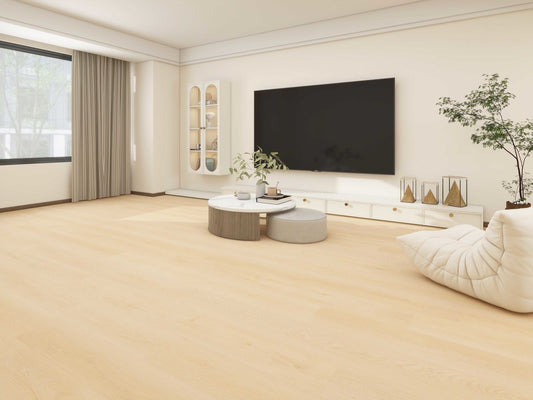
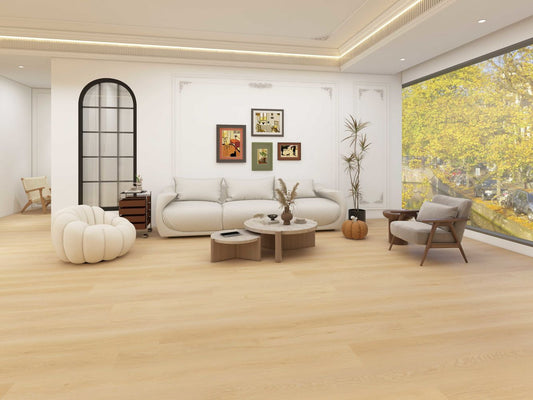
White oak flooring can provide a calm and refined foundation for living rooms and bedrooms.
It pairs well with:
- Cream and beige upholstery
- Gray furniture
- Brown leather
- Black metal accents
- Natural linen
- Warm wood furniture
- Green plants
- Soft blue décor
- Textured rugs
- Neutral curtains
Cleaner white oak styles with subtle grain can create a minimalist appearance, while flooring with stronger knots and plank variation can add warmth and rustic character.
In bedrooms, area rugs can add softness and comfort, provided the rug backing is approved for use over vinyl flooring.
White Oak Flooring for Small and Open-Plan Spaces
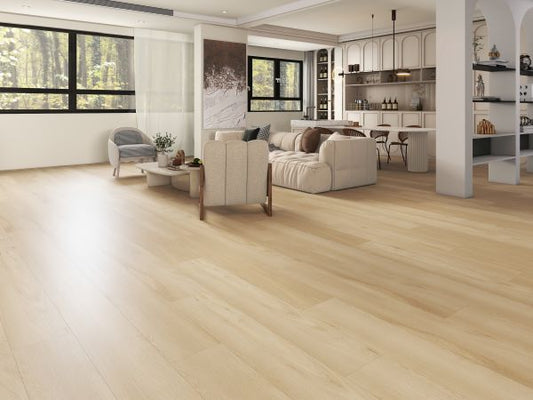
The light-to-medium coloring of white oak can help smaller rooms appear brighter and less enclosed.
In open-plan homes, using the same flooring through the kitchen, dining room, living room, and hallway can create:
- Better visual continuity
- Fewer abrupt transitions
- A more spacious appearance
- Easier furniture coordination
- Consistent warmth throughout the home
Wide-plank white oak flooring can further reduce visual clutter by decreasing the number of visible seams across the floor.
For floating installations across large connected areas, review the manufacturer’s maximum continuous-run dimensions and transition requirements.
White Oak vs Light Oak Vinyl Flooring
White oak and light oak flooring can overlap, but they often emphasize different visual characteristics.
White oak commonly features:
- Beige and tan undertones
- Muted brown grain
- Mineral streaks
- A balanced warm-neutral appearance
- Natural species-inspired visuals
Light oak may feature:
- Paler coloring
- Whitewashed effects
- Blonde undertones
- Cooler gray details
- Less visible brown depth
Choose white oak for a more natural and balanced wood appearance. Choose light oak when maximum brightness and a paler overall floor are the priorities.
White Oak vs Blonde Oak Flooring
Blonde oak is generally warmer and more golden than white oak.
Blonde oak may contain pale honey, cream, and soft gold tones, while white oak often appears more beige, tan, or neutral.
Choose blonde oak when you want a sunny, warm, Scandinavian-inspired appearance.
Choose white oak when you want a quieter, more understated floor that can coordinate with both warm and cool interior finishes.
White Oak vs Natural Oak Flooring
Natural oak flooring usually contains stronger tan, honey, and medium-light brown tones.
White oak generally appears slightly paler, more neutral, and less yellow.
Natural oak may be better suited to homeowners seeking a traditional and visibly warm wood appearance. White oak may be preferred when the goal is a cleaner, modern, or transitional interior.
Because product naming is not standardized, samples should always be compared directly.
Choosing the Right Wear Layer
White oak vinyl plank flooring may be available with several protective wear-layer options.
Common specifications include:
- 12 mil wear layers
- 20 mil wear layers
- 22 mil wear layers
- Manufacturer-specific protective finishes
A 12 mil wear layer may suit bedrooms, guest rooms, and moderate residential use.
A 20 mil or 22 mil wear layer may provide additional surface protection for busy kitchens, hallways, children, pets, and frequently used living spaces.
The wear layer is important, but it should be evaluated alongside total plank construction, surface finish, installation method, locking system, and residential warranty.
Grain, Texture, and Plank Variation
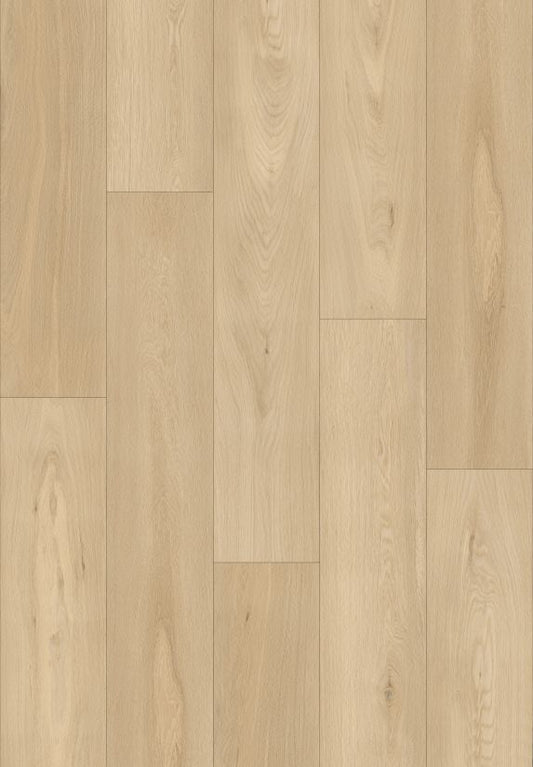
White oak vinyl flooring can range from clean and understated to rustic and character-rich.
Cleaner designs may include:
- Straight grain
- Few knots
- Low shade variation
- Subtle mineral lines
- Consistent plank coloring
More rustic styles may include:
- Large knots
- Strong cathedral grain
- Saw-mark visuals
- Weathered details
- Greater board-to-board variation
Surface treatments may include embossed grain, embossed-in-register texture, wire-brushed visuals, matte finishes, painted bevels, and micro-beveled edges.
Embossed-in-register flooring aligns the surface texture with the printed wood grain, creating a more realistic appearance.
Is White Oak Vinyl Flooring Good for Pets?
White oak vinyl flooring can be a practical choice for homes with dogs and cats.
Depending on the product, benefits may include:
- Easy cleaning
- Water-resistant construction
- Durable wear layers
- Textured finishes
- Colors that disguise some dust and pet hair
- Compatibility with frequently used rooms
No vinyl flooring is completely scratch-proof.
Keep pet nails trimmed, remove grit regularly, place mats near entrances, use protective mats beneath food and water bowls, and add furniture pads to help maintain the surface.
Cleaning and Maintaining White Oak LVP
Routine maintenance is generally straightforward.
Recommended care may include:
- Sweeping or dust mopping regularly
- Vacuuming with a hard-floor setting
- Cleaning spills promptly
- Using a damp microfiber mop
- Using an approved vinyl flooring cleaner
- Placing mats near exterior doors
- Using felt pads beneath furniture
- Lifting rather than dragging heavy objects
Avoid abrasive scrubbers, wax-based products, oil soaps, harsh chemicals, and steam mops unless specifically approved by the flooring manufacturer.
Measure and Order the Correct Amount
Measure the length and width of each room and calculate the total square footage.
Additional flooring should be included for:
- Cuts
- Waste
- Closets
- Irregular walls
- Plank arrangement
- Damaged pieces
- Future repairs
Approximately 7% to 10% extra flooring is common for straightforward installations. Complex layouts, diagonal patterns, and rooms with numerous corners may require more.
Always round up to full cartons.
Order White Oak Flooring Samples
White oak undertones can appear dramatically different depending on natural light, artificial lighting, cabinets, wall colors, and furniture.
Ordering samples allows you to evaluate:
- Beige, tan, or greige undertones
- Grain pattern
- Surface texture
- Shade variation
- Beveled edges
- Finish level
- Cabinet compatibility
- Daytime and evening appearance
Place the sample flat on the floor and move it around the room before making your final decision.
Frequently Asked Questions About White Oak Vinyl Flooring
Is white oak flooring actually white?
No. White oak flooring usually features beige, tan, pale brown, and subtle greige tones rather than a true white color.
Is white oak flooring warm or cool?
It can be warm, neutral, or cool depending on the product. Beige white oak feels warmer, while greige or whitewashed styles appear cooler.
Is white oak flooring timeless?
White oak is considered highly versatile because its neutral natural coloring works across modern, traditional, farmhouse, coastal, and transitional interiors.
Does white oak flooring work with white cabinets?
Yes. White oak adds warmth and grain while preserving a bright, clean kitchen appearance.
Is white oak vinyl flooring waterproof?
Many white oak LVP products are available with waterproof or water-resistant construction. Review the individual product specifications and warranty.
Is white oak flooring good for small rooms?
Yes. Its light-to-medium coloring can help small rooms feel brighter and more open without appearing overly pale.
Is white oak flooring good for pets?
Yes. Vinyl flooring is easy to clean and available with durable wear layers, although no floor is completely scratch-proof.
What wall colors work with white oak flooring?
Warm white, cream, beige, greige, pale taupe, light gray, sage green, muted blue, and soft clay can all work depending on the floor’s undertone.
Does white oak flooring show dirt?
Its natural beige and tan coloring may disguise some dust and minor marks better than very dark or extremely pale flooring.
Should I order samples before purchasing?
Yes. White oak undertones can look different under natural and artificial lighting, so physical samples are strongly recommended.
Explore related options in White Oak Engineered Hardwood Flooring, Republic Floor White Oak SPC Flooring, and Light Wood Flooring.
Explore related flooring
Browse related flooring collections, brands and styles before making your final choice.