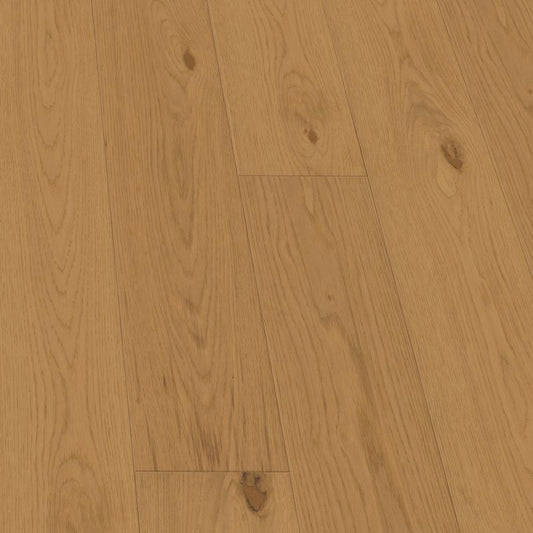
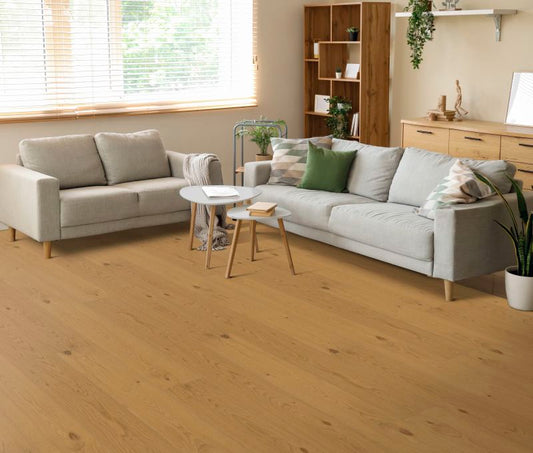
Engineered Hardwood Flooring for Kitchens
Engineered hardwood flooring can bring genuine wood grain, warmth, and natural character into a kitchen. Its layered construction may provide greater dimensional stability than traditional solid hardwood, making it a practical option for qualifying residential installations.
Available styles may include:
- White oak
- European oak
- Light natural wood
- Warm beige
- Honey oak
- Medium brown
- Dark brown
- Wide-plank flooring
- Long-plank flooring
- Wire-brushed finishes
- Matte or low-gloss surfaces
Kitchen approval, installation instructions, and care requirements should be confirmed for every product.
Is Engineered Hardwood Good for Kitchens?
Engineered hardwood may be suitable for kitchens when the manufacturer approves the product for the intended installation.
Potential benefits include:
- Genuine hardwood appearance
- Natural grain variation
- Layered construction
- Multiple installation options
- Broad color selection
- Wide and long plank formats
- Compatibility with many interior styles
- Potential contribution to long-term home appeal
Genuine wood remains sensitive to standing water, leaks, and excessive moisture. Homeowners must clean spills promptly and maintain the flooring properly.
Is Engineered Hardwood Waterproof?
Most engineered hardwood should not be considered waterproof. Its genuine wood surface can react to excessive moisture even when the supporting structure is engineered.
Some manufacturers may market specific products with enhanced water protection. Any waterproof or water-resistant claim must be verified for the exact product.
Even when the flooring has enhanced protection, water may still affect:
- Plank edges
- The subfloor
- Adhesive
- Walls and trim
- Cabinets
- Adjacent rooms
No flooring should be used to conceal an unresolved plumbing or moisture problem.
What Happens If Water Spills on Engineered Hardwood?
Ordinary kitchen spills may not cause permanent damage when cleaned promptly and handled according to the manufacturer’s instructions.
Problems are more likely when water:
- Remains on the surface
- Reaches plank edges
- Travels beneath the floor
- Comes from a recurring appliance leak
- Saturates the subfloor
- Is used excessively during cleaning
Spills should be absorbed rather than spread across the floor.
What Is the Best Finish for a Kitchen?
A durable factory-applied finish can help protect the wood from normal household wear.
Kitchen-friendly visual characteristics may include:
- Matte finish
- Low-gloss finish
- Wire-brushed texture
- Moderate color variation
- Visible wood grain
- Medium-tone coloring
- Natural knots and markings
Textured and varied surfaces may disguise dust, crumbs, small marks, and everyday debris more effectively than highly glossy, uniform flooring.
What Color Engineered Hardwood Works Best in a Kitchen?
The best color depends on the cabinets, countertops, backsplash, room size, lighting, and overall design.
Popular options include:
- Light oak for dark cabinets
- Natural oak for white cabinets
- Warm beige for sage green cabinets
- Medium brown for cream kitchens
- Greige oak for neutral interiors
- Dark brown for large, bright kitchens
- Honey oak for traditional spaces
- Pale European oak for modern kitchens
Samples should be placed beside every major kitchen finish before ordering.
Can Engineered Hardwood Go Under Kitchen Cabinets?
Whether engineered hardwood should be installed beneath cabinets depends on the installation method and manufacturer instructions.
Floating floors generally need to expand and contract freely. Fixed cabinets should not restrict that movement unless the manufacturer permits it.
Glue-down or fastened installations may follow different requirements. The flooring installer and cabinet contractor should coordinate the sequence before work begins.
Can Engineered Hardwood Go Under Appliances?
Approved engineered hardwood may be installed around or beneath certain kitchen appliances, depending on the product and installation system.
Planning should consider:
- Appliance weight
- Floating-floor movement
- Finished floor height
- Dishwasher clearance
- Refrigerator movement
- Protective floor panels
- Water-supply lines
- Leak-detection equipment
- Manufacturer instructions
Appliances should not be dragged directly across the finished wood surface.
Is Engineered Hardwood Better Than Solid Hardwood for Kitchens?
Engineered hardwood can offer improved dimensional stability and more installation options, including potential compatibility with concrete subfloors.
Solid hardwood may offer greater refinishing potential depending on its thickness, but it can have more restrictive installation and environmental requirements.
The better choice depends on:
- Subfloor type
- Climate
- Moisture risk
- Installation method
- Veneer or wear thickness
- Maintenance expectations
- Budget
- Desired appearance
Neither material is automatically waterproof.
Engineered Hardwood Versus Luxury Vinyl for Kitchens
Engineered hardwood uses genuine wood at its surface, while luxury vinyl uses synthetic construction and a printed design layer.
Engineered hardwood may appeal to buyers prioritizing:
- Authentic wood
- Natural variation
- Premium material character
- Genuine oak grain
- Potential refinishing where supported
Luxury vinyl may appeal to buyers prioritizing:
- Waterproof plank construction
- Easier spill management
- Lower maintenance
- Pet-friendly practicality
- Broader installation flexibility
The best choice depends on the household rather than appearance alone.
How Should Kitchen Engineered Hardwood Be Maintained?
Recommended care may include:
- Cleaning spills immediately
- Removing crumbs and grit regularly
- Using manufacturer-approved cleaner
- Avoiding steam mops
- Avoiding excessive water
- Using mats near sinks
- Maintaining appliance water lines
- Using furniture and appliance protection
- Maintaining appropriate indoor humidity
- Following warranty requirements
Rubber- or latex-backed mats should only be used when compatible with the flooring finish.
Frequently Asked Questions
Can engineered hardwood be installed in a kitchen?
Yes, when the selected product and installation method are approved by the manufacturer for residential kitchen use.
Will kitchen spills ruin engineered hardwood?
Promptly cleaned spills may not cause damage, but standing water and recurring leaks can affect the wood and installation.
Is engineered hardwood waterproof enough for a kitchen?
It should not be assumed waterproof. Product-specific moisture claims and spill instructions must be verified.
What wood color hides kitchen crumbs?
Varied light-to-medium wood tones often disguise everyday debris more effectively than extremely light or dark uniform floors.
Can engineered hardwood go beneath a refrigerator?
It may be possible when permitted by the installation system. Appliance weight, movement, and floor protection should be considered.
Can engineered hardwood go beneath a dishwasher?
Installation height and dishwasher clearance must be planned carefully. The manufacturer and installer should determine the correct approach.
Is wire-brushed hardwood good for kitchens?
A wire-brushed surface may help disguise minor wear and debris, but it still requires appropriate cleaning and moisture care.
Can engineered hardwood be refinished after kitchen wear?
Some products may support professional refinishing depending on veneer thickness and manufacturer guidance.
Should I order kitchen flooring samples?
Yes. Samples help compare the flooring with cabinets, countertops, backsplash, walls, appliances, and lighting.
Browse the products above to compare engineered hardwood flooring for kitchens by species, color, veneer thickness, plank dimensions, finish, installation method, and warranty.